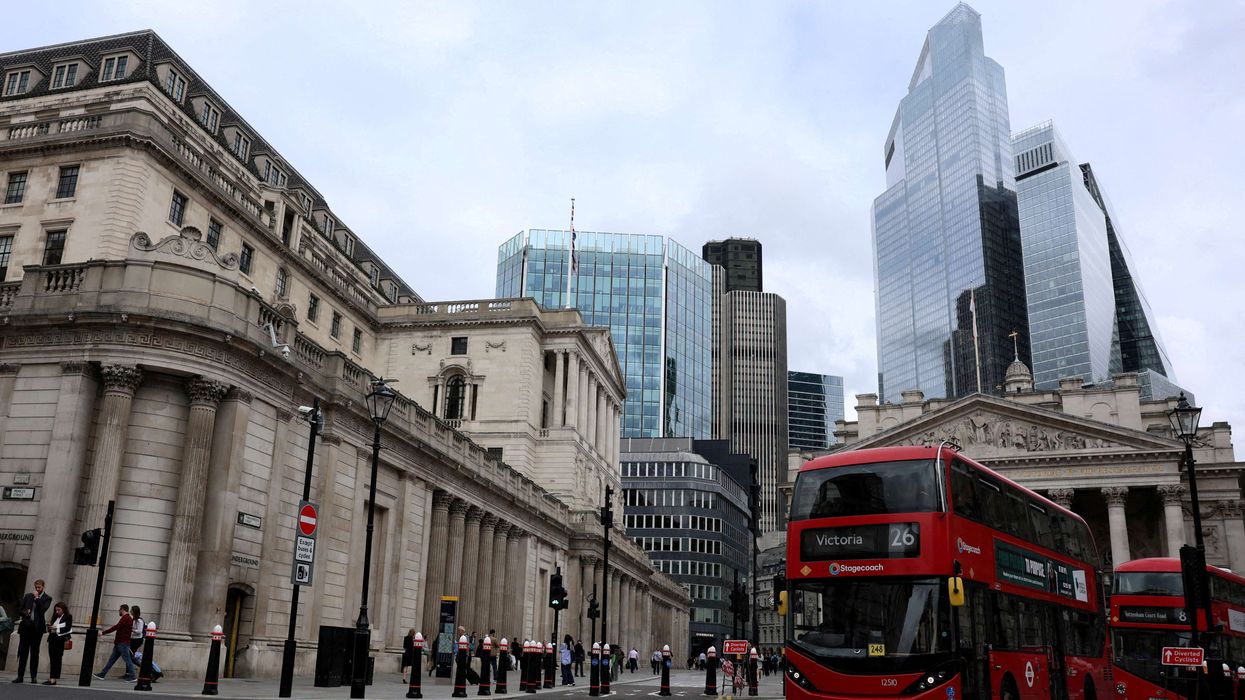

THE BANK of England is expected to keep interest rates unchanged this week as it waits for clearer signals on inflation, even as borrowing costs are expected to fall further later this year.
The BoE is likely to hold its benchmark rate at 3.75 per cent on Thursday, with Governor Andrew Bailey and other policymakers expected to avoid giving clear guidance on the timing or scale of future rate cuts.
The UK currently has the highest official borrowing costs among major advanced economies, despite six rate cuts since mid-2024.
Further rate reductions could help Prime Minister Keir Starmer and Chancellor Rachel Reeves support an economy that has shown limited momentum. However, inflation remains a concern. December’s inflation rate of 3.4 per cent was the highest among Group of Seven countries.
Inflation is expected to slow towards the BoE’s 2 per cent target, but some policymakers remain concerned about underlying price pressures.
“We expect Bank Rate to be cut twice this year. The timing of those rate cuts, however, is coming increasingly into question,” Deutsche Bank chief UK economist Sanjay Raja said, adding that his forecast for cuts in March and June could be pushed back.
MARKETS DIAL BACK RATE CUT BETS
Financial markets are pricing in almost no chance of a rate cut following this week’s Monetary Policy Committee meeting and see less than a 50 per cent chance of more than one cut this year. In mid-January, two quarter-point cuts were almost fully priced in.
This shift followed tentative signs of improvement in the UK economy and reduced expectations for interest rate cuts in the United States, which influence UK markets.
Economists also expect little change in the BoE’s economic forecasts, last updated in November, which showed inflation hovering around 2 per cent in two and three years’ time.
Bailey said last month, as US President Donald Trump raised the prospect of a trade war with Europe over Greenland, that the BoE was “very alert” to geopolitical risks. Market reaction has so far been limited, and Trump has since withdrawn those threats.
Investors are expected to focus closely on the BoE’s policy statement at 1200 GMT on Thursday and the press conference that follows.
In December, the MPC said interest rates were “likely to continue on a gradual downward path” but added that “judgements around further policy easing will become a closer call”.
Some MPC members remain concerned that a slowdown in pay growth could stall, despite a recent increase in unemployment.
Policymakers will review the BoE’s annual pay survey. MPC member Megan Greene said last month she was concerned by early data pointing to pay settlements of around 3.5 per cent for 2026, above the roughly 3 per cent level consistent with 2 per cent inflation.
7-2 VOTE FOR HOLD SEEN IN REUTERS POLL
The MPC voted 5-4 to cut Bank Rate in December, marking the fourth quarter-point cut of 2025. Several members indicated that the pace of cuts could slow.
Signs of improved confidence among consumers and businesses, following uncertainty around potential tax rises in Reeves’ November 26 budget, may also support a cautious approach.
Most economists surveyed by Reuters expect a 7-2 vote in favour of holding rates this week.
Barclays economists said the next rate cut would likely come in March, after which Bank Rate would be held at 3.5 per cent, “given the caution on the committee that rates at that level may no longer be restrictive”.
Paul Dales, chief UK economist at Capital Economics, said inflation was likely to slow more than expected, allowing the BoE to cut rates three times in 2026 starting in April.
(With inputs from Reuters)