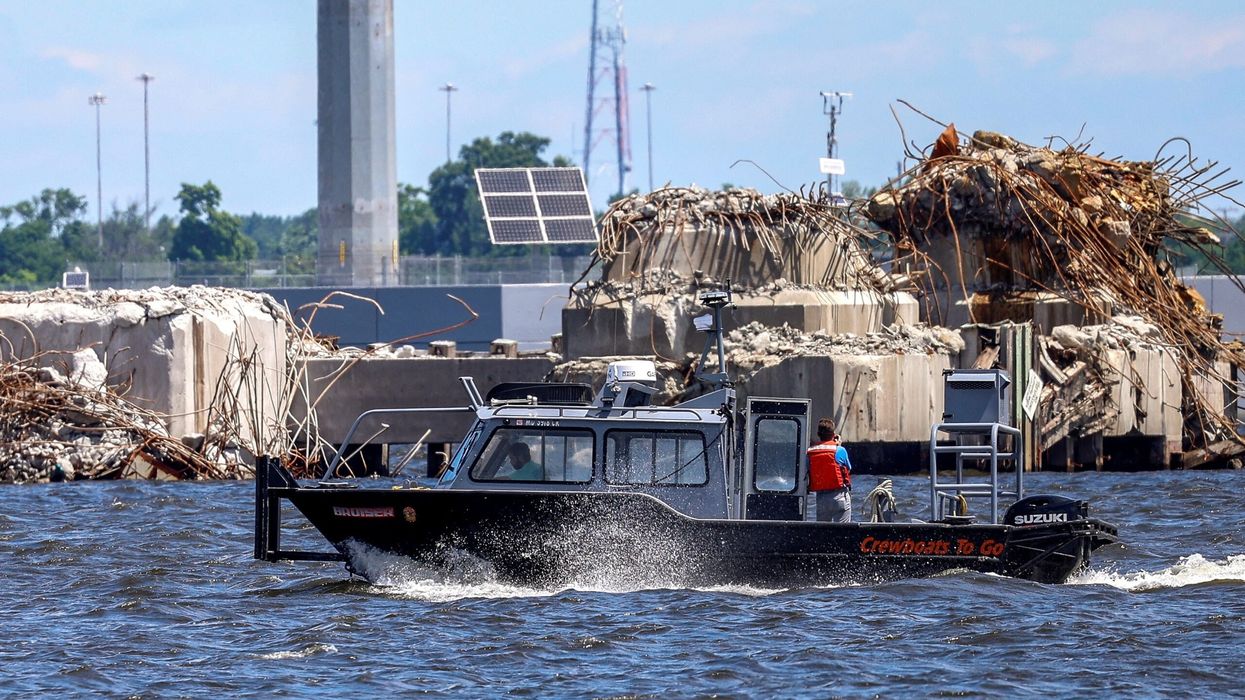

THE Baltimore shipping lane blocked for more than two months after a cargo ship collided with a major bridge in March, sending it crashing into the water, fully reopened on Monday (10), authorities said.
The US Army Corps of Engineers, along with Navy salvage divers, restored the channel to its original dimensions by removing about 50,000 tons of debris from the Patapsco River, a statement from the Key Bridge Response Unified Command said.
The riverbed was certified as safe for transit on Monday.
"We are proud of the unified efforts that fully reopened the Federal Channel to port operations," said Lieutenant General Scott Spellmon, commanding general of the Army Corps of Engineers.
"The partnerships that endured through this response made this pivotal mission successful."
On March 26, the Singapore-flagged M/V Dali lost power and plowed into a support column of the Francis Scott Key Bridge, causing it to collapse and killing six road workers who had been filling potholes overnight.
The 106,000-ton ship had been headed for Sri Lanka at the time of the accident.
The US National Transportation Safety Board (NTSB), which is investigating the incident along with the FBI, has said the ship had two electricity blackouts in the moments before the disaster.
The Dali was refloated last month and towed back into port.
The port of Baltimore is one of America's busiest ports and a key hub for the auto industry, handling almost 850,000 autos and light trucks last year -- more than any other US port, according to state figures.
The full reopening of the shipping channel will allow for two-way traffic, Monday's statement said.
More than 1,500 individual responders along with 500 specialists from around the world operated a fleet of boats during the operation which involved 56 federal, state, and local agencies.
Surveying and removal of steel at and below the 50-foot mud-line will continue to ensure future dredging operations are not impacted and wreckage will continue to be transported to Sparrows Point for follow-on processing.
In April, the FBI opened a criminal probe into the collapse. The NTSB said last month the Dali lost electrical power several times before it crashed into the bridge including experiencing a blackout during in-port maintenance and shortly before the crash.
Maryland estimates it will cost $1.7 billion (£1.34bn) to $1.9bn (£1.5bn) to rebuild the bridge and anticipates completion by fall 2028.
(Agencies)