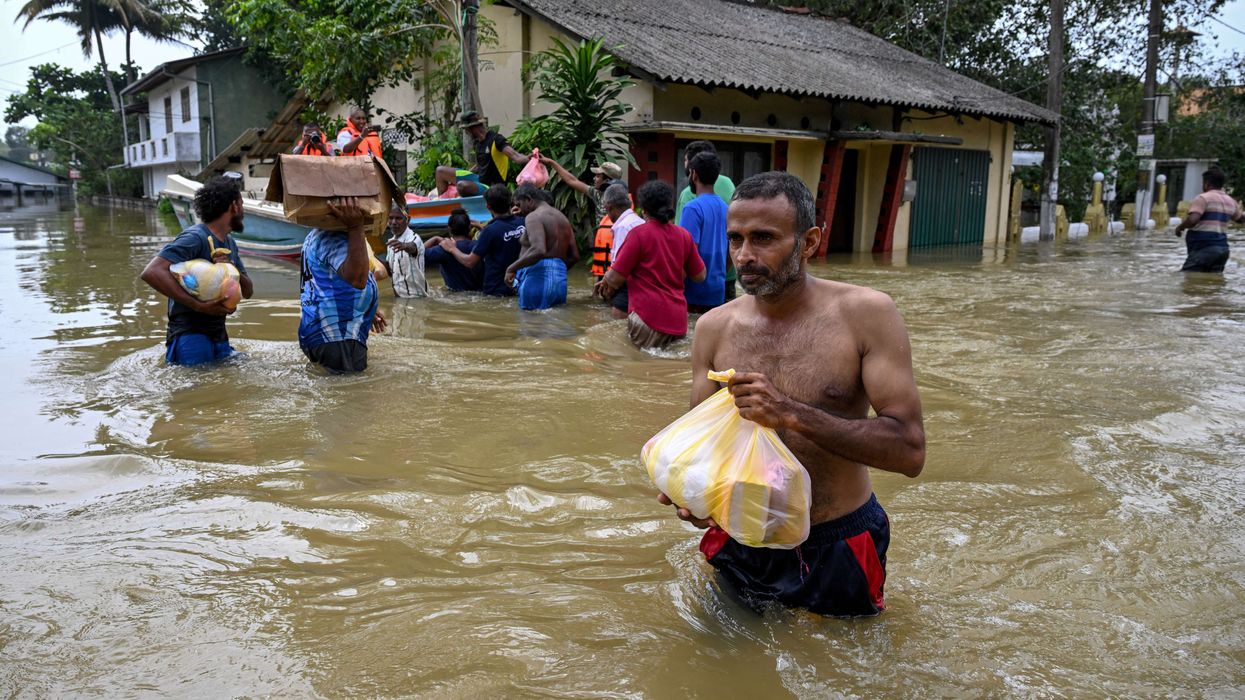

GOVERNMENTS and aid agencies in Indonesia and Sri Lanka on Tuesday moved to deliver assistance to hundreds of thousands of people stranded by flooding that has killed more than 1,200 people across four countries.
Heavy monsoon rains and two separate tropical cyclones last week brought strong downpours to Sri Lanka and parts of Indonesia's Sumatra, as well as southern Thailand and northern Malaysia.
Climate change is increasing the intensity of rain events because a warmer atmosphere holds more moisture, and warmer oceans can strengthen storms.
Floodwaters have receded in many places, but the damage has forced hundreds of thousands into shelters where they are struggling to access clean water and food.
In Aceh, one of the hardest-hit areas in Indonesia, residents told AFP that those who could afford it were stockpiling supplies.
"Road access is mostly cut off in flood-affected areas," 29-year-old Erna Mardhiah said while queueing at a petrol station in Banda Aceh.
"People are worried about running out of fuel," she said after waiting in line for two hours.
Residents reported that prices had surged.
"Most things are already sky-high... chillies alone are up to 300,000 rupiah per kilo ($18), so that's probably why people are panic-buying," she said.
Indonesia said on Monday it was sending 34,000 tons of rice and 6.8 million litres of cooking oil to Aceh, North Sumatra and West Sumatra.
"There can be no delays," Agriculture Minister Andi Amran Sulaiman said.
But Alfian, a resident in Banda Aceh, told AFP the government had been "very slow, especially in ensuring basic necessities".
Food shortage risk
Aid groups said they were sending supplies to affected regions, warning that local markets were running out of essential items and that prices had already tripled.
"Communities across Aceh are at severe risk of food shortages and hunger if supply lines are not reestablished in the next seven days," Islamic Relief said.
The group said a shipment of 12 tonnes of food on an Indonesian navy vessel was expected to arrive in Aceh on Tuesday.
Across Sumatra, at least 659 people have been killed in the floods, and 475 are still missing. A million people have evacuated their homes, according to the disaster agency.
Survivors described sudden waves of water that struck without warning.
In East Aceh, Zamzami said the floodwaters had been "unstoppable, like a tsunami wave".
"We can't explain how big the water seemed, it was truly extraordinary," said the 33-year-old, who like many Indonesians uses one name.
People in his village sheltered on the upper floor of a two-storey fish market and are now clearing mud and debris while facing power and telecommunications outages.
"It's difficult for us (to get) clean water," he told AFP on Monday.
"There are children who are starting to get fevers, and there's no medicine."
The weather system that hit Indonesia also brought heavy rain to southern Thailand, where at least 176 people were killed.
In Malaysia, two people were killed.
Colombo floodwaters recede
A separate storm caused heavy rain across Sri Lanka, triggering flash floods and landslides that killed at least 410 people.
Another 336 people remain missing, and an official in Welimada told local reporters he expected the toll to rise as teams searched for victims buried in mud.
President Anura Kumara Dissanayake declared a state of emergency, calling the situation the "most challenging natural disaster in our history".
He has requested international assistance, unlike the Indonesian government.
Sri Lanka’s air force, supported by aircraft from India and Pakistan, has been evacuating stranded residents and delivering food and other goods.
In Colombo, floodwaters were slowly receding on Tuesday.
Residents said the speed at which waters rose was unexpected.
"Every year we experience minor floods, but this is something else," delivery driver Dinusha Sanjaya told AFP.
Rainfall has eased, but landslide alerts remain in place across much of the central region, according to officials.
(With inputs from agencies)