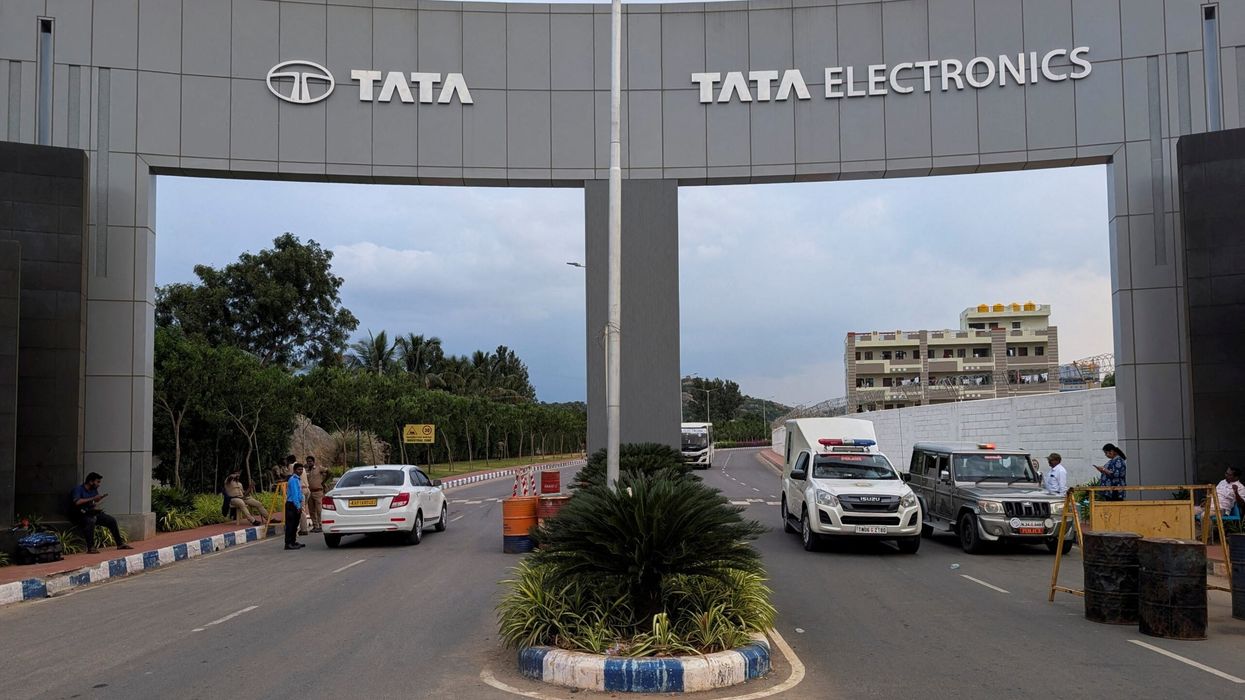

A FIRE at Tata Group's Apple iPhone component plant in southern India may disrupt production ahead of the upcoming festive season, potentially pushing Apple’s suppliers to source critical parts from China or other locations, according to an industry analyst and a source familiar with the matter.
The fire over the weekend has led to an indefinite halt in production at Tata's Hosur plant in Tamil Nadu. This facility is the only Indian supplier of iPhone back panels and some other parts for both Foxconn and Tata’s own iPhone assembly at another location.
Hong Kong-based Counterpoint Research told Reuters that it estimates local sales of 1.5 million units of iPhone 14 and 15 models during the Indian festive season, which runs from late October to early November. The fire could make it difficult for Apple to meet up to 15 per cent of this demand.
"There will be a 10-15 per cent impact on production of older iPhone models from India. Apple could offset that impact by importing more components and by re-routing more export inventory towards India," said Neil Shah, co-founder of Counterpoint, which tracks Apple’s global shipments.
Apart from local sales, Tata also exported iPhones to the Netherlands and the US, as well as some parts to China, amounting to over £187.5 million in exports for the year ending August 31, based on available customs data.
Tata declined to comment on the situation.
Counterpoint Research noted that Apple’s suppliers generally carry a three- to four-week stock of back panels. However, an industry source familiar with the matter estimated that Apple likely has stock for up to eight weeks, minimising the immediate impact of the fire.
If the suspension continues for an extended period, Apple may consider setting up another assembly line in China or adding shifts there to secure parts for its Indian iPhone manufacturers, the source added.
This disruption highlights the broader challenges facing Narendra Modi's "Make in India" initiative, especially in electronics manufacturing. Apple has been diversifying its supply chain beyond China, but recent incidents in India, such as fires at Foxlink and Pegatron last year, caused brief production halts.
“These are temporary setbacks,” said Prabhu Ram, vice president at Cybermedia Research. “Continued efforts to improve safety and operational standards are crucial for strengthening India's position as a global electronics manufacturing hub.”
Tata is one of Apple’s newest suppliers in India, with analysts predicting that India will account for 20-25 per cent of global iPhone shipments this year, up from 12-14 per cent last year. The fire-hit plant employed 20,000 workers. Another unit in the same complex was set to begin manufacturing complete iPhones later this year, but it remains unclear if the fire will delay these plans.
Tata has another iPhone plant near Bengaluru, acquired from Wistron last year, and is set to acquire a second plant in Tamil Nadu from Pegatron.
(Reuters)



