
Skip to content
Search

Latest Stories

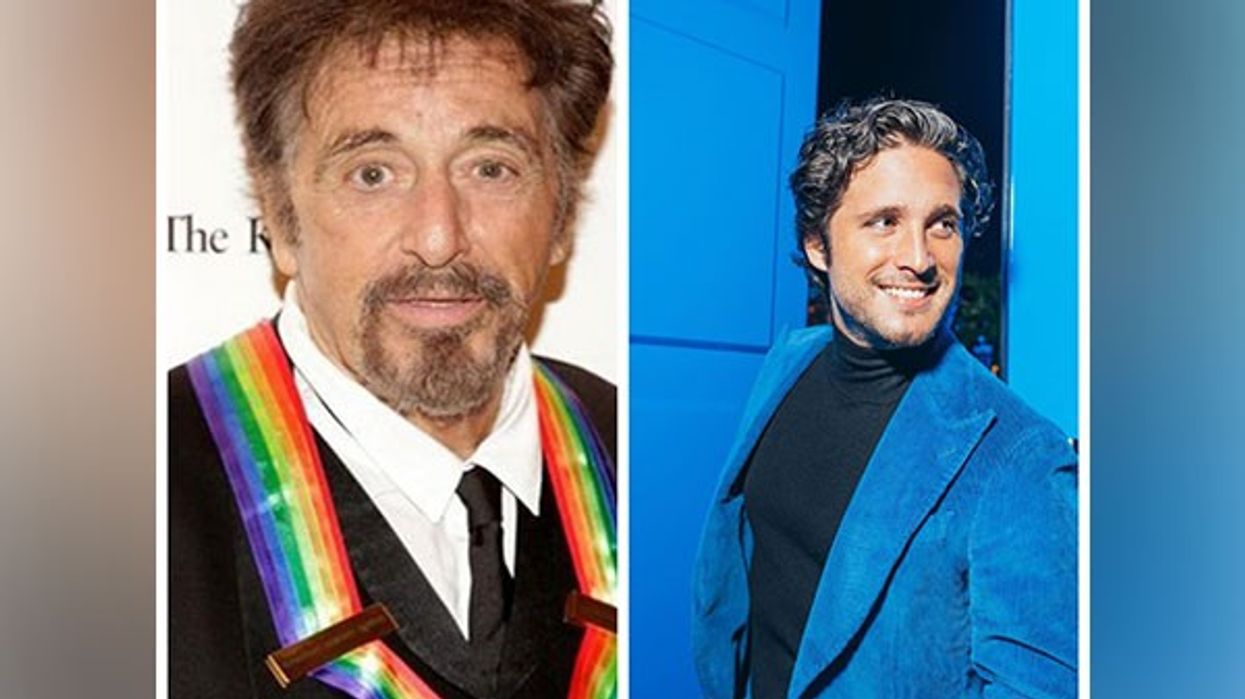
Al Pacino, Diego Boneta star in 'Killing Castro'

The film follows true events when Fidel Castro visited New York City in 1960 to address the United Nations General Assembly.

Al Pacino, Diego Boneta star in 'Killing Castro'

Actors Al Pacino, Diego Boneta, and Xolo Mariduena will be seen sharing screen space in Killing Castro thriller.

KiKi Layne, Alexander Ludwig, Ron Livingston, Kendrick Sampson, Nicole Beharie, Logan Marshall, and Titus Welliver will also feature in Eif Rivera's directorial.


Killing Castro, written by Leon Hendrix, Thomas DeGrezia, and Colin Bateman, follows true events when Fidel Castro visited New York City in 1960 to address the United Nations General Assembly as the Cuban revolutionary leader, The Hollywood Reporter reported.

The film is produced and financed by Romulus Entertainment's Brad Feinstein, along with Christina Weiss Lurie of Fourth and Twenty-Eight Films also producing. Executive producers are John Takis, Rudy Langlais, Josh Glick, Boneta, Sam Slater, Hendrix, Bateman, Piers Tempest, Joseph Ingrassia and Nick Ham.

"I am honoured to be part of telling such an important story that is a piece of history that was largely unknown. Killing Castro perfectly encapsulates the type of stories we strive to tell at Romulus Entertainment, stories that do more than entertain audiences but create thought-provoking diverse content that brings to light the complexities of real life. We are looking forward to working with the incredible cast led by the inimitable Eif Rivera," Feinstein said in a statement on Monday.

More For You

Samir Zaidi

Two Sinners marks Samir Zaidi’s striking directorial debut

Samir Zaidi, director of 'Two Sinners', emerges as a powerful new voice in Indian film

Indian cinema has a long tradition of discovering new storytellers in unexpected places, and one recent voice that has attracted quiet, steady attention is Samir Zaidi. His debut short film Two Sinners has been travelling across international festivals, earning strong praise for its emotional depth and moral complexity. But what makes Zaidi’s trajectory especially compelling is how organically it has unfolded — grounded not in film school training, but in lived observation, patient apprenticeships and a deep belief in the poetry of everyday life.

Zaidi’s relationship with creativity began well before he ever stepped onto a set. “As a child, I was fascinated by small, fleeting things — the way people spoke, the silences between arguments, the patterns of light on the walls,” he reflects. He didn’t yet have the vocabulary for what he was absorbing, but the instinct was already in place. At 13, he turned to poetry, sensing that the act of shaping emotions into words offered a kind of clarity he couldn’t find elsewhere. “I realised creativity wasn’t something external I had to chase; it was a way of processing the world,” he says. “Whether it was writing or filmmaking, it came from the same impulse: to make sense of what I didn’t fully understand.”

Keep ReadingShow less