
BRITISH minister Kanishka Narayan has said India and the UK could become the world’s leading countries for the adoption of artificial intelligence, ahead of the AI Impact Summit in New Delhi, the fourth in a series of annual gatherings to discuss the fast-evolving technology and the largest edition yet.
World leaders, technology executives and policymakers gathered in New Delhi this week for the AI Impact Summit, with the UK and India positioning themselves not as rivals in building the largest AI models, but as global leaders in how the technology is adopted and put to work for public good.
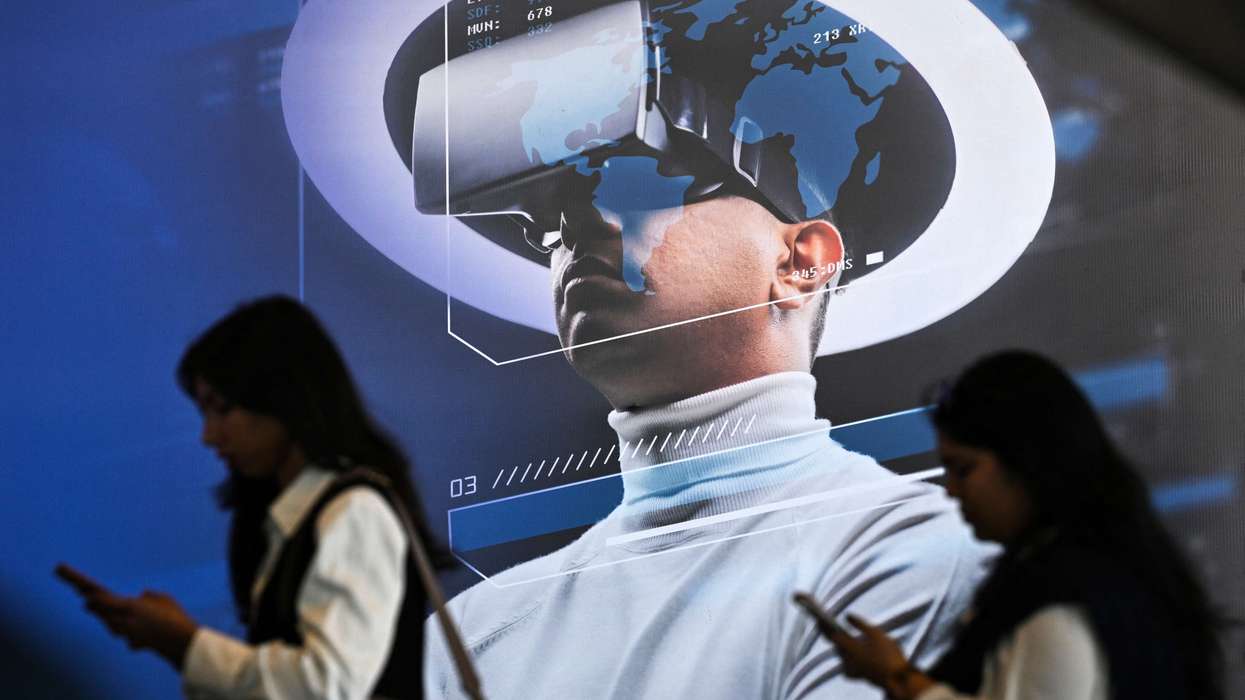
 Visitors explore interactive exhibits at Bharat Mandapam in New Delhi during the AI Impact Summit.ANI video grab
Narayan, the minister for AI and online safety, visited India for the summit, and said the next phase of AI growth would be defined less by where frontier models are invented and more by where AI is deployed at scale, responsibly and inclusively.
“The big AI laboratories may be in the US or China, but the opportunity for the UK and India is to become the best places in the world for the adoption of AI,” Narayan said. “Not necessarily just the invention of AI.”
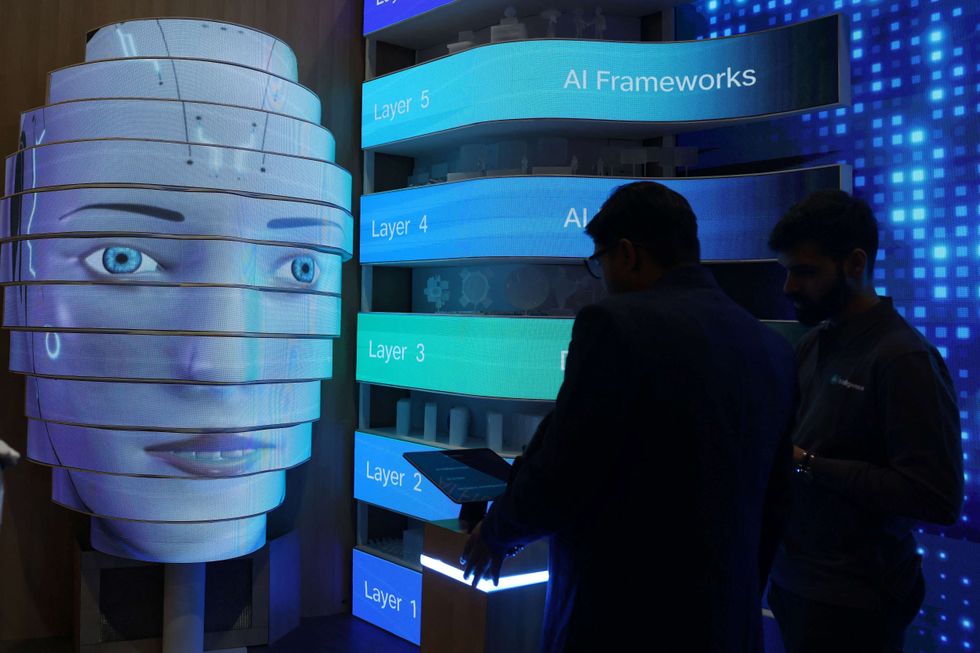 ANI video grab
Speaking during a two-city visit that included Bengaluru and New Delhi, Narayan said both countries were aligned in their ambition to tap the “exceptional” economic opportunity offered by AI, while ensuring it is used safely and fairly.
Narayan said AI adoption across sectors such as services, healthcare and life sciences would determine which economies benefit most from the technology.
“I’m thinking adoption in areas like services, like healthcare,” he said. “India has got a huge population and a large-scale, innovative healthcare sector. The UK has a world-leading life sciences sector anchored by the NHS. There are huge exchanges to be done in learning there.”
The minister said this practical application of AI could transform diagnosis, reduce waiting times and improve delivery of public services, while also driving productivity and growth.
He added that cooperation between India and Britain would also extend to the next stage of research and development in AI, including work on frontier technologies and semiconductors.
“The second thing is how we think about the next iteration of R&D in AI, with a focus on frontier AI and semiconductors,” Narayan said.
Equally important was the shared responsibility of shaping rules and standards around the technology, he added.
“The third is shaping responsible AI. We have a great opportunity as two countries grounded in similar values to make sure that AI works for everyone,” Narayan said.
The UK delegation, led by deputy prime minister David Lammy and Narayan, highlighted AI’s role in boosting growth, creating jobs and improving public services.
“This summit is an important moment in determining how we can work together with our international partners to unlock the full benefits and potential of AI, while baking in robust and fair safety standards that protect us all,” Lammy said.
The AI Impact Summit, held from Monday to Friday (16-20) at Bharat Mandapam in New Delhi, was the first such global gathering to take place in the developing world.
According to Narayan, governance, assurance and responsible use must remain central as AI systems are deployed more widely. His message aligned with India’s own push at the summit to build global consensus on ethical AI, particularly among developing nations.
Indian IT minister Ashwini Vaishnaw said India aims to drive agreement on “good, proper and right use of AI so artificial intelligence can be used for the benefit of humanity and while we can contain the harms which may come from improper use”.
Vaishnaw said India expects investments of around $200 billion (£148bn) across the AI stack over the next two years and is expanding access to high-quality computing resources for startups and researchers. The government plans to deploy tens of thousands of GPUs under its IndiaAI Mission, alongside a structure like digital public infrastructure to make AI more accessible.
India’s prime minister Narendra Modi on Monday (16) said the country stands at the forefront of the AI transformation and that its progress in the field reflects both ambition and responsibility.
In a post on X, Modi said: “Bringing the world together to discuss AI! Starting today, India hosts the AI Impact Summit at Bharat Mandapam in Delhi. I warmly welcome world leaders, captains of industry, innovators, policymakers, researchers and tech enthusiasts from across the world for this Summit.”
He said the theme of the summit - “Sarvajana Hitaya, Sarvajana Sukhaya” or welfare for all, happiness for all - reflects a shared commitment to harnessing artificial intelligence for human-centric progress.
Modi said the summit would enrich global discourse on innovation, collaboration and responsible use of AI.
“Thanks to the 1.4 billion people of India, our nation stands at the forefront of the AI transformation. From digital public infrastructure to a vibrant startup ecosystem and cutting-edge research, our strides in AI reflect both ambition and responsibility,” the prime minister said.
Modi pitched India as a global hub for digital infrastructure and artificial intelligence, saying the country is ready to host the world’s data and lead the next wave of the technology revolution.
“The tax incentives announced in the budget are designed to accelerate investment in this space, lower the cost of building advanced facilities and position India as a globally competitive destination for data infrastructure,” he said last Sunday (15).
He added: “We invite the whole world’s data to reside in India.”
Narayan, the first Welsh MP of Indian heritage (his family is from Muzaffarpur, Bihar), also used his visit to pitch Britain as a prime destination for Indian AI companies looking to expand overseas.
“The UK should be on top of their mind because it is one of the top three AI places in the world,” he said.
He pointed to Britain’s strength in research quality, startup numbers and scale of its tech ecosystem.
“We have more unicorns than France and Germany combined, and by far the biggest tech ecosystem in Europe,” the minister said. “We are among the global top three – the US, China and then the UK.”
Britain remains open to global talent and collaboration at a time when some countries are becoming more restrictive, he said. Data from the Department for Science, Innovation and Technology shows that UK AI companies attracted £24bn in investment last year and announced £28bn in infrastructure spending.
India, meanwhile, used the platform to amplify the voice of developing nations in global AI governance and to push for wider access to technology.
Experts noted that while AI adoption offers huge benefits, it also raises concerns around job disruption, misinformation and safety, particularly in countries with large service sectors.
Narayan acknowledged those challenges, but said the answer lay in cooperation rather than retreat.
“We are totally aligned in making sure the people of Britain and the people of India don’t just watch AI being built by others,” he said. “They should build AI and benefit from AI directly.”
Previous global AI summits, at Bletchley Park in the UK in 2023, Seoul in 2024 and Paris in 2025, were dominated by safety commitments, voluntary corporate pledges and governance declarations, though critics said they produced few enforceable outcomes.
More than 3,250 speakers are scheduled to attend, alongside an expo featuring more than 300 exhibitors from global and Indian technology firms.
Some 20 heads of state, including France’s Emmanuel Macron and Brazil’s Luiz Inácio Lula da Silva, and government officials, business leaders and investors also attended the event.