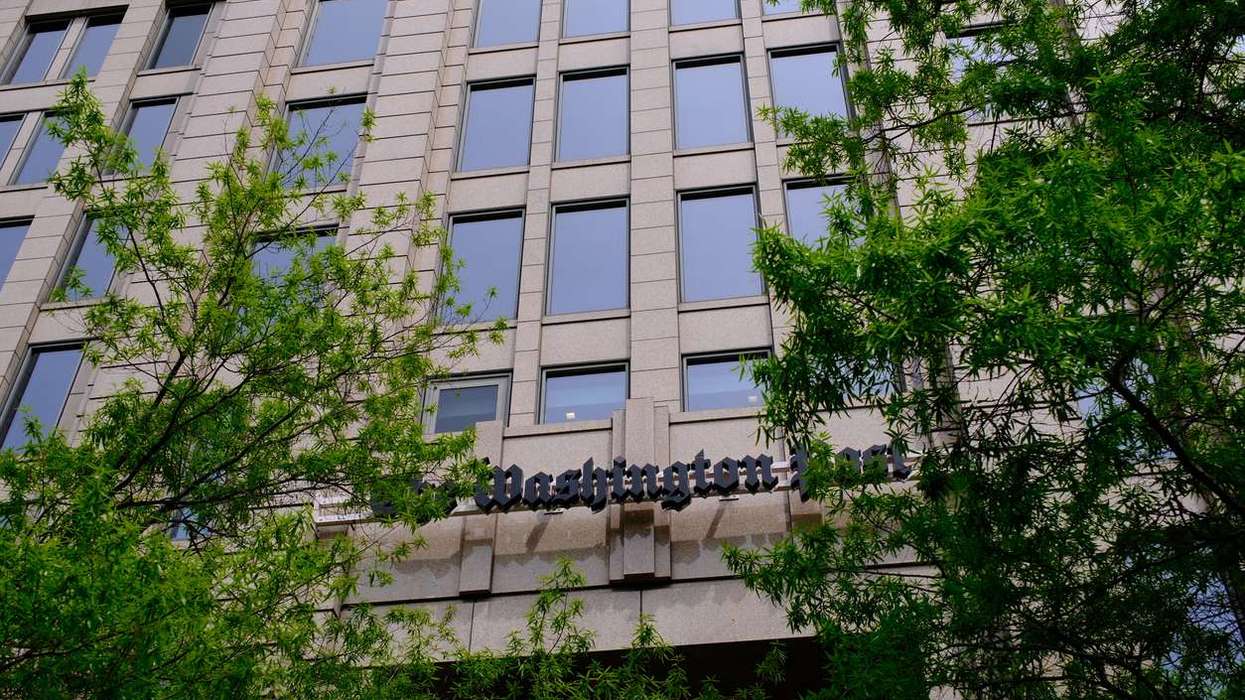

- Layoffs affect newsroom and business teams, with sports and foreign desks scaled back.
- Executive editor says the paper must “reinvent” itself after years of financial losses.
- Former leaders and staff describe the move as one of the darkest moments in the paper’s history.
The Washington Post has begun a wide round of layoffs that will sharply reduce its sports, metro and international reporting, in what senior editors describe as a strategic reset aimed at stabilising the loss-making newspaper.
Executive editor Matt Murray told staff on Wednesday that all sections would be affected in some way. The sports desk will close in its current form, with some reporters moved into features to cover the culture of sport rather than match reporting. The books section is being shut, as is the daily “Post Reports” podcast. The metro desk covering Washington DC will shrink, and foreign reporting will be scaled back, though correspondents will remain in nearly a dozen locations.
“The actions we are taking include a broad strategic reset with a significant staff reduction,” Murray reportedly said on a newsroom call, as quoted in a news report. He added that the organisation had been losing too much money for too long and had not been meeting readers’ needs.
While the exact number of job losses has not been formally disclosed, journalists across affected desks have confirmed widespread cuts. Some foreign correspondents posted on social media that entire regional teams, including Middle East coverage, had been eliminated. A Ukraine-based reporter reportedly said she lost her job “in the middle of a warzone”.
Marty Baron, the former executive editor who left in 2021, described the moment as “among the darkest days in the history of one of the world’s greatest news organizations”, reportedly said in a news report.
What led to the crisis
Jeff Bezos bought the paper for $250 million in 2013, roughly £200 million at the time. In the early years of his ownership, the publication expanded, invested heavily in digital growth and positioned itself as a leading national title during Donald Trump’s first term in the White House.
In recent years, however, the momentum appears to have slowed. Audiences have fallen and subscriptions have weakened. In 2024, the paper lost tens of thousands of subscribers after it chose not to endorse a presidential candidate ahead of the US election, breaking with decades of tradition.
Bezos hired Will Lewis as publisher in late 2023 to find a path back to profitability. Lewis has experimented with artificial intelligence tools for comments, podcasts and aggregation, and has pushed for structural changes across the business. In a staff meeting in 2024, he reportedly warned employees: “We are losing large amounts of money. Your audience has halved in recent years. People are not reading your stuff.”
Bezos himself acknowledged the struggle at a conference in 2024, saying, “We saved The Washington Post once, and we’re going to save it a second time,” as quoted in a news report.
10 things to know about the layoffs
- The cuts affect both editorial and business teams.
- The sports section in its current form is being shut down.
- The metrodesk covering Washington DC is being reduced significantly.
- Foreign reporting will shrink, though some overseas bureauxwill remain.
- The books section and the “Post Reports” podcast are being closed.
- The shift will place greater emphasis on national politics, investigations, business and health coverage.
- Murray reportedly said the aim is to make the paper “nimbler” and more aligned with what readers want.
- The Washington Post Guild criticised the cuts, warning they risk weakening the paper’s mission.
- The paper’s struggles mirror wider industry pressures, including falling print circulation, fragmented digital audiences and the rise of generative AI.
- The situation stands in contrast to The New York Times, which reported adding around 450,000 digital-only subscribers in the final quarter of 2025.
The broader publishing industry remains under strain. Print sales continue to decline, digital traffic is increasingly shaped by search algorithms and AI summaries, and readers are scattered across social media platforms. Many outlets have turned to events, memberships and specialist content in an attempt to offset falling advertising and subscription revenues.
Whether this reset stabilises the Post or marks a deeper contraction remains unclear. What is certain is that one of the most recognisable names in US journalism is entering another period of upheaval.