
THE CONFLICT in West Asia expanded further as Yemen’s Iran-aligned Houthis launched attacks on Israel on Saturday, while additional US forces arrived in the region.
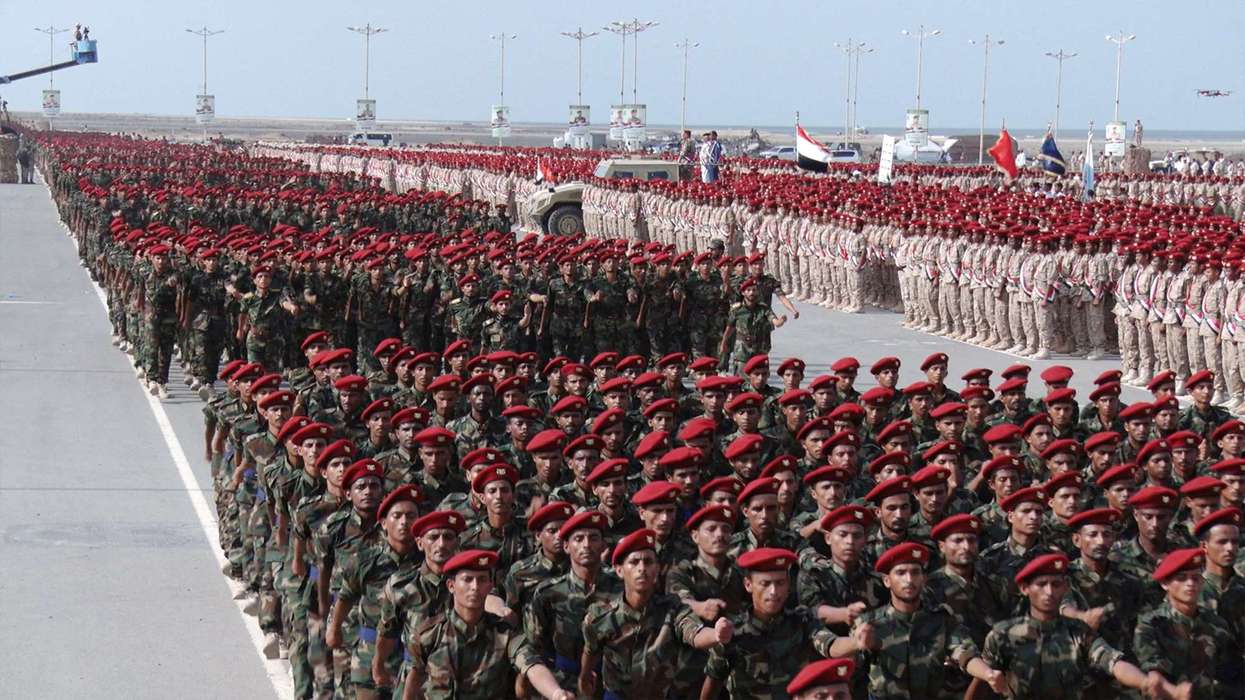
The Houthis said they carried out missile and drone strikes on Israel, marking their first involvement since the war began on February 28 with US and Israeli strikes on Iran. Houthi military spokesperson Yahya Saree said the group carried out a second strike and vowed more attacks.
At the same time, the United States deployed more forces to the region. The US military said the first of two Marine contingents arrived on Friday aboard an amphibious assault ship. The USS Tripoli, carrying around 3,500 Marines and sailors, reached West Asia.
The Washington Post reported that the Pentagon is preparing for weeks of ground operations in Iran, possibly involving raids by special operations forces and conventional infantry. Reuters has also reported that such options are being considered. Whether US president Donald Trump will approve deploying ground troops remains unclear.
ALSO READ: Trump Delays Iran Strike as Global Oil Lifeline Faces Crisis
US secretary of state Marco Rubio said the US could achieve its aims without ground troops but was deploying forces to give Trump “maximum” flexibility.
The Pentagon is also expected to deploy thousands of soldiers from the US Army’s 82nd Airborne Division.
The war has spread across the region since February 28, with strikes reported in Iran, Israel, Lebanon, Iraq, Syria and the Gulf. Iranian state media said five people were killed and four wounded in a strike on a quay in the port city of Bandar Khamir near the Strait of Hormuz. Loud explosions were also reported in Tehran, with smoke seen rising from impacted areas.
Iran said US-Israeli strikes also hit the same port city. A Qatari news channel said an Israeli missile struck the building housing its office in Tehran, damaging the premises. “I miss a peaceful night's sleep,” an artist in Tehran said. “so intense it felt like all of Tehran was shaking”.
Iran’s Revolutionary Guards said they launched missile and drone strikes on aluminium plants in Bahrain and the United Arab Emirates, targeting industries they described as linked to the US military. Emirates Global Aluminium said six people were wounded and its plant was damaged, while Bahrain’s Aluminium Bahrain reported two employees injured.
ALSO READ: Israel launches new strikes on Iran as Tehran rejects talks with US
Iran also continued attacks on Israel and the Gulf. A drone was shot down near the residence of Iraqi Kurdish leader Masoud Barzani in Erbil. Another drone targeted the home of the president of Iraq’s Kurdistan region. In Kuwait, the military said it was responding to “hostile missile and drone” threats, adding: “The general staff of the Kuwaiti Armed Forces confirms that any explosions that may be heard are the result of air defence systems intercepting hostile targets.”
An Iranian missile strike on a village in central Israel wounded 11 people and left a crater in a residential area in Eshtaol.
Israel said it targeted weapons infrastructure in Tehran, including storage and production sites. It also struck Lebanon, where three journalists were killed in a strike on a media vehicle, according to Al Manar TV. A Lebanese soldier was also killed, and a follow-up strike on rescue workers caused further deaths.
Israel’s military said it had targeted one of the journalists, accusing him of being part of a Hezbollah intelligence unit and reporting on Israeli troop locations.
ALSO READ: Britain to 'host summit on reopening Strait of Hormuz'
Lebanese authorities, including President Joseph Aoun and Prime Minister Nawaf Salam, condemned the killings as war crimes. The health ministry said Israeli raids also killed nine paramedics.
The Israeli army said one of its soldiers, Sergeant Moshe Yitzchak hacohen Katz, was killed in combat in south Lebanon.
In Syria, authorities said they repelled a drone attack from Iraq targeting a US military base. The attack follows a series of strikes claimed by pro-Tehran Iraqi groups.
The Houthis’ entry into the war has raised concern about shipping routes. The Strait of Hormuz, through which about a fifth of global oil and liquefied natural gas supplies pass, has been effectively closed. Iran has threatened ships in the waterway, while Pakistan said Iran agreed to allow 20 Pakistani-flagged vessels to pass, with two ships permitted daily.
The Houthis have previously attacked shipping in the Red Sea and Gulf of Aden. If they expand operations, the Bab el-Mandeb Strait could also be affected.
Iranian president Masoud Pezeshkian said Iran would “retaliate strongly if our infrastructure or economic centres are targeted”.
ALSO READ: Narendra Modi & Donald Trump talk Hormuz crisis
Iran’s Revolutionary Guard also threatened to strike US university campuses in the West Asia unless Washington condemned attacks on Iranian universities.
Diplomatic efforts are continuing. Pakistan is hosting talks with foreign ministers from Saudi Arabia, Turkey and Egypt. Pakistan’s foreign minister Ishaq Dar said “dialogue and diplomacy remain the only viable path for lasting peace”.
Germany’s foreign minister Johann Wadephul said he expected a direct US-Iran meeting “very soon”. US envoy Steve Witkoff also said talks could take place soon and promoted a 15-point plan that Washington says “could solve it all”.
US vice president JD Vance said the US has “accomplished all its military objectives” in Iran but said the war must continue “a little while longer”.
Trump has threatened to target Iranian energy infrastructure if Iran does not reopen the Strait of Hormuz but has extended a deadline by 10 days.
The conflict has also triggered protests. Demonstrators gathered in cities across the United States in anti-war rallies. In Israel, hundreds protested in Tel Aviv and other cities against the war.
(With inputs from agencies)