
Something struck me as I wrote my Christmas cards this year to close family and friends. Compared with last year, quite a few sadly passed away in 2025.
Each year I promise myself I will post my cards in good time but invariably I leave it till the next minute. Cards to India are very much a hit and miss affair. I think I am doing well if half the cards get through to the person intended. On occasions, I get an acknowledgement that the card, posted in December, has arrived in April the following year. Quite often, they simply vanish into the Indian ether. This is mysterious because the British left behind an excellent postal service.
Christmas has been part of my life as far back as I can remember. As small children at St Xavier’s School, which was a Jesuit run institution in Patna in north-east India, we always got a cake for Father Murphy, the principal. Decades later in England, I always try and catch the Festival of Nine Lessons and Carols on Christmas Eve that is broadcast live from the Chapel of King’s College, Cambridge, starting with, “Once in royal David’s city.”
I like to think I reflect the views of a majority of British Asians that Christmas is Christmas. It doesn’t have to be sold to us as “a winter festival”.
This year, more so than in past Christmases, I have thought of near and dear ones who have been lost in recent times.
Lessons of history
Maybe the time has come to say something positive about Britain and British history. I say this because at a leisurely (4-hour) lunch last week, a friend, who had received an honour containing the word, “Empire”, showed me a cruel message sent by a nephew.
I didn’t jot down the nephew’s exact words but the sense of it was: “I am surprised you have accepted this honour. Do you not realise the cruelty that was imposed on Indians during British colonial rule. I don’t think I can have you in my life any longer.”
The nephew had been born in Britain, had never been to India, but clearly had his mind poisoned by his parents.
To be sure, British colonial rule was a dark period in India’s history but in my opinion it is wrong of the nephew to impose his views on others. In any case, perhaps the time has come to explain the British legacy in India is a complex one. We wouldn’t be living in this country if it had no redeeming features. In my part of India, if people consider taking a holiday abroad, the first place they think of is London. Those who are “England returned” – say after studying at a UK university – have a higher status in society. And middle-class parents in India will do anything to ensure their children get into English medium schools.
Back in 2008, I remember speaking to the playwright Tanika Gupta who was offered an MBE — Member of The Most Excellent Order of the British Empire — “for services to drama”.
In the end, she accepted but she did say: “I did struggle with the decision whether or not to accept because of the word, ‘Empire.’ I think it should be changed.”
Dinesh Chandra Gupta, the youngest brother of Tanika’s paternal grandfather, Dr Pritish Gupta, was only 19 when he went to the gallows at Alipore Central Jail on July 7, 1931, for the assassination of Colonel N.S. Simpson, the inspector-general of prisons, inside the Writers’ Building in Calcutta (now Kolkata).
 Tanika Gupta
What persuaded Tanika to accept the MBE was encouragement from her mother, Gairika Gupta, who with her late husband, Tapan, set up the Tagoreans, a society aimed at spreading the best of Bengali culture, after the couple arrived in London from Calcutta in 1961.
“My mum said, ‘Dinesh would be happy,’” explained Tanika, who went to Buckingham Palace to collect her MBE from the late Queen.
In the intervening years, Tanika’s mother has also passed away.
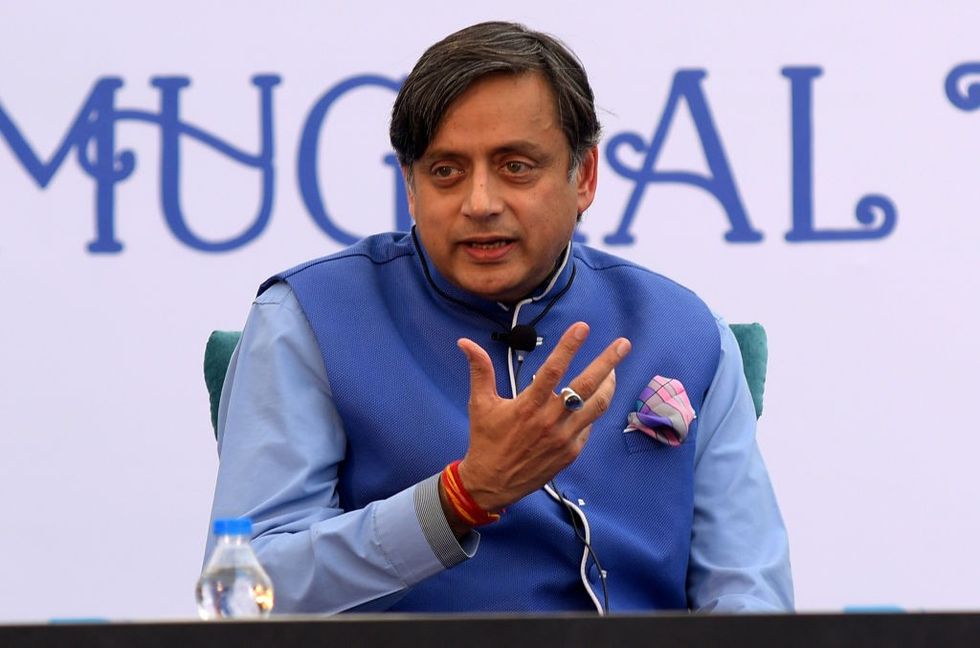
Maybe we should be concerned by the extreme intolerance shown by my friend’s nephew. Perhaps the time has come to be a bit more nuanced in writing about British history in India, rather than take the black and white approach adopted by Shashi Tharoor in his (brilliant) Oxford Union speech of 2015 and his subsequent book, Inglorious Empire: What the British Did to India.
The other extreme that the British did only good in India is reflected in Kartar Lalvani’s 2016 book, The Making of India: The Untold Story of British Enterprise.
Indian adventure
An English couple, neighbours of mine, are going to India for the first time for a two-week holiday. It should be a great adventure.
British government advice is to avoid places such as Kashmir and Manipur, not accept food or drink from strangers when travelling by train and for women to avoid isolated areas.
It says: “There is a risk of sexual assault, including attacks on female foreign national visitors in tourist areas and cities. Female travellers often experience verbal and physical harassment by individuals or groups of men. Serious sexual attacks involving both Indian and foreign nationals have been reported. British women have been victims of sexual assault, including rape, in multiple states in India. Avoid isolated areas, including beaches, when alone at any time of day.”
 Shashi Tharoor AFP via Getty Images
My tips have been basic – take cotton clothes, a sweater for cool evenings, insect repellent and sun cream, tablets for possible tummy upsets, stick to bottled water, lock up money, valuables and passports in the hotel safes, and beware of pickpockets.
India is the best place in the world for a holiday but lone women are vulnerable and there are criminals who have refined thieving into a fine art. I had hand luggage stolen from my taxi after the driver stopped to repair a “puncture”.
The south is generally safer than the north, and Kolkata much better than Delhi (or, at least, it used to be).
Ashes to ashes
English cricket writers are distraught that in the current “Ashes” series against Australia down under, England are currently trailing 0-3.
But they should console themselves that however bad England have been, India have been worse.
After England’s humiliation, Sir Geoffrey Boycott probably had himself in mind when he raged: “Our players are disrespectful to past great England cricketers and their helpful views. They are wrapped in cotton wool and overpaid. Time to get tougher with them because their way hasn’t won anything in three years.”
 English cricket writers are distraught that in the current “Ashes” series against Australia down under Getty Images
He wanted heads to roll, especially that of the coach Brendon McCullum: “Change is absolutely necessary to step up to the next level. What would I do? Change the coach.”
Meanwhile, the Indian sports writer Ayaz Memon has written about India’s dismal performance at home where previously the team was virtually unbeatable: “India’s unexpected 0-2 loss to South Africa in the recently concluded Test series has left the team reeling…. This was the second whitewash at home suffered by India in just over a year. In 2024, unfancied New Zealand had pulled off a staggering 3-0 win which effectively cost India a place in the World Test Championship (WTC) final.”
Like McCullum, the Indian coach Gautam Gambhir is also under pressure: “In his post-series press conference, Gambhir brazened out the criticism and said that Test cricket needs tough characters. But this truism cannot obscure his own inadequacies in delivering results. The outcome of the series appears to be particularly adverse for Gambhir.”
What I like is that the Indian women – still disparagingly referred to as “eves” by some newspapers – are doing much better than the pampered and overpaid men. The vice-captain, Smriti Mandhana, was at the centre of huge publicity when she called off her wedding to her fiancé, Palash Muchhal.