THE year 2026 has begun with a bang. It was not the New Year fireworks lighting up skylines, but the foreign policy pyrotechnics of the US intervention in Venezuela that have made the recurring dilemma of how to handle a problem like president Donald Trump an increasing headache this year.
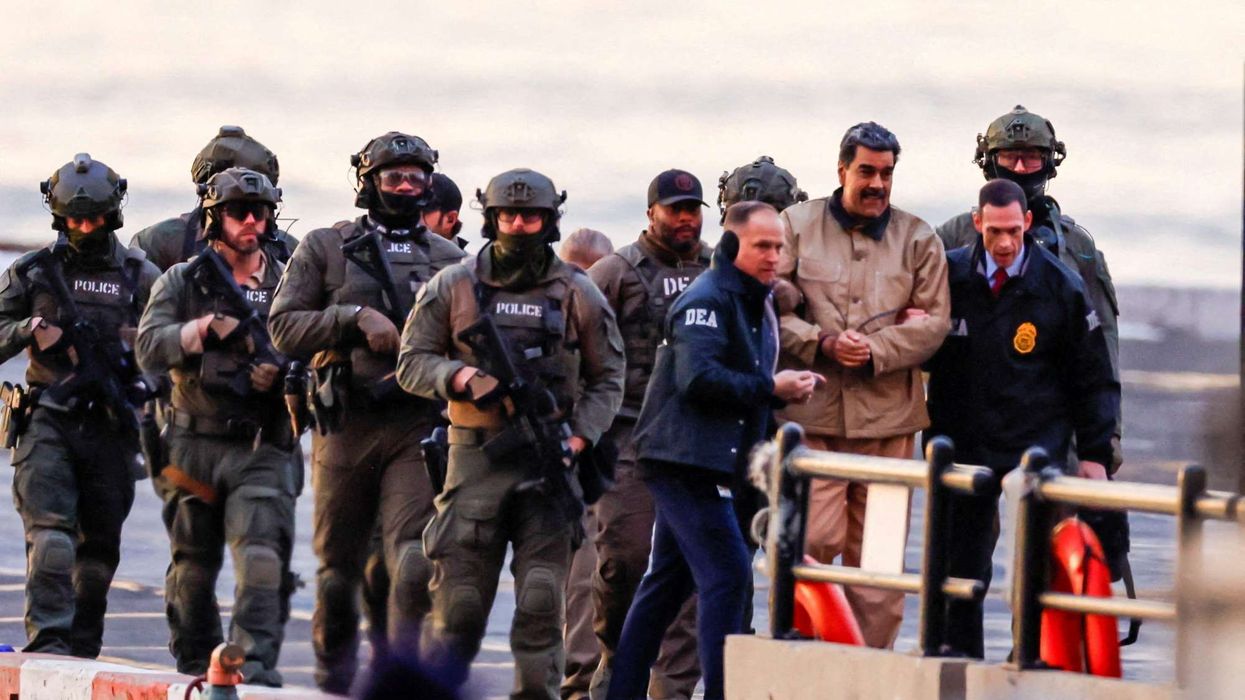
Trump’s itchy, trigger finger saw him send more than a hundred posts on his Truth Social platform to smite his enemies during Christmas Day. His administration was targeting Nigeria and Syria, threatening Iran, Cuba and Greenland, and even his World Cup 2026 co-hosts in Mexico and Canada. Capturing Nicolas Maduro, the president of Venezuela, showed “these were not all empty threats”.
Maduro’s regime in Venezuela certainly lacked international legitimacy. He declared himself the winner of the July 2024 presidential election, despite strong evidence that he lost that vote heavily. This was an illegitimate dictatorship brought down by a clear breach of international law. A rapid invasion – the death toll around eighty – was presented as simply an American policing operation in another country, with the western hemisphere essentially now home turf.
I asked foreign policy expert Mark Leonard of the European Council of Foreign Relations, how far the latest Trump adventure should change how we think about the world. There is little unprecedented about American intervention in Latin America, he explained, though Trump is more mercenary and less ideological than his cold war predecessors. To declare any clear Trump doctrine would be an exaggeration. The war for the president’s ear involves two contrasting ideas of what ‘America first’ should mean. Both camps agree that America should do what it wants - barely paying even lip service to international law - but disagree about what that should be. For the ‘restrainers’, Making America Great Again is a primarily domestic project, seeing faraway places like Ukraine, Iraq or Afghanistan as peripheral to American interests. The expansionist vision of American supremacy involves the active export of Trumpism to allies abroad.
The Venezuela intervention was the project of Marco Rubio, Trump’s secretary of state of Cuban American heritage, and a former senator from Florida, where Cuban and Venezuelan emigres are a major force in Republican politics. His real target is Cuba. “Rubio believes that the road to Havana runs through Caracas”, Leonard noted. The Trump administration increasingly championing an ethno-nationalist vision, where only white Christians count as true Americans, yet embarked on a diaspora-led intervention, though Rubio sold the intervention to Trump as a self-interested opportunity to seize control of Venezuela’s oil.
It took just a few hours after capturing Maduro for Trump to disregard and disappoint Venezuela’s democratic opposition, declaring that their leader Maria Corina Machado lacked the respect to govern her country. Trump officials briefed that her real sin had been to accept the Nobel Peace Prize, even though she dedicated her award to Trump himself.
The British and European governments continue to promote a democratic transition in Venezuela, but Trump may seek more control by making a deal with the vice-president and the existing regime. Autocrats find it easier to read Trump’s mind than democrats.
So Russia and China see opportunities in Trump’s great power world, hoping for a tacit understanding that Ukraine and Taiwan count as their own backyards. The muted criticism of prime minister Narendra Modi towards the US intervention reflects that India may see gains in this kind of world order, too. But the British and other European governments believe that a rule-based international order reflects their interests as much as their values. British and European governments have had an intense focus on containing the dangers of Trump’s pivot towards Russia’s president Vladimir Putin on Ukraine. The private acknowledgement that former American allies are no longer on the same team is combined with diplomatic business as usual to limit the damage. Trump’s appetite to annex Greenland could make that untenable.
Few people will have heard that the government of Sir Keir Starmer quietly has a foreign affairs doctrine of its own. “Progressive realism” was the phrase coined in 2024 by then foreign secretary David Lammy to navigate tensions between ethics and realpolitik. That means “engaging with the world as we find it” to pursue British interests and internationalist values, new foreign secretary Yvette Cooper told the House of Commons. Her parliamentary statement on Venezuela illustrates the core dilemma: how to defend a rule-based world order once the most powerful states barely pay lip service to international law.
The public understands the power imbalance with America. The risks of declaratory statements are increased by Trump’s vindictive egotism. The logic of a world of spheres of influence is to seek more responsibility for what happens close to home. “The most important thing is what you can do, rather than what you say”, Leonard told me. Yet, taking more responsibility for security in Europe is a difficult, expensive commitment - and reopens questions of how post-Brexit Britain works with its allies. Political leaders will eventually need to give a public account of how to find our place in this shifting global order.
 www.easterneye.biz
The author is the director of thinktank British Future and the author of the book How to Be a Patriot: The must-read book on British national identity and immigration.