
US PRESIDENT Donald Trump said he would again extend a deadline for Iran to reopen the Strait of Hormuz or face the destruction of its energy plants, after Tehran rejected a 15-point US proposal to end the fighting.
Trump said he would pause threatened attacks on Iranian energy plants for 10 days until April 6 at 8 pm Eastern daylight time (0000 GMT on April 7).
"I am pausing the period of Energy Plant destruction by 10 Days to Monday, April 6, 2026, at 8 pm, Eastern Time," Trump said on his Truth Social platform.
"Talks are ongoing and, despite erroneous statements to the contrary by the Fake News Media, and others, they are going very well."
The war, which began with US and Israeli strikes on Iran on February 28 during talks on Tehran’s nuclear programme, has spread across the Middle East, killing thousands of people and affecting the global economy. Energy and fertiliser prices have risen, raising inflation concerns.
ALSO READ: Israel launches new strikes on Iran as Tehran rejects talks with US
Iran has said it is not engaged in talks with Washington. Trump has not specified who the US is negotiating with in Iran, where many senior officials have been killed.
An Iranian official told Reuters that senior officials reviewed the US proposal and believed it served US and Israeli interests, but said diplomacy had not ended.
German foreign minister Johann Wadephul said there had been indirect contacts and preparations for direct talks.
"That would be very soon in Pakistan, apparently."
Pakistan has passed on the US proposal and is willing to host talks.
Trump earlier announced a halt to strikes for five days on March 23. He said the latest pause followed a request from Iran, though there was no immediate response from Tehran, and mediators cited by The Wall Street Journal cast doubt on that claim.
Iran has said it will respond with strikes on energy facilities in the Gulf if the US proceeds with attacks.
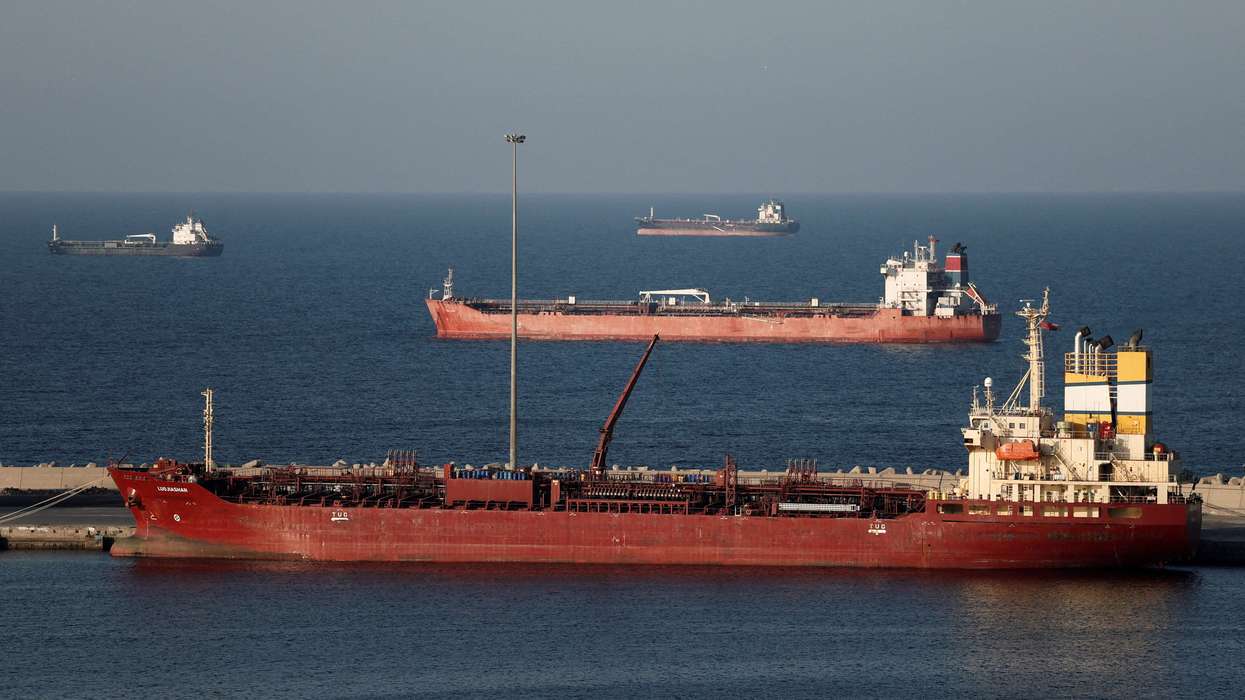
Iran has effectively blocked the Strait of Hormuz, which carries about 20 per cent of global oil and liquefied natural gas. The move has raised energy prices and affected financial markets.
The Islamic Revolutionary Guard Corps said shipping "to and from ports of allies and supporters of the Israeli-American enemies" is prohibited.
It added that the Strait of Hormuz is closed and any transit through it will face "harsh measures".
ALSO READ: Britain to 'host summit on reopening Strait of Hormuz'
Three container ships were turned back from the strait after warnings from the IRGC navy.
The disruption has affected Gulf energy output and pushed up prices of oil, gas and nitrogen fertilisers used in food production.
Stock markets continued to fall, while Brent crude stood around $110, rising more than 50 per cent since the war began.
"Many see the Iranian regime as holding the upper hand and doubt that there are indeed productive negotiations with the US in process," said ITC Markets senior FX analyst Sean Callow.
The United Arab Emirates has told the US and other Western allies it would join a multinational maritime taskforce to reopen the strait, the Financial Times reported.
Several US allies said they have no immediate plans to send ships.
On the ground, strikes and attacks continued across the region.
In Iran, strikes on three buildings in Qom killed at least six people. In Tehran, rescue workers pulled a survivor from rubble.
In Urumia, a missile strike on a housing complex killed and injured civilians.
Israel’s military said it struck Iran’s main facility for producing missiles and sea mines in Yazd.
It also said it carried out "a wide-scale wave of strikes targeting infrastructure of the Iranian terror regime in the heart of Tehran".
Iran’s Revolutionary Guards said they carried out missile and drone strikes targeting sites in Israel and military facilities in the Gulf used by US forces.
A maintenance facility for the US Patriot air defence system in Bahrain was targeted.
In Kermanshah, the IRGC said it arrested a three-member cell linked to Israel’s Mossad that had planned attacks on sensitive sites and military personnel.
ALSO READ: Narendra Modi & Donald Trump talk Hormuz crisis
In Isfahan, more than 15 people were arrested for allegedly working with foreign-based Iran International and Manoto TV networks.
State TV said they were accused of sending images of bombing sites and military positions to enemy forces.
Across the region, further developments were reported.
Kuwait’s Shuwaikh port was damaged in a drone attack, with no casualties reported.
Iran warned that hotels housing US soldiers would be targets.
"When all the Americans (forces) go into a hotel, then from our perspective that hotel becomes American," armed forces spokesman Abolfazl Shekarchi said.
Saudi Arabia said it intercepted and destroyed four drones over its eastern region.
Lebanese media reported Israeli strikes in Beirut’s southern suburbs, with explosions heard in the area.
The United Nations Security Council is set to hold closed-door consultations following a request by Russia.
Japan plans to lift restrictions on coal-fired power plants for a year starting April to address the energy shortage.
India has reduced taxes on diesel and petrol by 10 rupees per litre as it deals with rising energy costs.
US Secretary of State Marco Rubio attended a meeting of G7 foreign ministers in France and said reopening the Strait of Hormuz was in the "interest" of all G7 nations.
(With inputs from agencies)