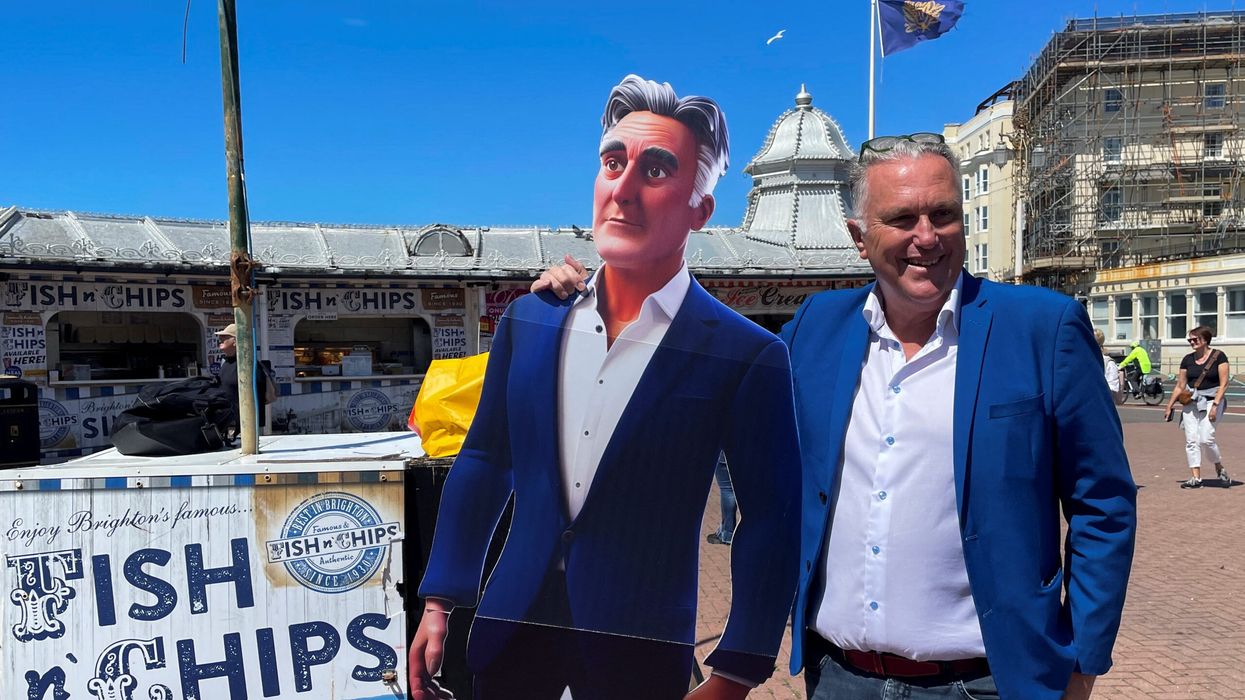

WHEN voters go to the polls in one English town next month they will get the chance to elect what is being billed as the world's first AI lawmaker.
Businessman Steve Endacott is among hundreds of candidates standing to become a member of parliament at Britain's July 4 national election - except unlike the others, the face on his campaign leaflet is not the 59-year-old, but an AI generated avatar.
"We're launching a party, we're going to be recruiting more AI candidates across the country after this election, and we see this as the launch, building block for something big and something democratic," he said.
Endacott, whose Neural Voice company powers his AI alter ego, said his frustration with "standard politics" made him decide to run as an independent for the Brighton Pavilion constituency in the southern seaside town.
"AI Steve" - the name that will appear on ballot papers - engages real-time with locals on topics ranging from LGBTQ rights and housing to bin collection and immigration. It then puts forward policy ideas before asking for their suggestions.
"We're using AI in so many (areas), at work, social interactions, why don't we put it in politics?" said charity worker Eona Johnston, 23, after meeting "AI Steve" near Brighton’s famous pier. "It might change the way we live."
When asked about AI Steve, the Electoral Commission, the elections watchdog, said if he wins, Endacott would be the member of parliament (MP), not any AI version of him.
Most locals appeared reluctant to vote for an AI candidate just yet.
Jim Cheek, a 37-year old accountant from Brighton, pointed out that an MP has to speak up for constituents in parliament.
"AI and politicians have the one thing in common," another local resident, Andy Clawson, 42, said. "They can’t be trusted."
(Reuters)