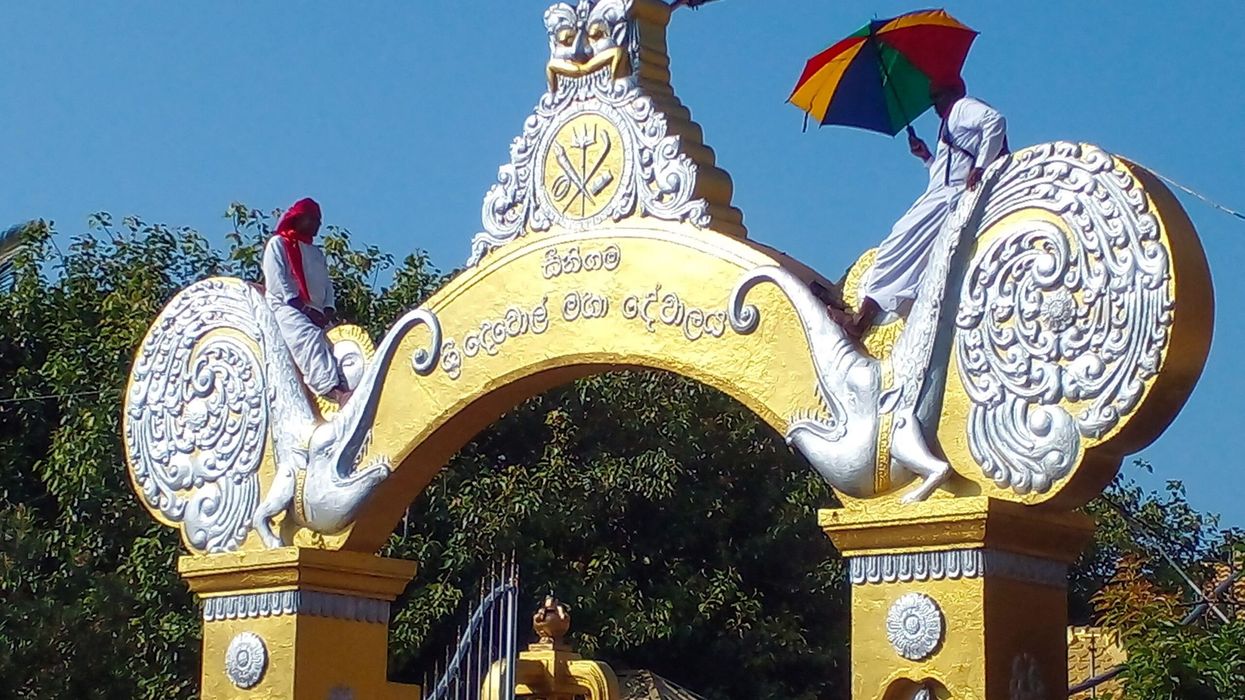

SHAMANS at a Sri Lankan temple known for helping pilgrims place curses on their enemies went on strike last Thursday (26) after appeals to the lord of destruction failed to resolve a pay dispute.
Seenigama Devale, a shrine on a small islet off Sri Lanka’s southern coast, hosts daily ceremonies in which celebrants guide the grinding of fiery peppers over a millstone. The ritual offering is made to Devol, a deity whose duties involve comforting the faithful and unleashing suffering on their enemies.
But DM Kumara, the temple’s chief shaman, said he and his nine colleagues had halted the ceremonies to protest new rules that sharply cut their earnings. Administrators decreed that Kumara and his colleagues could now only take 30 per cent of the cash and jewellery offerings made to Devol, down from the complete share they took earlier.
All 10 shamans had appealed to the deity to intervene on their behalf, he said, adding that the strike was necessary in the interim. “We have taken our grievance to god Devol, but we are taking direct action because we have not seen immediate results,” he said.
The temple’s interim administrator said the strike was unnecessary because celebrants would still be earning around $1,500 (£1,234) per month, 10 times the average salary of a new employee in the state sector.