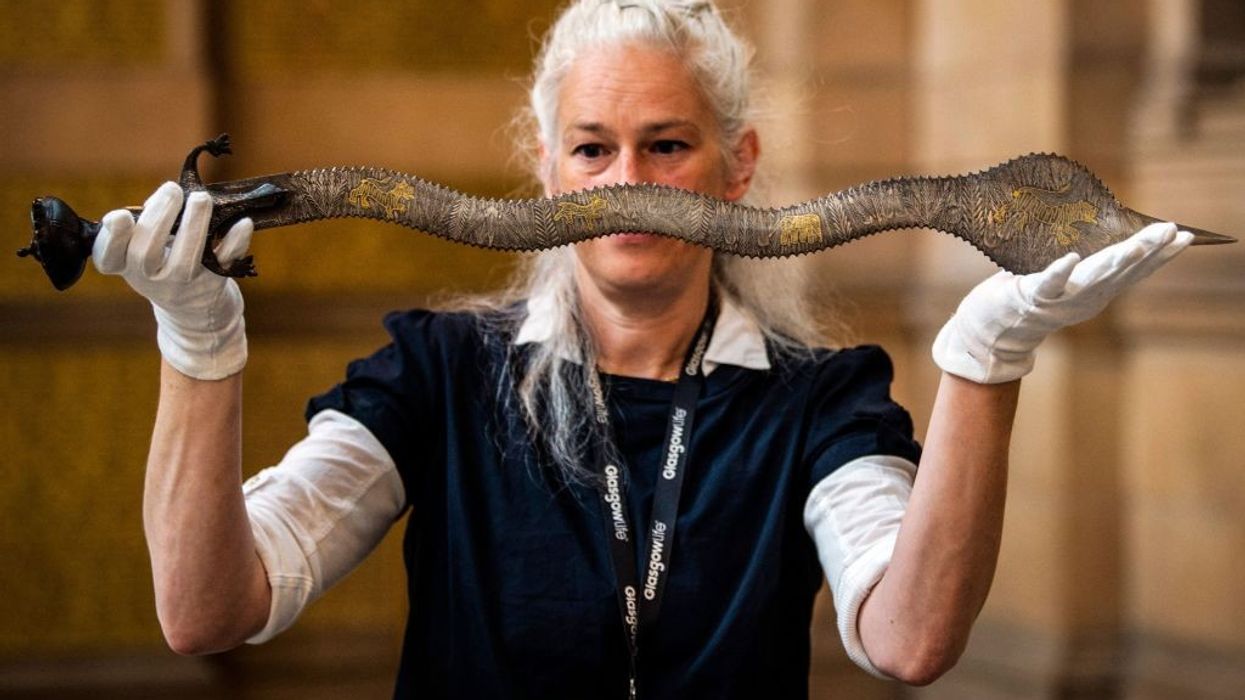

A Glasgow-based museum has signed a historic agreement with the Indian government to repatriate seven artefacts including a 14th-century Indo-Persian sword, a first such move by the UK museums service.
The transfer of ownership took place in the presence of the Indian High Commission officials on Friday, according to the Glasgow Life Museums statement. Following the meeting at Kelvingrove Art Gallery and Museum, the Government of India and Archaeological Survey of India delegates were given the opportunity to view the objects at Glasgow Museums Resource Centre, where they are safely stored.
The transfer of ownership ceremony took place after Glasgow City Council's City Administration Committee approved a recommendation made in April by the cross-party Working Group for Repatriation and Spoliation to return 51 items to India, Nigeria and the Cheyenne River and Pine Ridge Lakota Sioux tribes in South Dakota, US.
"Glasgow Life Museums has been working on the repatriation of the Indian artefacts, alongside the High Commission of India in London, since January 2021. The antiquities include a ceremonial Indo-Persian tulwar (sword) which is believed to date back to the 14th century and an 11th-century carved stone door jamb taken from a Hindu temple in Kanpur," the statement said.
Six of the objects were removed from temples and shrines in different states in Northern India during the 19th century, while the seventh was purchased following a theft from the owner. All seven artefacts were gifted to Glasgow's collections.
Bailie Annette Christie, Chair of Glasgow Life and Convenor for Culture, Sport and International Relations for Glasgow City Council, said: "The repatriation of these objects is of great historical and cultural importance to both Glasgow and India, so it's a privilege to welcome Indian dignitaries to our city for such a momentous occasion."
Delighted by the signing of the agreement, Sujit Ghosh, India's Acting High Commissioner, said these artefacts are an integral part of India's civilisational heritage and will now be sent back home.
"We express our appreciation to all the stakeholders who made this possible, especially Glasgow Life and Glasgow City Council," he said.
(ANI)



