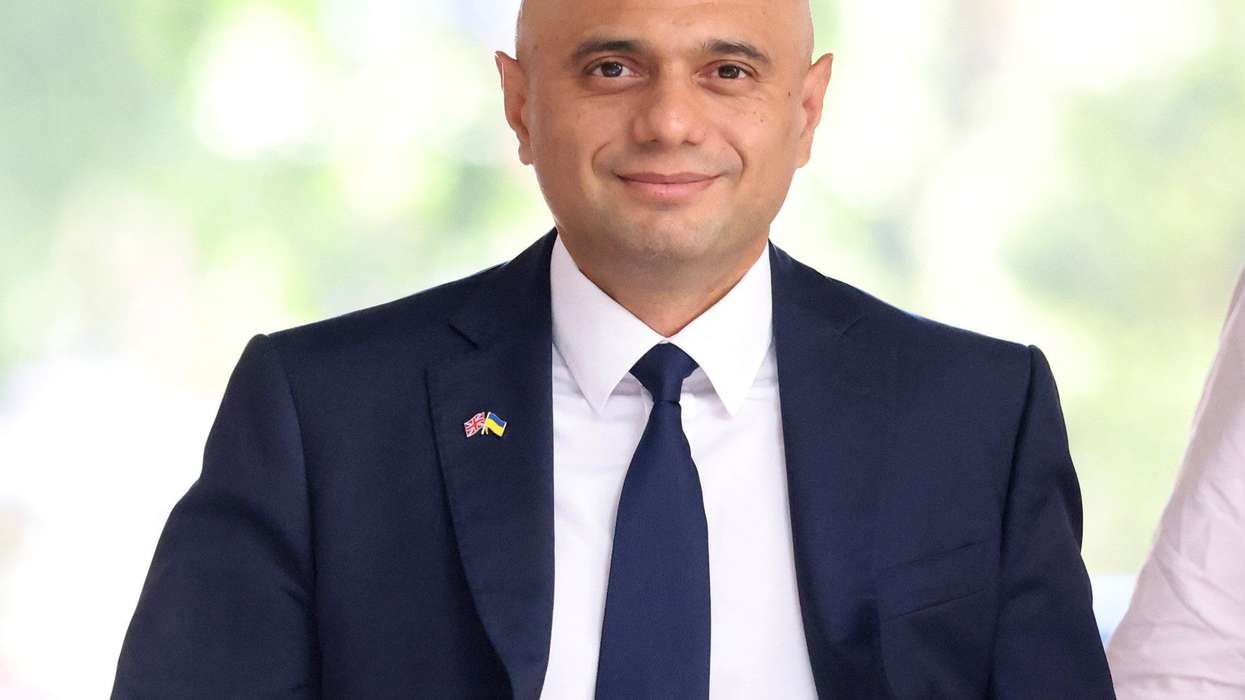

THERE are some, especially within the upper echelons of the Conservative Party, who believe Sajid Javid, and not Rishi Sunak, could have become Britain’s first South Asian-origin prime minister.
Javid, an ex-health secretary in the Conservative Party government, has been more in the news more recently, for calling for a new hybrid model of the NHS, where patients would pay for some services.
He has also announced his intention to stand down following the next General Election but will continue to serve the constituents of his Bromsgrove, West Midlands as an MP for the last time. The next General Election must be held by January 2025.
Javid was also most prominently in the news when it was announced that Shamima Begum’s bid to have her UK citizenship returned to her had failed.
“This is a complex case but home secretaries should have the power to prevent anyone entering our country, who is assessed to pose a threat to it,” Javid tweeted on the morning that the Special Immigration Appeals Commission had adjudicated on Begum’s case in late February.
It was Javid, who as home secretary, had originally stripped her of UK citizenship in 2019 on the grounds of her being a perceived threat to national security.
Begum, now 23, had travelled to a part of Syria, then controlled by the violent fundamentalist group, Islamic State (IS), to help and support the extremist organisation, in February 2015.
Just 15 at the time, and with two other female schoolfriends from Bethnal Green in east London, they had been married off to IS fighters and Begum now argues she was a victim of sex trafficking and her case should be considered as such. Her two friends died in the war that saw IS being defeated and Begum now lives in a refugee camp in Syria.
Javid hit the headlines earlier, when he said it was about time the NHS was run along a mixed hybrid model of both public provision and private fee payments and be based on a person’s ability to pay for care.
Those with little to no income would still get free care but anyone else would have to pay and that would be determined by a sliding scale of payments. He suggested that a visit to A&E without a further referral might cost about £66, while a consultation with your GP, could be about £20.
He believes that the NHS cannot survive in its present mode.
“The current state of affairs cannot continue in terms of the funding of it. It’s completely unsustainable,” he told the Andrew Marr show on LBC radio at the end of January this year.
Javid has argued that he wants a more European and contributory system in place with the NHS.
“If you look at virtually every universal healthcare system doing a reasonably good job, they have some element of contribution beyond general taxation, at a much higher level than we currently do or in a much wider way,” he outlined.
While the debate might be welcome, few have warmed to the idea and politically there isn’t much traction, from the degree of scepticism that followed his pronouncements, even in some media that might have been considered sympathetic.
Nevertheless, astute politicians also know that only by putting radical ideas - into the public domain – can you begin to shift opinions.
In December last year, he tweeted that he had decided to draw a curtain on his frontline political career.
“After much reflection I have decided that I will not be standing again at the next General Election.
“Serving as Member of Parliament for Bromsgrove remains an incredible privilege and I will continue to support the Government and the causes I believe in,” he said on December 2.
A looming deadline for Conservative MPs to announce their intentions ahead of the next election and boundary changes had “accelerated” his decision making.
It was the Financial Times (FT) that first reported that he he held talks with investment house, Pimco, about what he might do following standing down.
A spokesperson for Javid told the FT that “he continued to have strong relationships in business, finance and other sectors”.
But he had not made any firm decisions and he was very much exploring “what the next phase of his career will involve”, explained the spokesperson.
There’s little doubt that he was a big-hitter and could have perhaps steered himself into the position that Sunak enjoys today.
He comes from exactly the same wing of the party – but he would probably argue that it is Sunak who has stepped away from the tax-cutting, small government agenda he and other Tories like him, really favour.
Their personal relationship has cooled – the protégé probably no longer looks up to Javid or considers him a serious political ally any more but did express some disappointment about Javid’s decision to leave politics.
At one time, they enjoyed one of the best and most friendly of working relationships in Westminster.
Javid was Boris Johnson’s first Chancellor of the Exchequer, when he took office in December 2019, while Sunak was promoted to chief secretary to the Treasury at the time and essentially was the government’s second most powerful finance minister.
The two share a similar professional background – having worked in high finance and investment banking.
Javid enjoyed nearly 20 years in the City, in a wide variety of roles and was regarded as high-flier. Sunak had worked in investment banking both in the UK and in California before heading into the Commons in 2015.
Javid had stints in New York and Singapore and amassed a personal fortune. It was reported that his last position at Deutsche Bank came with a £3 million a year salary – so walking away from that shows how ambitious and politically charged Javid was when he won the election for his constituency and entered parliament in 2010 and his salary fell substantially.
Sunak had saluted Javid when he made the announcement that he was standing down, tweeting: “Sad to see my good friend @sajidjavid stepping back from politics”.
For his part, Javid had written to his local constituency chairman and former Wolverhampton MP, Paul Uppal, in a letter made public, that his decision to stand down would “not mark the end of my parliamentary activity, particularly for the causes I care deeply about. Nor will it impact my duties as a local MP on behalf of constituents across Bromsgrove.”
In some ways, he is the nearly man of British politics, a good communicator and able administrator from all accounts, he had the charm, intelligence and drive to match anyone in frontline politics. He was a reassuring figure as health secretary during the Covid crisis, especially in contrast to Johnson and Matt Hancock, who resigned after his affair with an aide was exposed and his lack of consideration Covid regulations. In the end it was only for a year and Javid was unable to address the waiting backlog or the pay and conditions disputes that dominate today.
Widely experienced, he held posts as health secretary, home secretary, and headed up departments at culture and business, as well under David Cameron, when he was prime minister between 2010-2016.
Aged just 53, he remains a recognised figure in national politics and could yet play a part in ideas surrounding NHS reform.