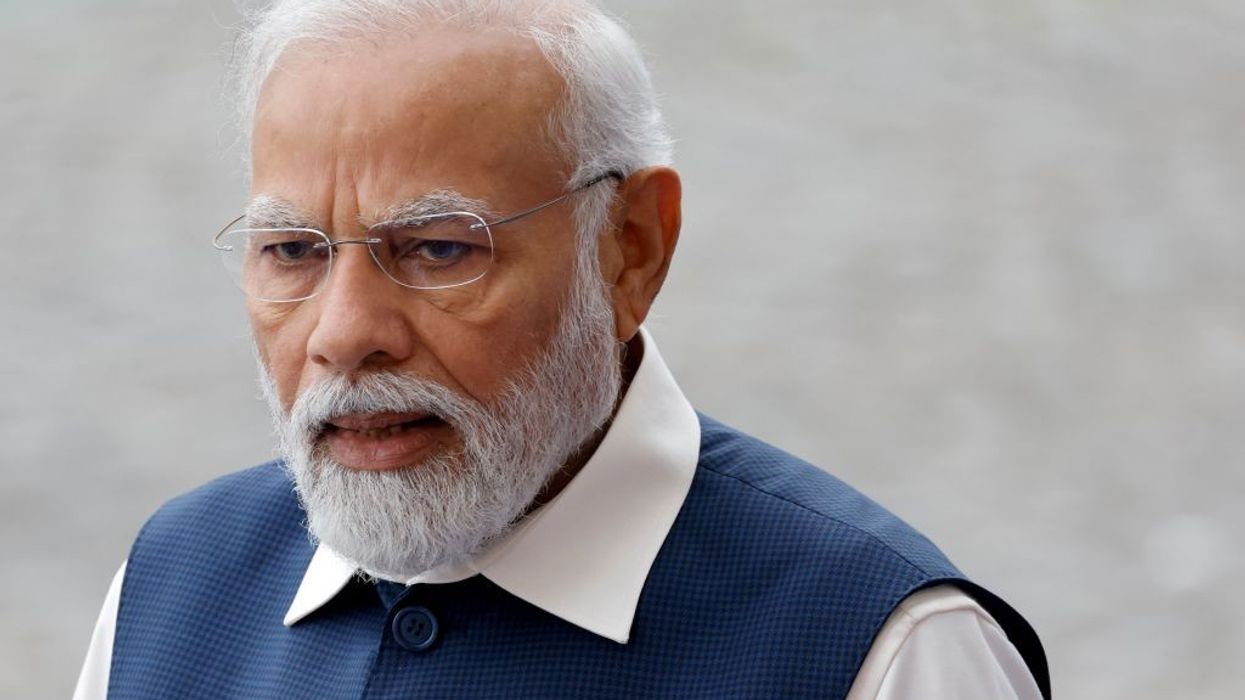
PRIME minister Narendra Modi has said the perception of India has changed as the country prepares to host world leaders at the G20 summit this weekend.
In an interview with the Press Trust of India news agency, Modi also called on the United Nations to reform in line with 21st century realities.
“For a long time, India was perceived as a nation of over one billion hungry stomachs. But now, India is being seen as a nation of over one billion aspirational minds, more than two billion skilled hands, and hundreds of millions of young people,” the prime minister said last Sunday (3).
“We are not only the most populous country in the world, but also the nation with the largest youth population. So, perspectives about India have changed.”
To a question about the influence of the UN, Modi said, “Institutions can retain relevance only when they change with the times. A mid-20th century approach cannot serve the world in the 21st century.
“So, our international institutions need to recognise changing realities, expand their decision-making forums, relook at their priorities and ensure representation of voices that matter.”
Modi is seeking to boost India's status and promote its causes, such as relief for unsustainable debt, using the global pulpit of the G20 summit starting Saturday (9).
The two-day summit will showcase India's highest-profile guest list ever, from US president Joe Biden to French president Emmanuel Macron, German chancellor Olaf Scholz and Saudi Crown Prince Mohammed bin Salman.
Modi said, "India's G20 presidency also sowed seeds of confidence in countries of so-called third world."
“The G20 has provided a platform for India to further its human-centric vision and also collaboratively work towards innovative solutions to problems that are faced by humanity as a whole.”
The prime minister also predicted India will be a developed country by 2047 – a century after it won independence.
India's $3.39 trillion GDP overtook that of the UK in the fiscal year ending March 31, 2022, making it the fifth-largest economy in the world behind the US, China, Japan and Germany.
Modi said as a developed nation, the Indian economy will be even more inclusive and innovative, poor people will comprehensively win the battle against poverty, and the nation's health, education and social sector outcomes will be among the best in the world.
"Corruption, casteism and communalism will have no place in our national life," the prime minister said.
"The quality of life of our people will be on par with the best countries of the world. Most importantly, we will achieve all of this while caring for both nature and culture.”
EY projects India's GDP to cross $5 trillion by 2028 to overtake both Japan and Germany. But the US economy is projected to still be nearly six times as large as the Indian economy.
Modi also reiterated his support in the interview for the African Union to become a full member of the G20 and called for global cooperation in fighting cyber crime, saying, "Terrorists using dark net, metaverse, cryptocurrency to fulfil nefarious aims can have implications for social fabric of nations."
Perception of India has changed: Modi
Indian prime minister urges the UN to reform in line with 21st century realities