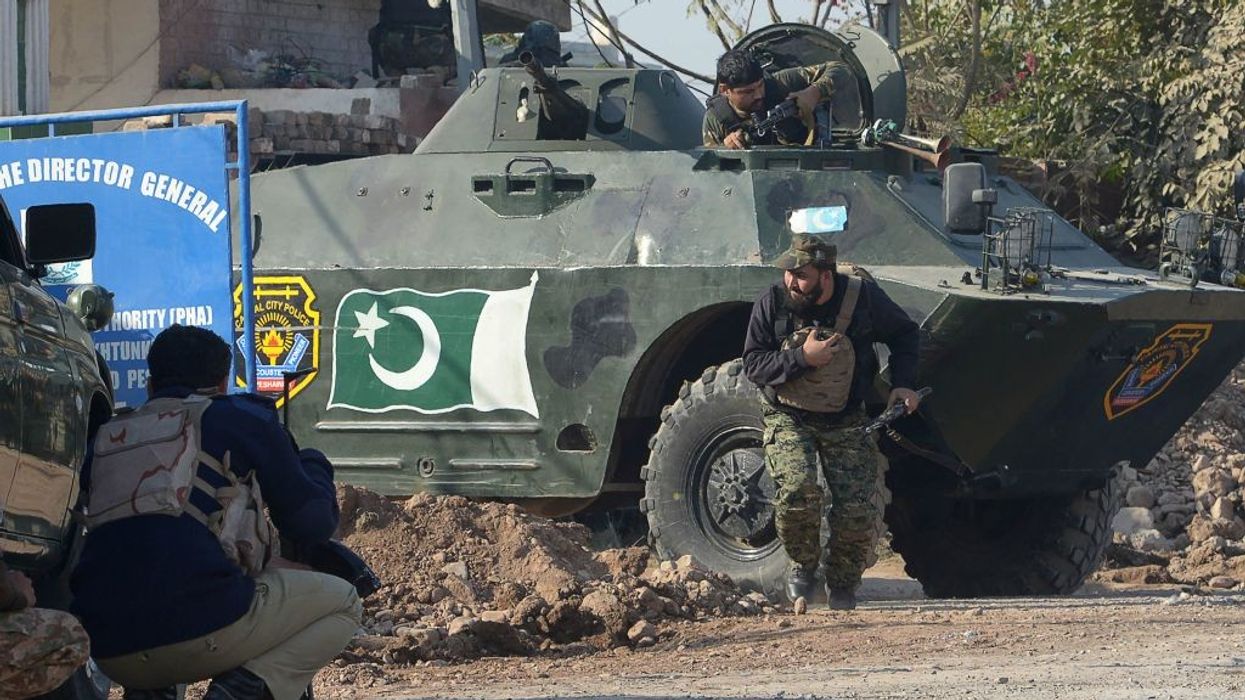

Pakistani security forces retook a counter-terrorism interrogation centre on Tuesday two days after it was seized by Islamist militants, security sources said, adding that all hostages, some slightly wounded, had been rescued.
Security forces were still looking to clear the compound, in the northwestern town of Bannu, after launching the operation to free the hostages from the Pakistani Taliban who snatched interrogators' weapons and took them captive on Sunday.
Six security officials and several detainees had been inside the centre, multiple sources told Reuters. They declined to be identified because they were not authorised to speak to the media.
"Good news is we successfully recovered all the hostages from the terrorists. Some of them are slightly injured but they are fine," one security official told Reuters, adding that some security personnel had also been wounded.
"The operation is being concluded and there is no more resistance ... the security forces have entered the compound," he said.
Initial reports said nine security force personnel had been wounded. The fate of the militants who had seized the compound was not immediately clear.
The military and the interior ministry did not immediately respond to requests for comment.
Security forces had surrounded the military district in which the centre is located, where about 20 fighters from the Pakistani Taliban, known as the Tehreek-e-Taliban Pakistan (TTP), were holed up.
"All options failed and the terrorists refused to free innocent people, so we decided to use force," a senior security official told Reuters earlier.
According to an update from another security official, the army's elite commando unit, the Special Service Group (SSG), had been called in to carry out the operation.
Residents said they heard explosions coming from the vicinity of the centre on Tuesday.
Pakistani authorities on Monday opened talks to try to resolve the stand-off.
The TTP are loosely allied with the Afghan Taliban.
The group emerged to fight the Pakistan state and enforce its own harsh brand of Islam in the years after the United States and its allies intervened in neighbouring Afghanistan to oust the Afghan Taliban in 2001 and drive them over the border into Pakistan.
The TTP has stepped up attacks since it announced the end of an Afghan Taliban-brokered ceasefire with the government last month.
According to a provincial government spokesman, the militants were demanding safe passage to Afghanistan.
A member of the Pakistani Taliban earlier told Reuters that the group's leadership had lost contact with their people in the compound.
"We are told that a military operation has started," he said.
(Reuters)