
PAKISTAN forces were searching for separatists behind coordinated attacks in Balochistan province after more than 190 people were killed over two days. The government said it would retaliate.
About a dozen sites remained sealed as troops combed areas a day after militants attacked banks, jails, police stations and military installations. At least 31 civilians and 17 security personnel were killed, according to the Balochistan chief minister.
He said at least 145 attackers were also killed, including more than 40 militants whom security forces said were killed on Friday.
Pakistan has faced a Baloch separatist insurgency for decades, with attacks on security forces, foreign nationals and non-local Pakistanis in the mineral-rich province bordering Afghanistan and Iran.
Mobile internet services across the province have been jammed for more than 24 hours. Road traffic is disrupted and train services are suspended.
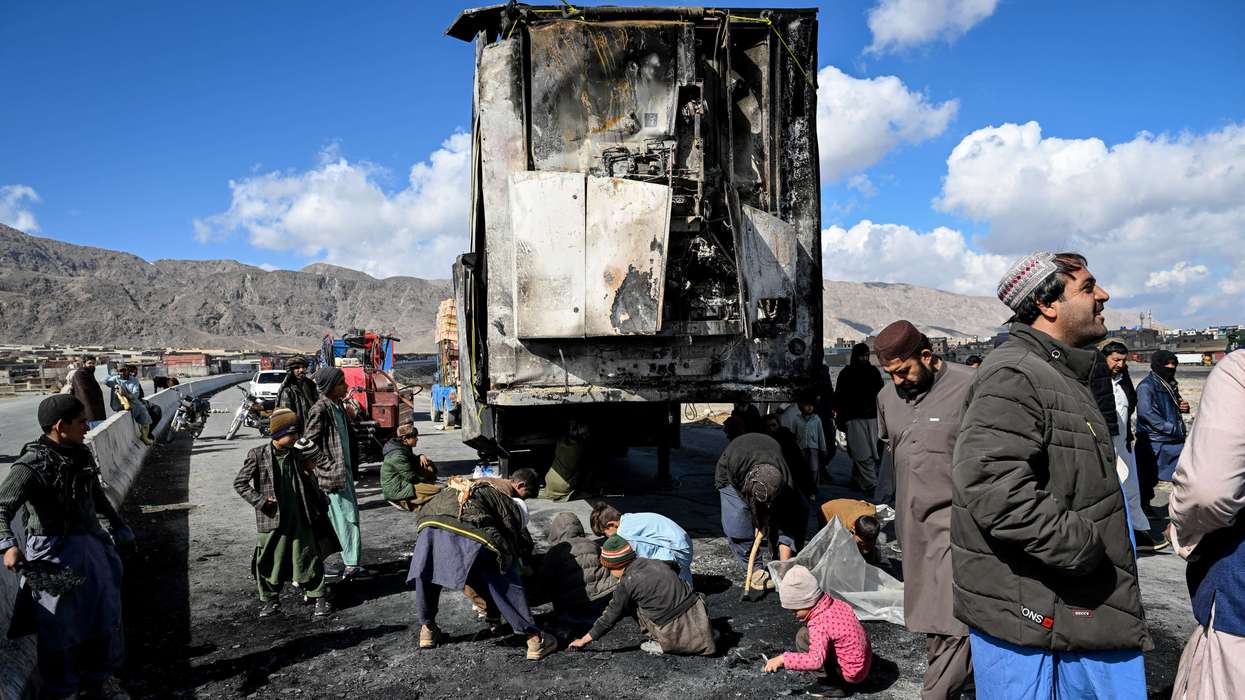
Quetta, the provincial capital, was quiet on Sunday after explosions, with major roads and businesses deserted as people stayed indoors.
Shattered metal fragments and damaged vehicles were seen on some roads.
"Anyone who leaves home has no certainty of returning safe and sound. There is constant fear over whether they will come back unharmed," Hamdullah, a 39-year-old shopkeeper who goes by one name, told AFP in Quetta.
'Our blood is not cheap' -
Chief Minister Sarfraz Bugti told a news conference in Quetta that all districts under attack were cleared on Sunday.
"We are chasing them, we will not let them go so easily," he said.
"Our blood is not that cheap. We will chase them until their hideouts."
The Baloch Liberation Army (BLA) claimed responsibility for the attacks in a statement sent to AFP.
The group, designated a terrorist organisation by the United States, said it targeted military installations, police and civil administration officials in gun attacks and suicide bombings.
Interior Minister Mohsin Naqvi, who flew to Quetta late on Saturday to attend funerals, said without offering evidence that the attackers were supported by India.
"We will not spare a single terrorist involved in these incidents," he said.
Defence Minister Khawaja Asif also said at a news conference on Sunday that the attackers had links to India and pledged to "completely eliminate these terrorists".
India denied any involvement.
"We categorically reject the baseless allegations made by Pakistan, which are nothing but its usual tactics to deflect attention from its own internal failings," foreign ministry spokesman Randhir Jaiswal said on Sunday.
'Broad daylight'
Saturday’s attacks followed a day after the military said it had killed 41 insurgents in two operations in the province.
The insurgents released a video showing group head Bashir Zaib leading armed units on motorcycles during the attack.
Another clip claimed to show the abduction of a senior official from Nushki district.
The BLA said in a statement to AFP on Sunday that the official had been released.
In another district, militants freed at least 30 inmates from a local jail, seized firearms and ammunition, ransacked a police station and took ammunition with them.
"It was one of the most audacious attacks in the region in recent years, as unlike other attacks, it took place in broad daylight," Abdul Basit at the S. Rajaratnam School of International Studies in Singapore told AFP.
"It is alarming that militants, with coordinated manpower and strategic acumen, have now reached the provincial capital," he added.
Several BLA videos showed women insurgents. Defence Minister Asif said at least one of the suicide bombers was a young woman.
"They continue to showcase women strategically in high-visibility attacks," Basit said.
Balochistan, Pakistan’s poorest province and largest by land area, lags behind other regions in education, employment and economic development.
Baloch separatists accuse the government of exploiting natural gas and mineral resources without benefiting local people.
The BLA has increased attacks on Pakistanis from other provinces working in the region, as well as on foreign energy firms.
Last year, separatists attacked a train carrying 450 passengers, leading to a two-day siege.
(With inputs from agencies)