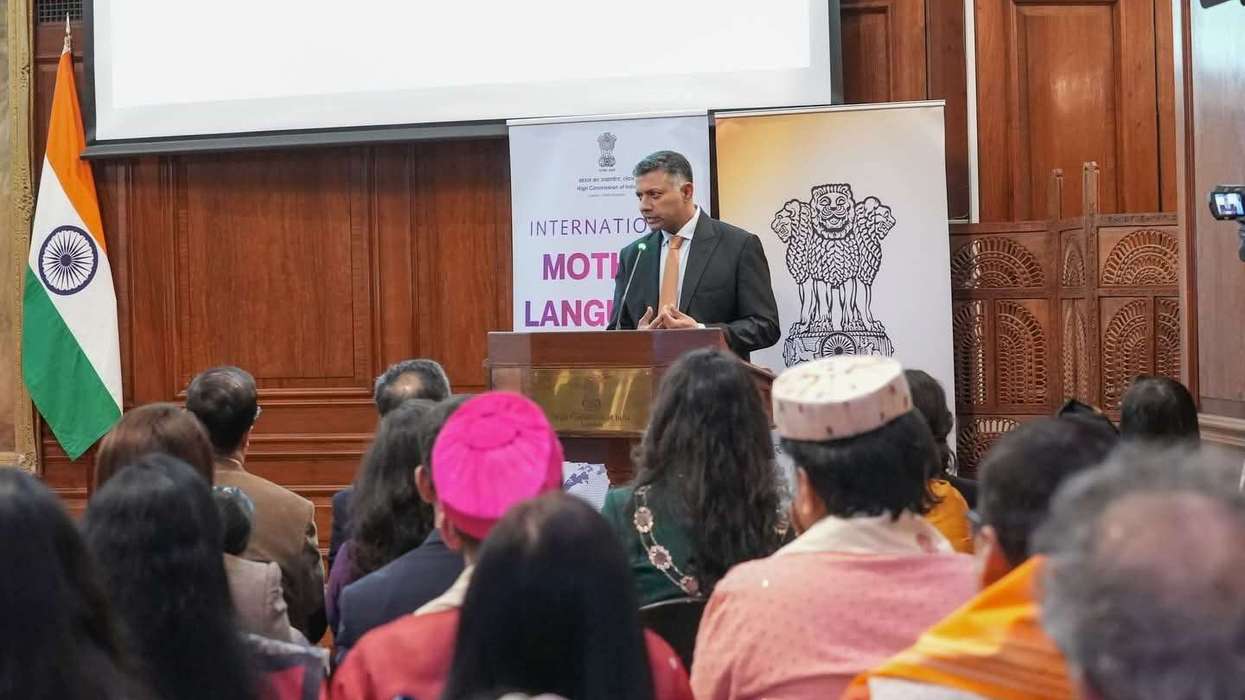

INDIA HOUSE in London observed International Mother Language Day last Friday (20) bringing together members of the Indian diaspora from across the country.
Cultural programmes featuring poetry in Bhojpuri, Sanskrit shlokas, folk music from Himachal Pradesh and Bihu dance from Assam were among highlights of the event.
The United Nations recognises February 21 each year as International Mother Language Day to promote multilingual education and its role in Sustainable Development Goals.
The event at the High Commission of India coincided with the foundation days of 10 Indian states – Arunachal Pradesh, Assam, Bihar, Himachal Pradesh, Manipur, Meghalaya, Mizoram, Rajasthan, Tripura and Uttar Pradesh.
Community leaders, professionals and students attended in traditional attire representing their home states.
High commissioner Vikram Doraiswami said India’s strength lay in how diversity was embedded across its states.
“When we celebrate all of that, including through our National Song Vande Mataram, we are celebrating India in its widest, most inclusive, most broad-based sense. There is no part of India in which our traditions, our cultures, our religions are not part of it, right down to the villages,” he said.
Dr MN Nandakumara, director of Bharatiya Vidya Bhavan UK, addressed the gathering in Kannada and recited Sanskrit shlokas, urging younger generations to remain connected to their language and roots. “There is no wealth which can be equated with wisdom, and language is a path to that wisdom,” he said.
Supriya Deshpande, cofounder of UK-based initiative GaMaBhaNa, spoke about her work offering free Marathi language classes and a Marathi library to preserve Maharashtrian culture among communities in the west.