
- Asian and European markets fall sharply amid Strait of Hormuz tensions
- Oil and gas prices surge, raising inflation concerns
- UK government calls emergency meeting as pressure builds
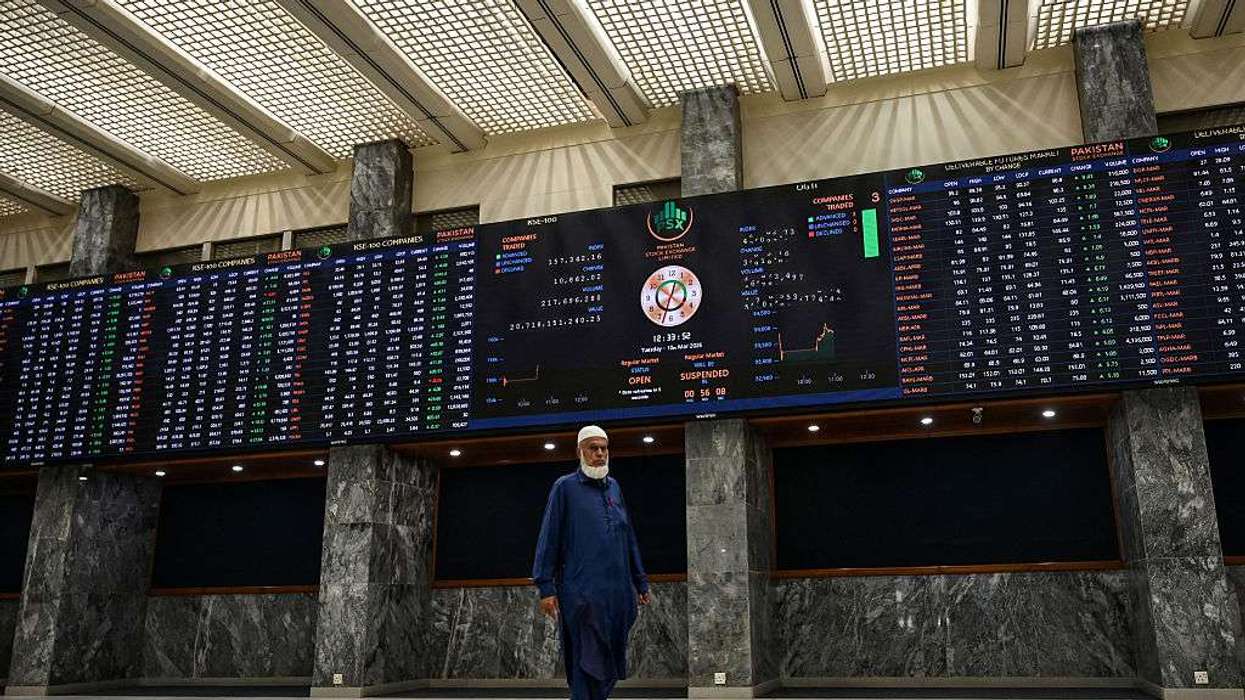
Global stock markets took a hit on March 23 as rising US–Iran tensions and fears over the Strait of Hormuz sent investors scrambling. The sell-off was felt across Asia and Europe, with energy supply concerns quickly spilling into financial markets.
In Asia, Japan’s Nikkei dropped 3.4 per cent, China’s CSI 300 fell 2.8 per cent, and South Korea’s Kospi slid 6.5 per cent. European markets followed the same direction. Spain’s Ibex lost 1.9 per cent, Germany’s Dax dropped 1.9 per cent, France’s CAC 40 slipped 1.5 per cent, and the FTSE 100 declined nearly 1.5 per cent.
The market reaction came after US President Donald Trump warned that Iran’s power infrastructure could be “obliterated” unless the Strait of Hormuz is reopened, reportedly said in a news report. The waterway is a key route for global energy trade, carrying roughly a fifth of the world’s oil and liquefied natural gas.
Iran, on its part, has warned of serious retaliation. Officials have said critical infrastructure across the Middle East could be targeted if the US follows through, as quoted in a news report.
Energy prices surge, inflation worries return
With the strait effectively blocked due to ongoing attacks, fears of a prolonged supply disruption are building. The International Energy Agency’s chief, Fatih Birol, reportedly said the situation could rival the oil shocks of the 1970s combined with the impact of Russia’s invasion of Ukraine.
Oil prices have already reacted. Brent crude rose to about £89 per barrel ($113.34), while earlier in the month it had surged as high as around £156 ($199). Goldman Sachs now expects oil to average about £67 ($85) per barrel this year, up from earlier forecasts of roughly £61 ($77).
Gas markets are also tightening. UK month-ahead gas prices climbed 3.1 per cent to 155p per therm, nearly double the levels seen before the conflict began.
The spike in energy costs is adding to inflation concerns, which in turn is unsettling investors. Gold prices dropped 5.8 per cent to around £3,340 ($4,226.16) an ounce, as expectations grow that central banks may keep interest rates higher for longer.
Pressure builds on UK government response
The situation is now feeding into domestic concerns in the UK. Prime Minister Keir Starmer is set to chair an emergency Cobra meeting on March 23 alongside senior ministers and Bank of England governor Andrew Bailey. Discussions are expected to focus on energy security, supply chains and the broader economic fallout, according to a Treasury statement.
Rising energy costs are also likely to hit households. Bills could increase by around 20 per cent when the current price cap ends in June, adding pressure on the government to step in with support measures.
Meanwhile, attention is turning to the bond market. The UK’s 10-year yield, a key measure of borrowing costs, recently touched 5 per cent for the first time since the 2008 financial crisis. This came after the Bank of England held interest rates steady at 3.75 per cent.
The US dollar edged up 0.2 per cent, reflecting its usual role as a safer asset during uncertain times, though movements remained relatively modest compared to the wider market volatility.