
It took the Green Party half a century to win their first ever Westminster by-election last week. Their breakthrough will elevate Zack Polanski’s insurgency on the left to a major plotline in the “Westenders” soap opera. It will be for a later episode to reveal if this was curtains for Keir Starmer’s premiership too. Can he find the main character presence to carry the show?
Ministers and backbenchers await the voter returns from May’s elections across England, Scotland and Wales before deciding what to do. But Labour’s third place in Greater Manchester reinforces expectations of a Spring bloodbath for the reds. Trailing both the Greens and Reform dramatises the political dilemmas for a governing party which has shed half of its public support within two years in all directions at once.
The aftermath of the by-election revealed much about this volatile political era - and how ethnic minority participation is talked about.
Reform had hoped to win - but their 29% vote share fell short of the third of the vote that Reform needed to hope they might gain from a split progressive vote. Ultimately, the Reform campaign was too narrow: in a constituency where six out of ten voters were white, they focused on one-third of the constituency, in white working-class areas, struggling to appeal across generational and educational as well as ethnic lines.
The Greens and Reform won about a third of white British voters each - with starkly contrasting appeal by age and education. The Greens had a winning coalition of 15,000 votes because they won both white and Asian voters. About a third of Asian voters chose other parties. Media discourse about ethnic minority voting struggles to grasp the foundational point that community “bloc voting” has never been weaker: there is now a more fragmented and contested voting pattern across ethnic minorities in general - including Muslims in particular - than ever before.
Local politics can be a bruising contact sport. The parties traded accusations of extremism and dirty tricks. Misleading leaflets became a local cottage industry. The Greens defended campaigning in Urdu as a way of reaching voters, but were criticised for an image of Starmer with Indian prime minister Narendra Modi. Criticising the UK government for failing to challenge Trump’s America, Netanyahu’s Israel, Modi’s India, the Chinese government, or others, is a legitimate, contested political argument. But that policy argument should be made explicitly, not merely by visual association.
Labour’s criticism of the Green leaflet underlined how short-sighted it had been of Starmer’s Labour Party to produce an almost identical image of Boris Johnson with Modi in their Batley by-election campaign in 2021. Parties should only seek votes from any group in the electorate with messages they would be happy for everybody else to see.
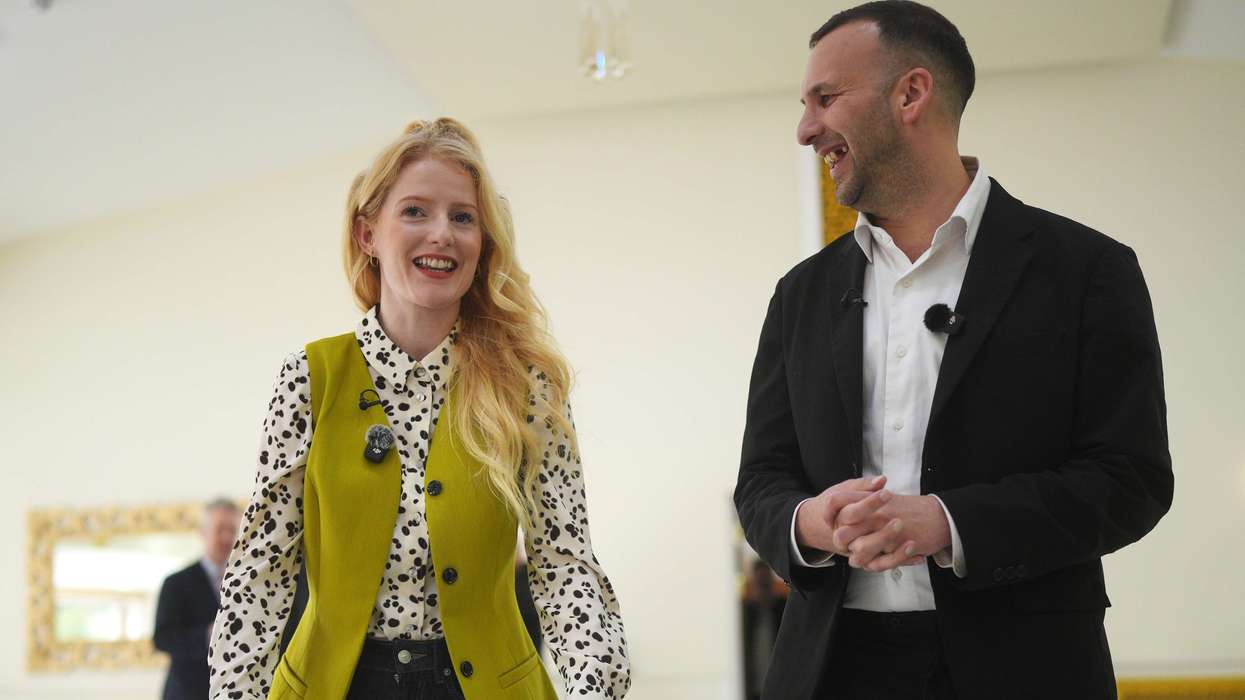
George Galloway had pulled his candidate out of the election to not split the Green vote. But nobody but the most hyper partisan could have heard the softly unifying victory speech of Hannah Spencer, the plumber turned politician, about solidarity across communities and working-class pride and mistaken her for a mini-Galloway. So, it felt tin-eared of Starmer to say that the Gorton and Denton voters had elected an MP who would divide more than unite.
Electoral integrity should be taken seriously. But Farage’s parties fail to do that. For over a decade, and back to Ukip’s defeat in Oldham in 2015, they react to every defeat in any constituency with a visible Asian population, by talking loudly in the media about voter fraud, before quietly deciding they have no actual evidence to put to the election court. This recurring Trumpian tribute act is an exercise in sectarian identity politics: this intended message is that Asian voters should not count.
On Sunday morning, Farage declared the election had been “stolen” - because eligible foreign-born voters had taken part. His maths doesn’t add up. A fifth of the constituency was born abroad - and the Greens would have won a narrower majority without these valid votes. Farage pretended to have only recently discovered that Commonwealth nationals could vote - pledging to disenfranchise them. Since Zia Yusuf’s mass deportation plans mostly target Commonwealth migrants. There may be some logic in Reform wanting to disenfranchise the voters who they want to deport en masse. But Reform cannot execute their “deport and disenfranchise” policy before a general election in which their targets have a voice and a vote too.
This was the first by-election for four decades where as many voters turned up as when they had been electing a government. Reform can take much of the credit for that - for the double-edged reason, that how to stop Reform now motivates more voters than how to elect them. That lesson from this defeat in diverse Manchester, replicating that in the 99% white Welsh constituency of Caerphilly, is one Reform seems to be determined not to learn.