
ON 'GivingTuesday', 3 December 2024, UK-based charity Lepra is focusing on its annual ‘Giving Shoesday’ campaign. The initiative provides protective footwear for people affected by leprosy and lymphatic filariasis (LF).
GivingTuesday, observed on the Tuesday following Thanksgiving in the United States, is described as a "global generosity movement" aimed at making a positive impact in communities around the world.
Leprosy causes nerve damage that leaves individuals unable to feel pain, making them vulnerable to injuries that can result in permanent disabilities. LF can cause severe swelling in the legs and feet, making standard shoes unusable.
Lepra’s custom-made footwear helps prevent injuries, improves mobility, and reduces stigma associated with these conditions.
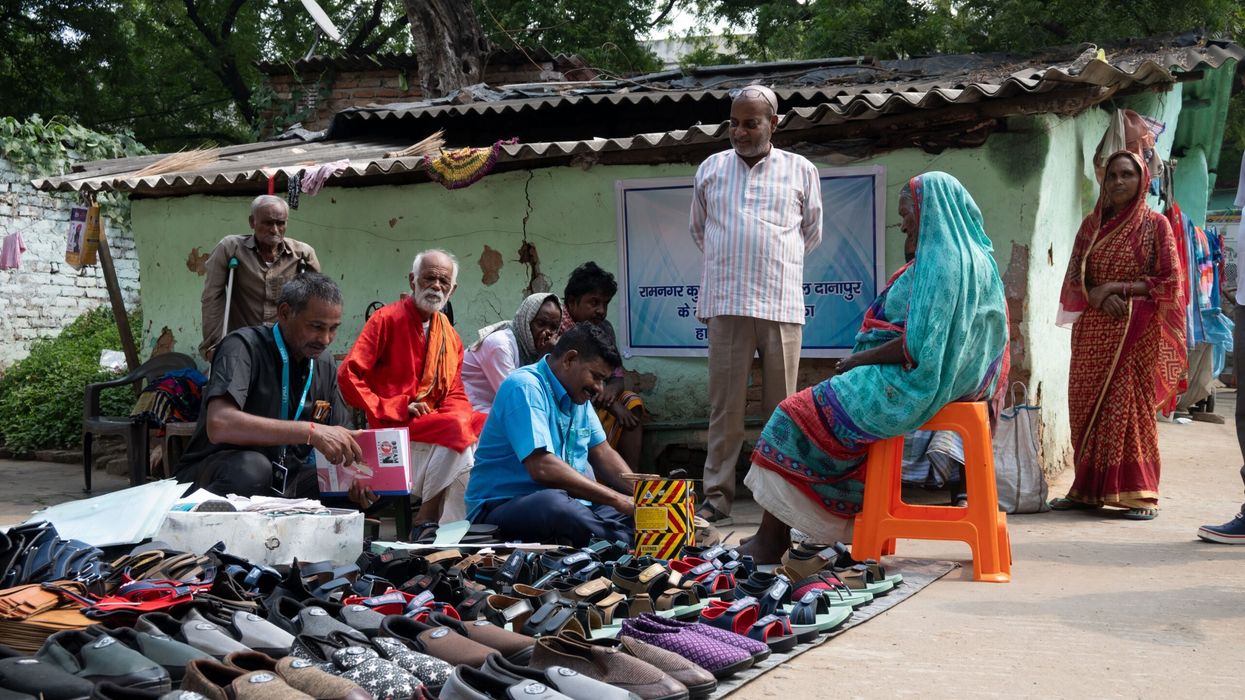
In October, Lepra’s corporate partnerships manager, Matt Lovelock, visited Bihar to witness the impact of these donations. At the Ramanager Leprosy settlement, he met Malti, a 60-year-old widow whose late diagnosis led to severe disabilities.
"Without protective shoes, walking is painful and dangerous for Malti. But now, thanks to Lepra’s custom-made shoes, she can walk comfortably, perform daily tasks, and even venture to the market without fear of injury or judgment. Seeing the joy on her face as she tried on her new closed-toe shoes is something I’ll never forget," Lovelock said.
The closed-toe shoes provided by Lepra not only protect individuals like Malti from injuries but also restore their confidence to move freely in public spaces.
Last year, Lepra’s Giving Shoesday Appeal funded the distribution of nearly 30,000 pairs of protective footwear, costing £6.50 per pair.