
Highlights:
- Started sitar at 16, after growing up surrounded by music at home.
- Learned both Indian guru–shishya tradition and Western conservatoire methods.
- Writing ragas in Western notation is tricky because of micro-slides and phrasing.
- Works with non-South Asian musicians by giving notes and showing the logic of ragas.
- Every piece, for him, is about balancing Indian and Western musical worlds.
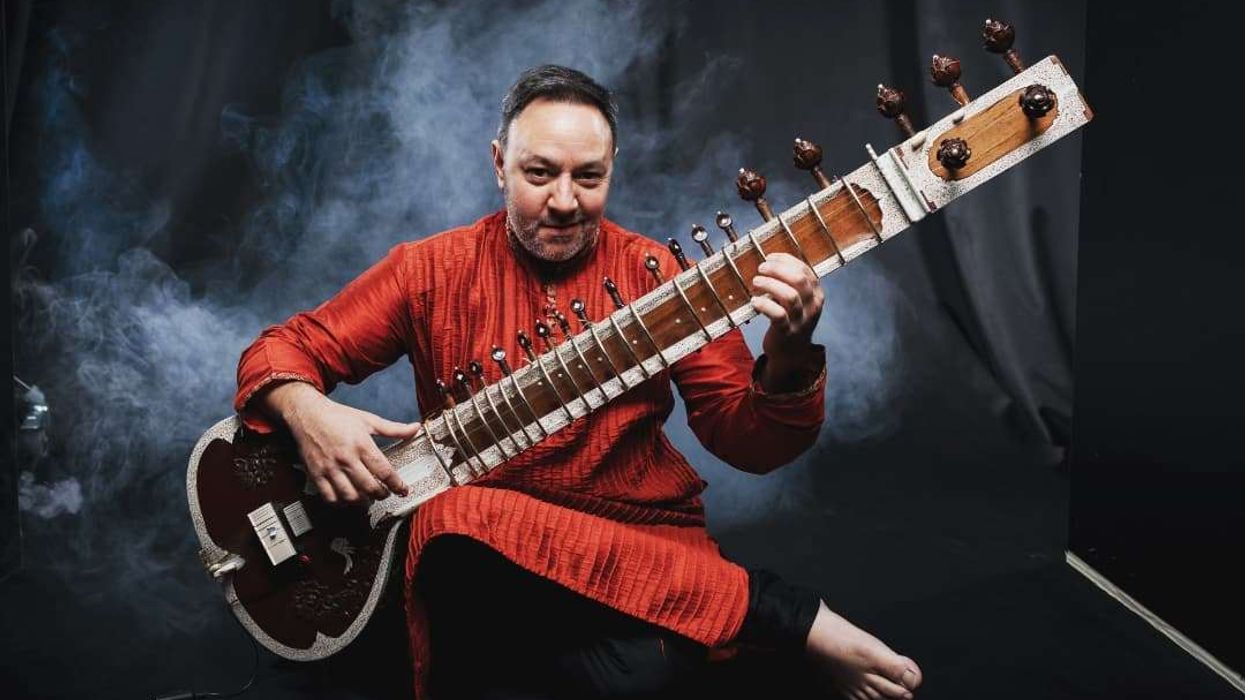
Jonathan Mayer says he started with the sitar at 16, after growing up in a home filled with music. “My father was a composer from Kolkata. My mother was a piano player. My grandfather was a violinist on my mum’s side,” he explains. From an early age, he learned violin and piano, and the sound of the sitar was always around him through his father’s work. But his own path wasn’t automatic. Mayer says the sitar became his voice only when he realised he could build an identity that wasn’t just an extension of his father’s work.
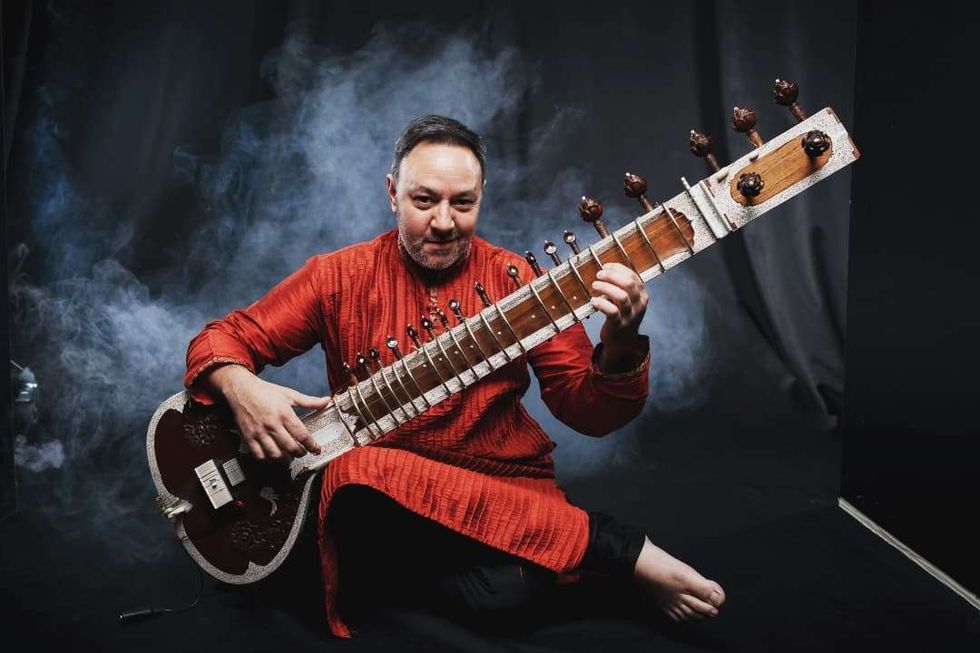 Jonathan Mayer on the sitar and beyond Instagram/the_sitarist/ @sat_sim
Dual training, two languages of music
Today, he is balancing several roles: composer, performer, director of ZerOclassikal, and someone who regularly moves between Indian classical thinking and Western orchestral structures. That dual training shapes almost every project he takes on. Mayer studied in the guru–shishya tradition, where music is absorbed through memory, repetition, and trust, but he also trained formally in the Western conservatoire system. He describes it as two different ways of building the same house, and he switches methods depending on what the work demands.
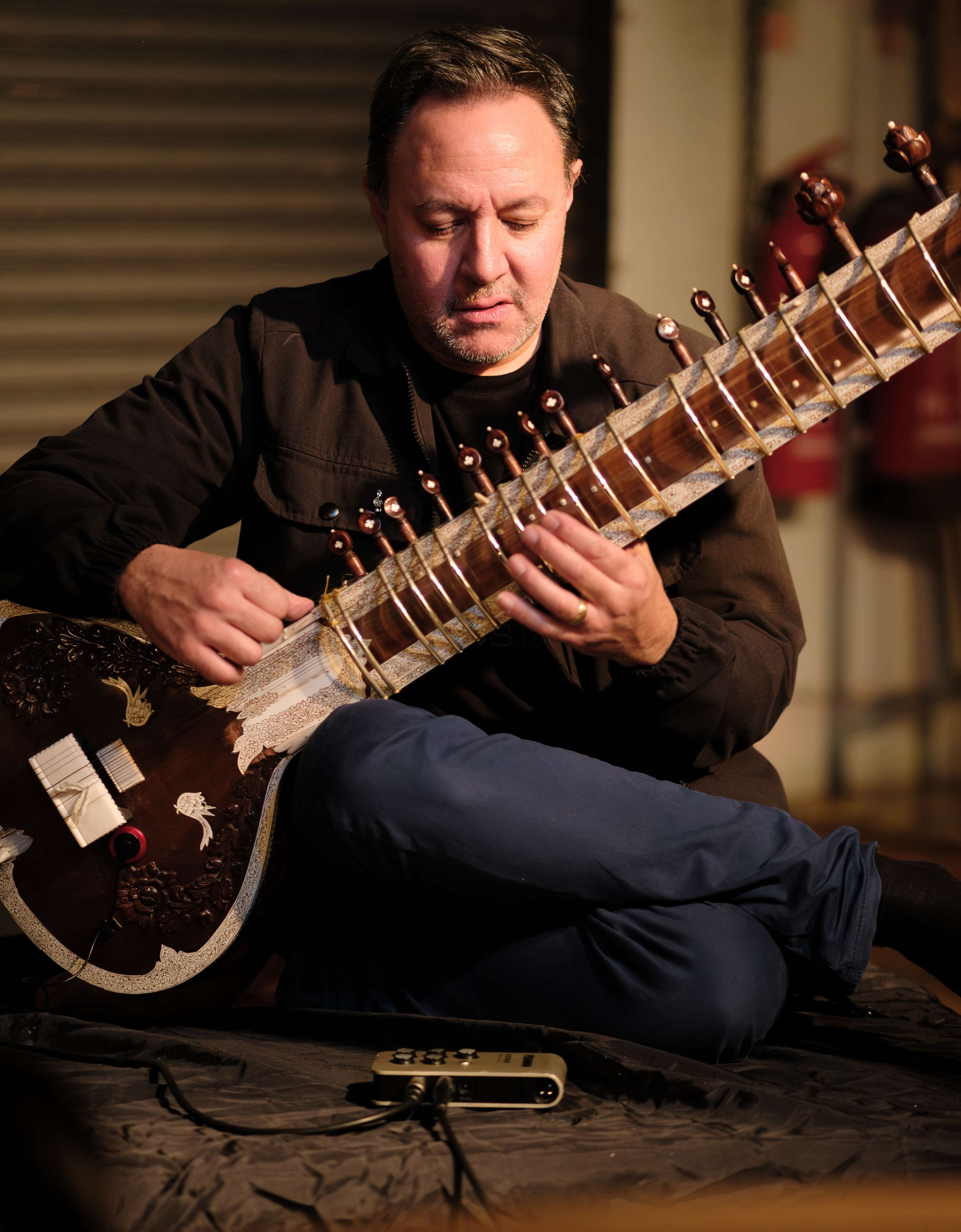 Redefining Indian classical music with Jonathan Mayer Akil Wilson
Translating ragas into Western notation
This tension becomes clearest when he sits down to write ragas into Western notation. In the interview, he laughs slightly before answering, calling it “a great question”, and then breaks down a challenge he faces almost daily. The problem isn’t the melody itself but the details around it like the micro-slides, the bends and the weight of a phrase. Western notation simply was not built to hold these movements. Mayer often resorts to symbols, instructions on the score, or a long rehearsal process to make musicians feel the shape of a raga rather than read it literally.
Raga Music for Western Instruments
His project Raga Music for Western Instruments came out of this space. While working with Western players, he realised that the first barrier is rarely technical. It is cultural. Many musicians are unsure how much freedom they are allowed inside a raga. Once they understand it isn’t rigid, and that the phrasing has a logic of its own, they begin to find their way in. Mayer says the breakthrough usually comes when they stop worrying about correctness and start listening to the movement of each phrase.
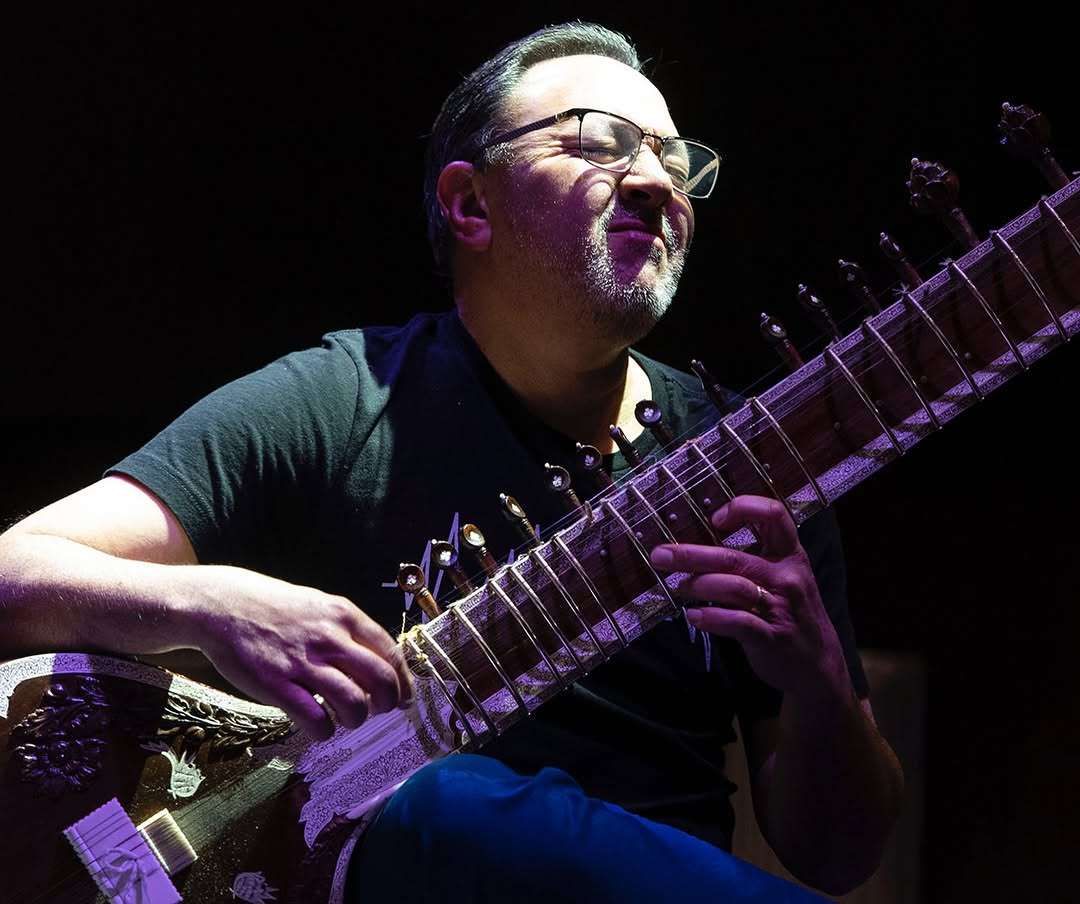 Jonathan Mayer on music without boundaries Instagram/the_sitarist/zeroclassikal
Moments of instinct and tradition
In his own compositions, he often returns to traditional material. Perseverance, built around tilak kamod, is Jonathan Mayer’s own composition, featuring Steve Tromans on piano and Denis Kucherov on tabla. While explaining it, he talks through the taal changes and how a simple phrase suddenly opened up a new direction he hadn’t planned. The piece expanded from there, shaped not by theory but by instinct. Mayer treats these moments as reminders that tradition isn’t a fixed archive but a living space that keeps shifting when handled respectfully.
Composing with orchestras
When writing for an orchestra, Mayer says, “There’s a way of basically, you play something on the sitar and you have orchestral backing… But the true terminology of concerto is almost a battle between the soloist and the orchestra. I know how the sitar sounds, I know how the instruments of the orchestra sound, so I can adjust the balance in dynamics. But the sitar is a very quiet instrument, so you always need to amplify it.”
Tala++ and finding organic harmony
‘Tala++’ is an original composition by pianist Steve Tromans, performed by Tromans with Mitel Purohit and Denis Kucherov on tabla; it was commissioned by ZerOclassikal Rekords. Bold correction: ‘Perseverance’ is Jonathan Mayer’s release: a three-part development around tilak kamod that features Mayer on sitar, with Steve Tromans on piano and Denis Kucherov on tabla.
Mayer describes Perseverance as an exploration of “the vulnerability of hope” and as proof that South Asian classical music is a contemporary medium able to address current issues. The piece reworks pakards and combines multiple taals to create contrapuntal material rather than decorative fusio
- YouTube youtu.be
ZerOclassikal : collaboration with respect
This philosophy runs through ZerOclassikal, where Mayer works with musicians from many backgrounds. He is clear that the goal isn’t fusion for the sake of fusion. It is about creating work that is rooted, informed, and built with care. When working with musicians unfamiliar with South Asian traditions, Mayer says he gives them the notes and a few instructions, and explains, “I’ll give them the notes, and I’ll give them a few Buck cards… try and miss out SA, miss out PA on the way up… follow me.” He adds, the key is that they understand the logic behind the raga, not just the notes.
Pushing boundaries, respecting tradition
ZerOclassikal describes its approach as “pushing boundaries”, and Mayer sees this as a necessary step for British South Asian classical music today. For him, the boundaries lie in assumptions about purity, fixed formats, and who gets to participate. About his new label and studio, Mayer explains, “We want to give musicians the freedom to come in and experiment… to play with the boundaries without breaking the essence of the raga… It’s about giving space for ideas to grow while respecting the tradition.”
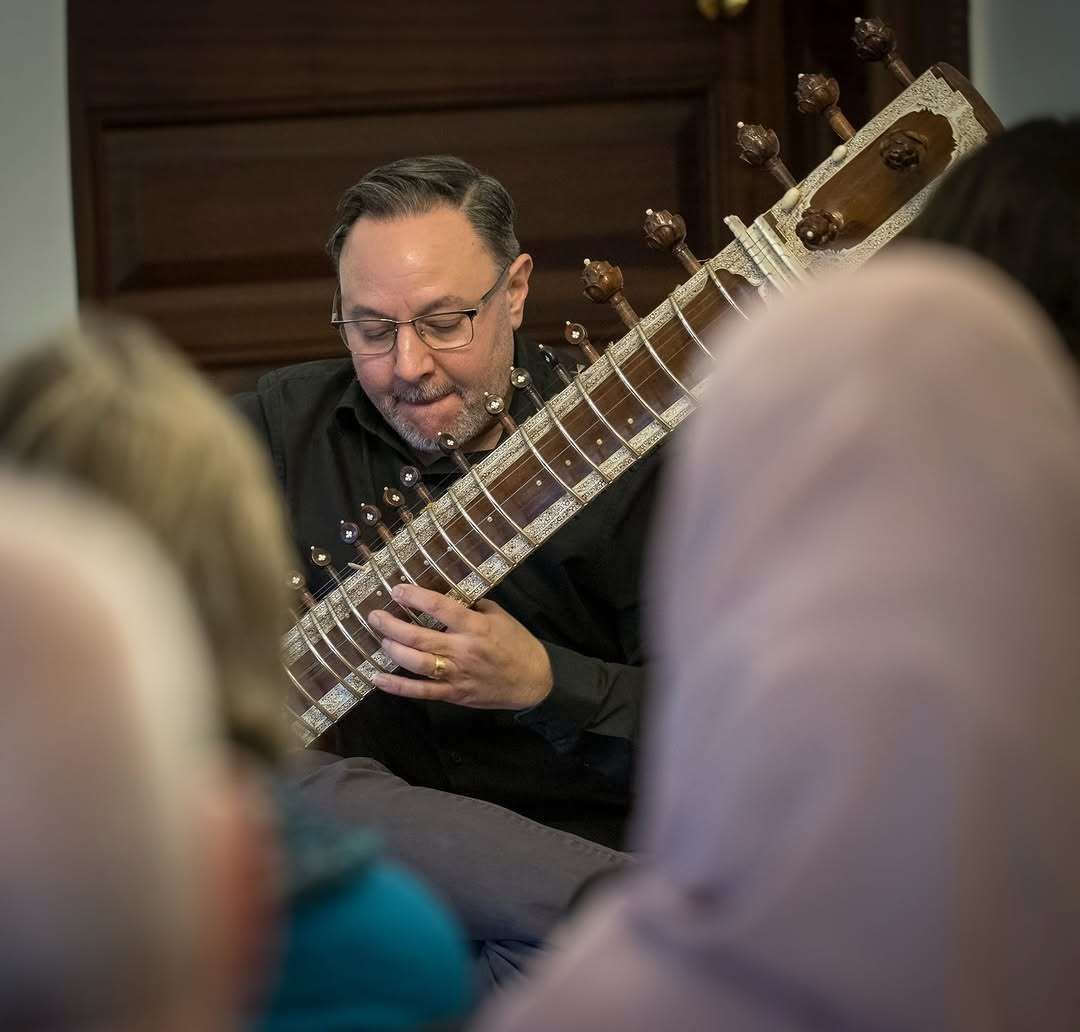 Jonathan Mayer on teaching and performing Indian music Instagram/the_sitarist
Looking ahead: cross-cultural projects
On his future projects in cross-cultural music, he said: “I’ve done quite a bit of orchestral writing, so I want to start writing with smaller ensembles and introducing South Asian instruments within that ensemble, and make it… organic. So I’m looking to write a piece for brass quintet and tabla, and then hopefully a wind quintet with bansuri in there as well. I want to explore actually not being on stage and playing it, but writing for other South Asian musicians and incorporating their stuff in, you know, with other instruments from around the world.”
Finding clarity between musical worlds
Across the interview, Mayer returns to the same idea again and again: every raga, every collaboration, every composition is an attempt to find clarity between two musical worlds. And for him, that search is far from over.
Watch the full interview on the Eastern Eye YouTube channel here.
Follow ZerOclassikal and Mayer on Instagram: @zeroclassikal and @thesitarist.