
Highlights
- Manavatty now available in over 250 off-licence shops across the UK and expanding to 20 countries.
- Brand won bronze at London Spirits Competition 2025 and Spirit Bronze 2025 at International Wine and Spirit Competition.
- Scottish National Party auctioned signed Manavatty bottles at Edinburgh for party fundraising.
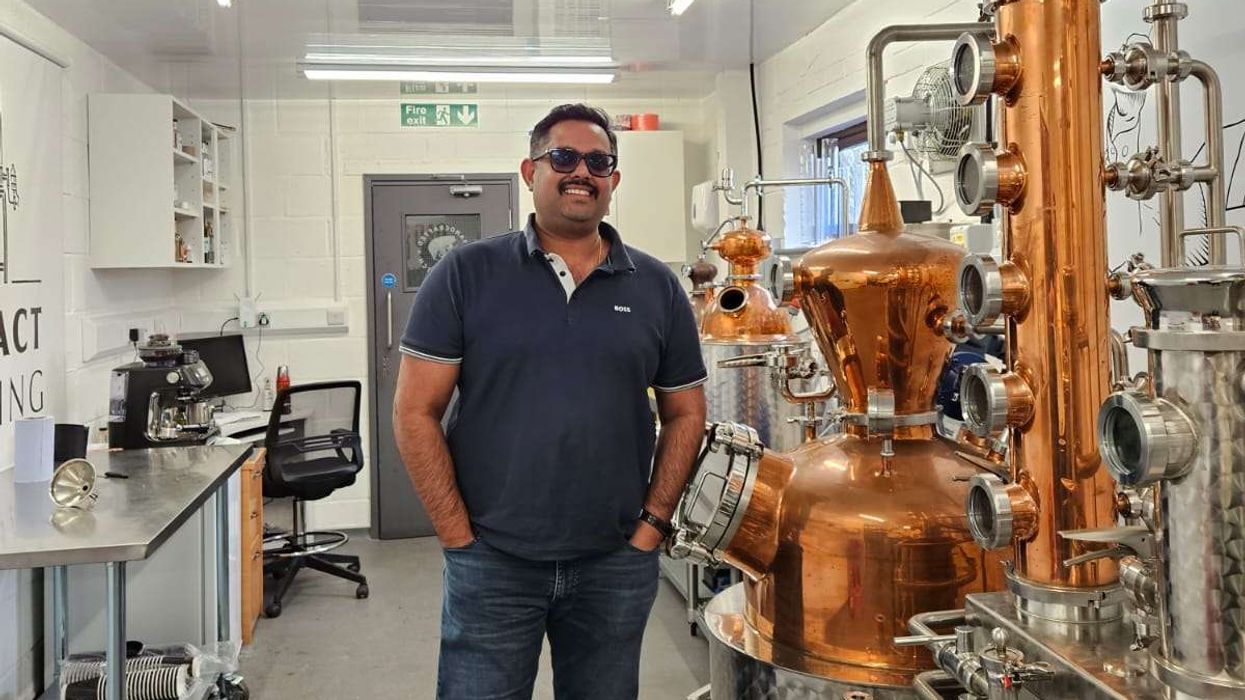
"It's a tradition for the SNP political party to keep a product at an auction and take the funds for party welfare," explains John Xavier, the man behind this unlikely success story.
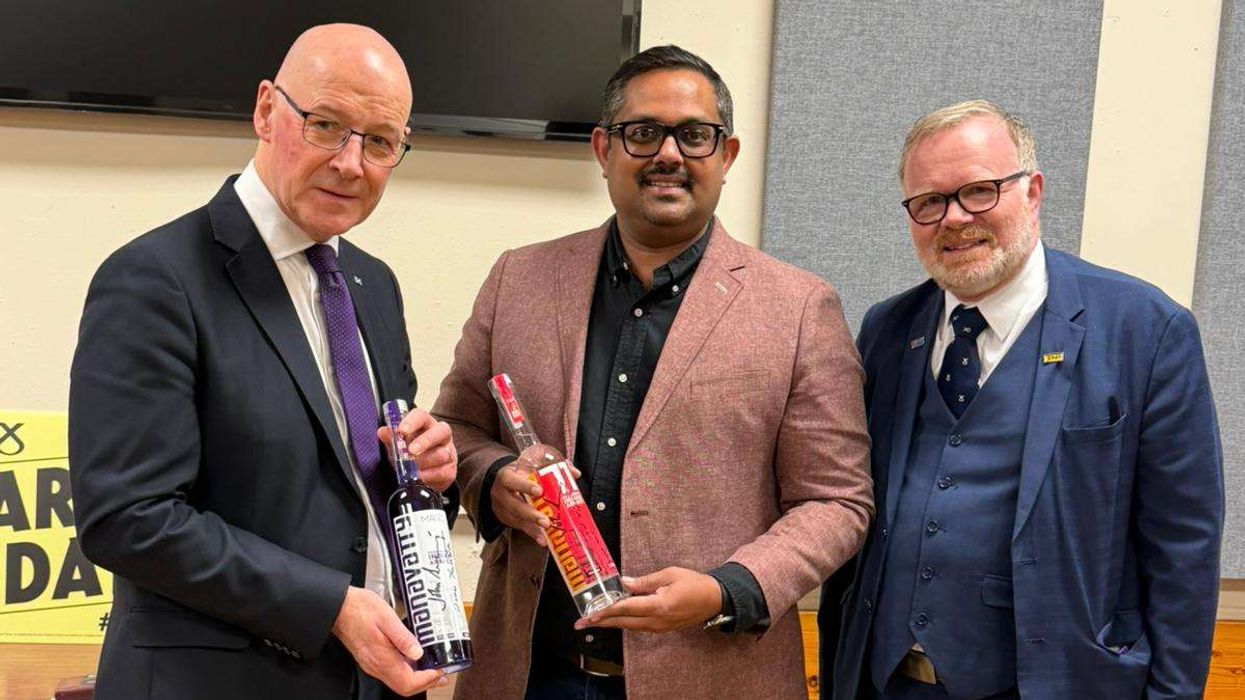 Manavatty was selected for SNP's traditional fundraising auctionJohn Xavier
The signed bottle raised funds for the party, but for Xavier, it symbolised something deeper: Kerala's natural arrack may be banned back home, yet he has transformed the tradition into an authentic pure spirit in UK.
The journey to that moment began decades earlier, in the southern Indian state of Kerala, where Xavier's fascination with manavatty took root in childhood.
During family visits to Velankanni Church, a renowned pilgrimage site in Tamil Nadu, southern India he would hear relatives say "oru Manavatty adichitt varam," (come, let's go get a Manavatty). The phrase intrigued him, and as he grew older, he understood its meaning. In his native Kochi, Manavatty became locally known as natural arrack, a traditional spirit deeply woven into the cultural fabric.
"Locally, Manavatty means a bride," Xavier explains, revealing the evocative layers behind the name he would later give his brand. The word itself carries poetry, mana represents intrinsic power in a body or object, while vatty references its fermentation process.
When Xavier moved to the UK 22 years ago to pursue his bachelor's degree in business, those childhood memories travelled with him, dormant but not forgotten. Years passed before those recollections crystallised into entrepreneurial vision.
"We changed by admiring the West, but now Gen Z are accepting the older traditions," Xavier observes. He watched as Kerala's arrack remained banned, its reputation tarnished by adulteration and poor quality. Yet around the world, similar spirits thrived.
"If it is made in a proper form, it's a best drink like Goan feni ,they commercialised it," he notes. "There is arrack in Jordan, even arrack in Sri Lanka, which they serve in celebrations. In Poland there's śliwowica, even Japan has its own arrack, China has baijiu. But in Kerala, after adulterating and losing its quality, we faced a ban."
Licensing, crafting, scaling
The thought took hold what if we could produce Kerala's arrack in the UK, crafted to the highest standards? In 2019, Xavier founded London Baron Limited, with Manavatty as the brand name and trademarked product. Every business needs a domain, so he secured manavatty.com.
Acquiring an alcohol licence became his first major hurdle. "It's not an easy task. It takes quite a lot of time the documentation and paperwork," Xavier recalls.
"It's quite challenging when it comes to the alcohol business," he admits. The regulatory requirements were exacting, particularly around quality control. It took five years to complete the paperwork and licensing procedures, but Xavier remained steadfast, understanding that quality and legitimacy were non-negotiable.
When the licence finally came through, Xavier launched Manavatty at his Northampton restaurant, Kallu Shappu. The response from British customers exceeded his expectations.
"Britons have tasted Ceylon and Jordan arrack, but they haven't tasted the Indian one, which amused them," he says. That curiosity translated into enthusiasm, and word began to spread.
By 2023, Xavier had scaled up production significantly. The brand's quality garnered industry recognition, in May this year, Manavatty won bronze at the London Spirits Competition 2025 and earned the Spirit Bronze 2025 title at the International Wine and Spirit Competition Annual Awards Ceremony. By 2025, the spirit had secured placement in over 250 off-licence shops across Britain.
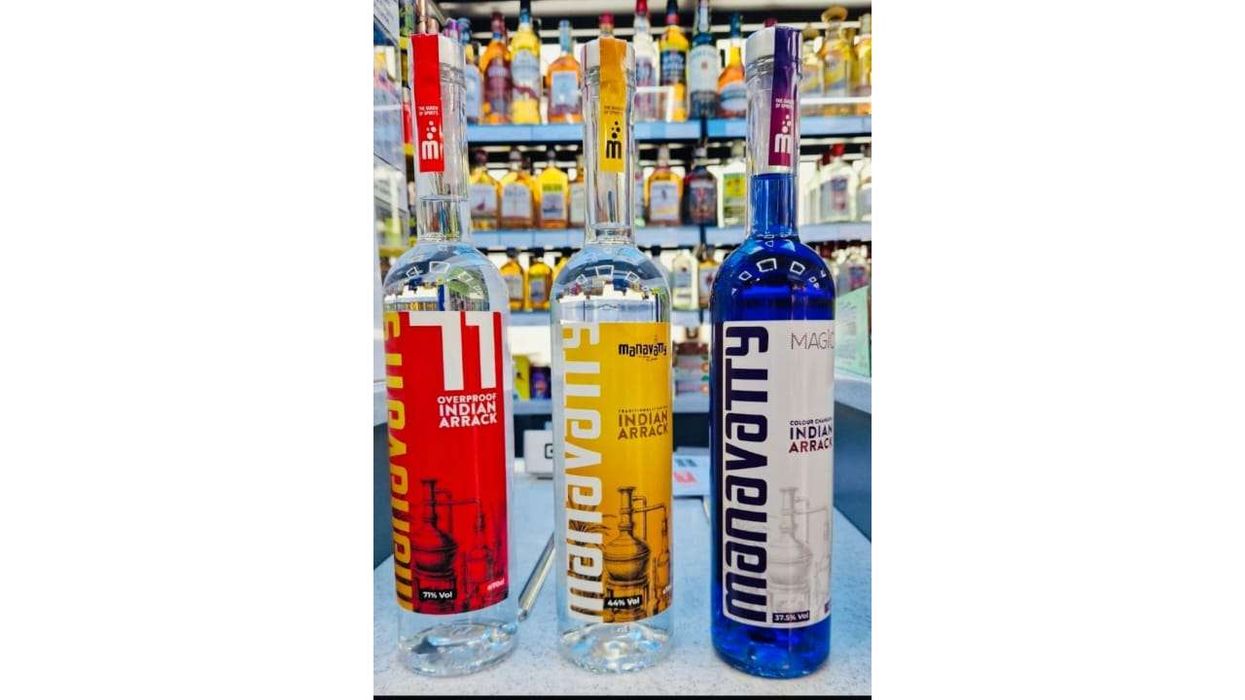 Manavatty 71 is the flagship a tribute to traditionJohn Xavier
Today, Xavier's range celebrates India's age-old distilling tradition through carefully crafted expressions. Manavatty 71 is the flagship a tribute to tradition, an unflinching expression of Indian arrack crafted for those who seek intensity in every sip.
At 71 per cent alcohol content, it delivers the authentic arrack strength that evokes nostalgia, though Xavier also produces a 44 per cent variant for those seeking a smoother experience.
"For those who would like to taste the actual arrack can have it, but the demand is for 71 per cent, giving a nostalgic feeling," he explains.
Then there's the Blue Arrack, infused with butterfly pea flower, it arrives naturally imbued with a deep, mesmerising blue with no artificial colours, no added flavours. But the real magic happens with a splash of fresh lime juice the drink blossoms into a radiant pinkish violet.
"It's not just a drink, it's a moment of wonder in every glass," Xavier says. The butterfly pea flower is one of the few ingredients he sources externally; nearly everything else, including tender coconut water for fermentation, comes from local suppliers.
These products aren't merely for nostalgic hearts but for curious palates everywhere a philosophy that has driven Manavatty's expansion across continents. The brand now operates in 11 countries and plans entry into 20 countries.
At Cochin International Airport, Xavier has maintained stalls for over a year, receiving enthusiastic responses from travellers. An ayurvedic variant infused with herbs and spices is in development, with research and development licensing complete and production scheduled for February.
Mindset shapes success
Xavier's perspective on entrepreneurship in Britain is nuanced and honest. "The visa policies are not easy in the UK," he acknowledges, "but for business, the UK is a very easy place. Britain doesn't feel you're an immigrant entrepreneur we are not less or more; we are equal with them."
"I don't believe in competition. Focus on the product and how to bring it to heights. In front of me, everyone is a human being, so we mustn't see them as competitors," Xavier says.
"I have an entrepreneur mindset. It doesn't mean we should change our nationality." Many Keralites are successfully doing business in the UK, he notes, though he chose to retain his Indian nationality.
"We can do a business anywhere if we have a strong mindset, meeting every standard," Xavier reflects. Looking ahead, Xavier is expanding the London Baron Limited portfolio with plans to produce additional brands beyond Manavatty.
In transforming a banned local arrack in Kerala into an award-winning British success, he has proven that some spirits - both liquid and entrepreneurial - refuse to be contained by borders or bans.