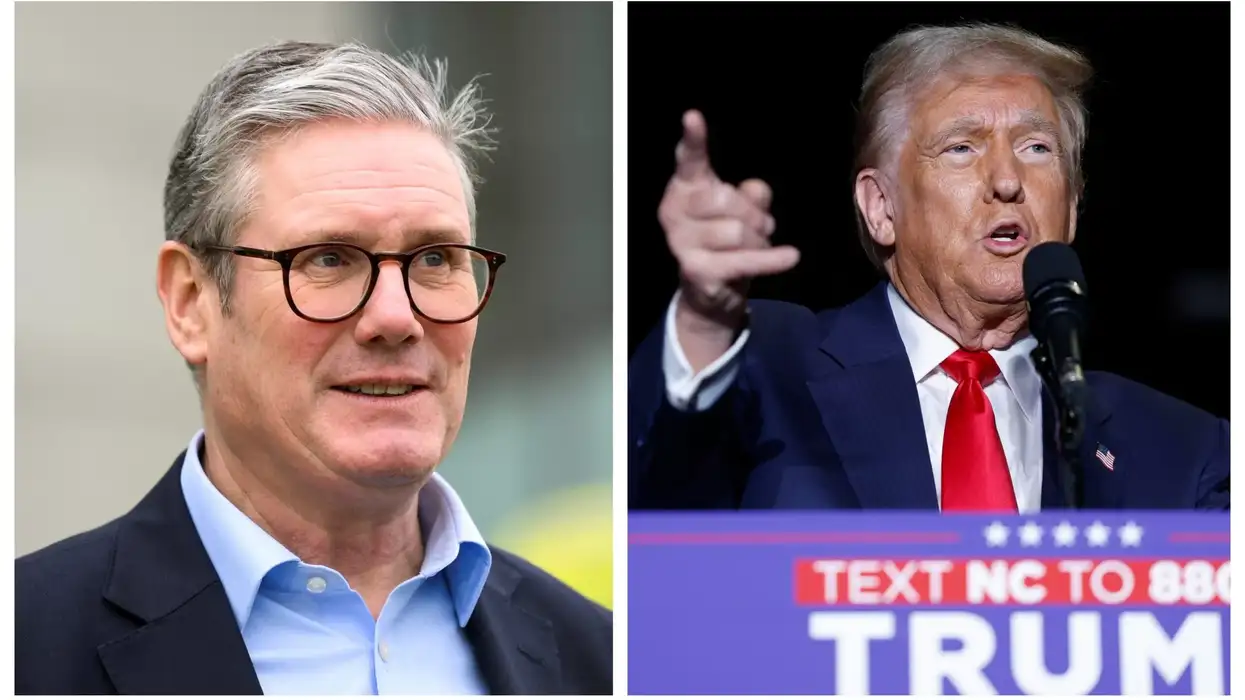

US PRESIDENT Donald Trump has said the relationship between the United States and the UK is “not like it used to be”, after Britain did not join US-Israeli strikes against Iran.
Prime minister Keir Starmer said Britain “does not believe in regime change from the skies” and confirmed the UK was not involved in the initial strikes against Iran.
He later allowed the limited use of British military bases by the United States for what he described as a “specific and limited defensive purpose”.
Trump criticised the decision in interviews with British newspapers.
Speaking to The Sun, Trump said: “This was the most solid relationship of all. And now we have very strong relationships with other countries in Europe.” He singled out France and Germany.
He added: “I never thought I'd see that. I never thought I'd see that from the UK. We love the UK.”
“It’s just a much different kind of relationship... It’s very sad to see that the relationship is obviously not what it was.”
In an interview with The Daily Telegraph, Trump described Starmer’s response as “very disappointing”. He said Starmer appeared to be “worried about the legality” of the strikes and added that the shift in stance took “far too much time”.
“That’s probably never happened between our countries before,” Trump said of the disagreement.
In parliament, Starmer defended his position, saying decisions were guided by law and the national interest.
“We were not involved in the initial strikes against Iran, and we will not join offensive action now. But in the face of Iran's barrage of missiles and drones, we will protect our people in the region,” he said.
“President Trump has expressed his disagreement with our decision not to get involved in the initial strikes, but it is my duty to judge what is in Britain's national interest. That is what I’ve done, and I stand by it.”
He added: “We all remember the mistakes of Iraq, and we have learned those lessons. Any UK actions must always have a lawful basis, and a viable, thought-through plan.”
“This government does not believe in regime change from the skies.”
Starmer said he approved the limited use of British bases after Iranian drone and missile strikes put British people and interests at risk. About 300,000 Britons are in the region.
Government minister Darren Jones said Britain would only get involved in military action where there was a “legal basis” and a “clear plan” in the UK’s national interest.
“That’s why we were not involved in the initial strikes in Iran in the Middle East,” he said.
“But it is also why we’ve consented to American Air Forces using our air bases and for British jets to be in the sky in order to defend British citizens who are currently in the region,” he added.
He confirmed that two UK bases — one in Gloucestershire in western England and the UK-US base at Diego Garcia in the Indian Ocean — had been cleared for use by the Americans.
Starmer also said the RAF base at Akrotiri in Cyprus, where a runway was hit by an unmanned drone, was “not being used by US bombers”.
On Sunday, an Iranian-made drone hit RAF Akrotiri, causing limited damage and no casualties.
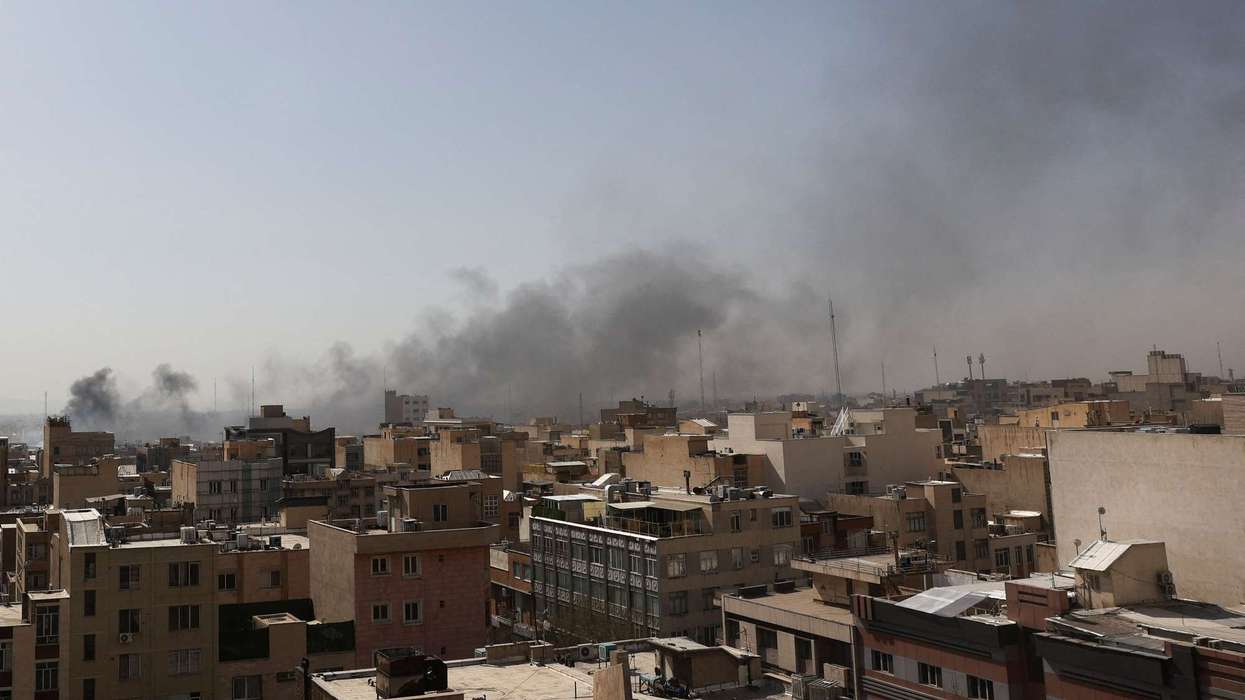
The United States and Israel launched air strikes against Iran on Saturday. Trump said it was “useful” that the US could now launch operations from Diego Garcia but said he was “very disappointed in Keir” over a deal on the sovereignty of the Chagos Islands.
Trump has changed position on the Chagos deal, which Britain says secures the future of the base while transferring sovereignty of the archipelago to Mauritius.
Starmer said: “It is very clear that the death of the Supreme Leader will not stop Iran from launching these strikes. In fact, their approach is becoming even more reckless and more dangerous to civilians.”
Britain’s role in military action in the Middle East remains sensitive following the 2003 Iraq war, in which 179 UK soldiers died. A later inquiry found that then prime minister Tony Blair acted on flawed intelligence when joining the war.
Evie Aspinall, director of the British Foreign Policy Group think tank, said Starmer faced a “very tight diplomatic tightrope”.
“The UK wants to support the United States, not least to protect its own security interests and to show European value to the US, which remains critical in the context of Ukraine and Greenland,” she said.
“At the same time, it is deeply cautious of engagement with a conflict that could rapidly increase global insecurity and of working closely with an increasingly unreliable United States, who keeps undertaking actions which don't align with UK interests.”
A Downing Street spokesperson said relations remained strong.
“The UK and US are staunch allies, as we have been for many decades,” the spokesperson said.
(With inputs from agencies)