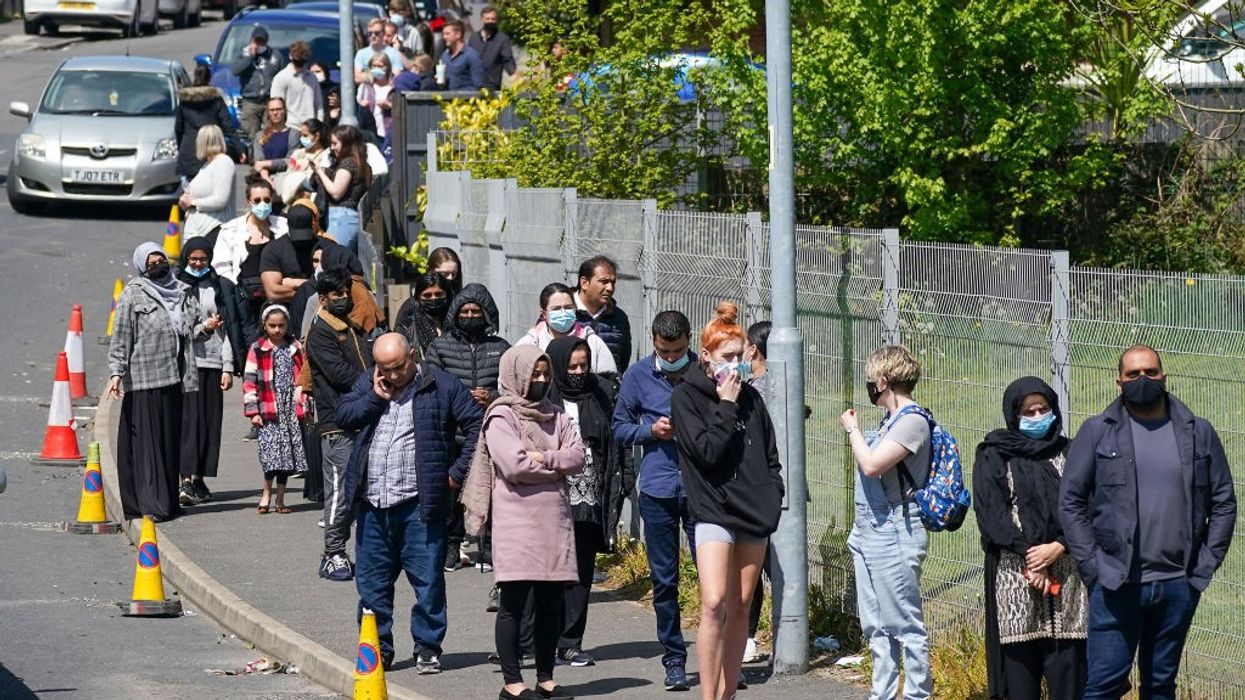

CASES of the Indian variant in the UK have doubled to almost 7,000 in the past week, Public Health England said, sparking fresh concerns over stage four of prime minister Boris Johnson’s roadmap out of lockdown.
Health secretary Matt Hancock said on Thursday (27) the Indian variant now accounts for 75 per cent of all new infections in the country.
"The latest estimates are that more than half and potentially as many as three-quarters of all new cases are now of this variant," said Hancock, adding “we must remain vigilant."
The new variant is also considered the reason behind the recent spike seen in fresh Covid numbers, with daily new cases crossing 3,000 for the first time since mid-April.
The Indian strain is now confirmed to be present in more than 250 of the UK's 315 authorities, out of which 168 have seen a rise in rates in the past week, PHE data shows.
Bolton, Bedford, and Blackburn with Darwen continue to be the worst-affected areas while Hyndburn, Rossendale, and Kirklees have also reported some cases of the new variant.
The variant of concern is thought to spread more rapidly than the previously dominant B.1.1.7 "Kent" variant, although experts say that vaccines are almost as effective against B.1.617.2 as they are against the Kent variant.
Johnson warned the lifting of lockdown restrictions “may have to wait” on June 21 amid a concerning rise in cases of the Indian variant of Covid-19.
"I don't see anything currently in the data to suggest that we have to deviate from the roadmap, but we may need to wait," he said.
The final stage of the easing of England’s lockdown restrictions is expected on June 21, when it’s hoped all legal limits on social distancing will be removed. The UK government says a final decision on the date will be made on 14 June.