
INDIA stepped into the new year with news that its economy overtook that of Japan to become the world’s fourth largest, as the south Asian nation pursues its ambition of becoming a viksit (developed) country by 2047, the centenary of its independence.
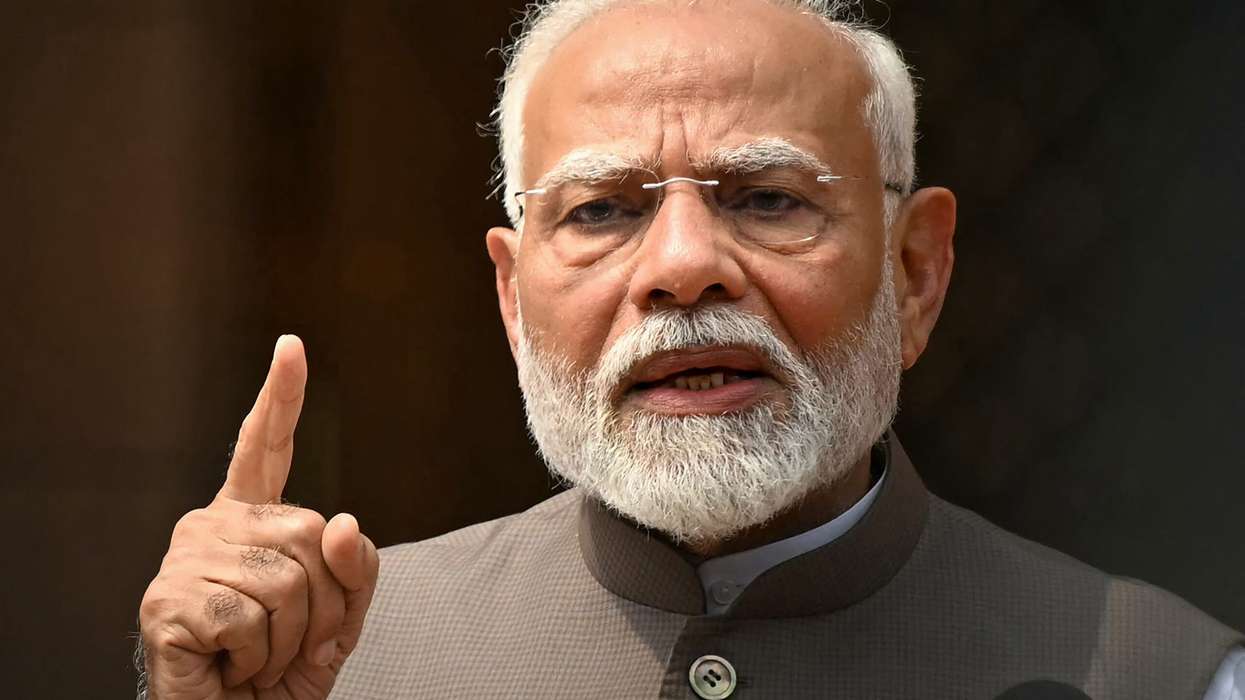
Prime minister Narendra Modi highlighted India’s growth momentum, saying the country was on course to become one of the world’s top three economies.
At a recent international business gathering in New Delhi, Modi said, “You all know that India is moving towards becoming the world’s third-largest economy. India’s growth rate is above eight per cent, driven by productivity, strong governance, and innovation-led policies. Today, India offers multiple opportunities across sectors.”
Government estimates place India’s gross domestic product at around £3.3 trillion ($4.18tr), pushing it ahead of Japan in nominal GDP terms.
Official confirmation will follow once annual figures are released later this year; meanwhile, projections from the International Monetary Fund indicate that India’s economy is set to remain larger than Japan’s in the near term.
Viraj Solanki, research fellow for south and central Asian defence, strategy and diplomacy at the International Institute for Strategic Studies (IISS), said India’s outlook remained positive even He told Eastern Eye, “Despite the impact of the US’ tariffs on India’s economy, 2025 was a strong year for India’s economic growth, highlighted by its 8.2 per cent growth in the second quarter of FY26.
“The Modi government worked to finalise several trade agreements, including with the UK, Oman and New Zealand in 2025.
“The government also undertook several economic reforms, including the goods and services tax (GST), and labour law reforms, to increase the ease of doing business and enhance growth. This is important as India is still primarily a domestic-driven economy.
“This will help India’s ability to become the world’s third-largest economy by 2030.”
India became the world’s fifth-largest economy in 2022, after overtaking the UK, and its latest advance underscores the scale of transformation achieved over the past decade.
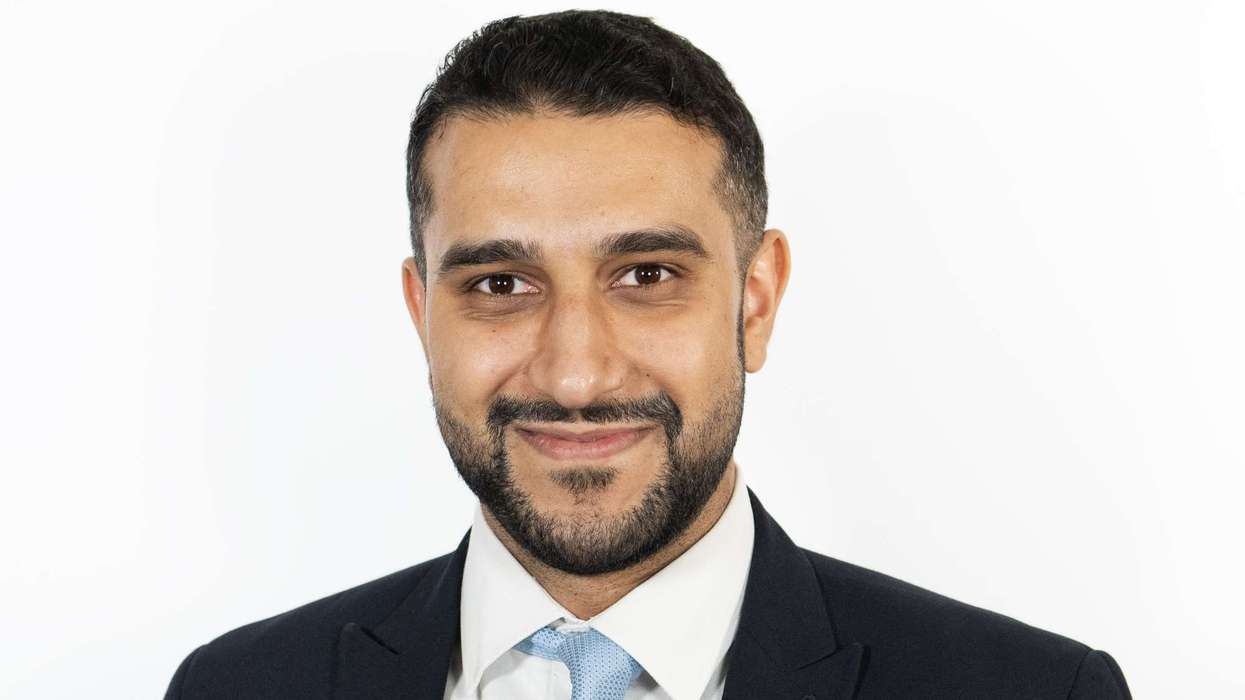 Viraj Solanki www.easterneye.biz
In an end-of-year economic briefing, the government said India was “among the world’s fastest-growing major economies” and was well positioned to sustain that momentum despite persistent global trade uncertainties.
The assessment forecast that India could rise another place in the global rankings within the next two and a half to three years, with GDP projected to reach roughly £5.7tn ($7.3tn) by 2030.
Dr VK Vijayakumar, investment strategist, Geojit Financial Services, an Indiabased brokerage firm, told Eastern Eye, “There is also a broad consensus that India will overtake Germany to become the world’s third-largest economy by around 2028. This appears achievable, given the contrasting growth trajectories, with India expanding at roughly seven per cent, while Germany is grappling with weak economic performance, recording GDP growth of about 0.3 per cent in 2025 and a projected growth rate of around one per cent in 2026.
He added, “It is important to understand that references to India becoming the fourth- or third-largest economy relate strictly to the overall size of the economy measured by gross domestic product.
“Living standards, however, depend not on the size of GDP, but on per capita income. On this measure, India continues to lag significantly behind, with per capita income currently at around $2,800 (£2,000). That said, sustained high growth will inevitably translate into rising per capita incomes over time.”
According to him, India’s recent success in reducing poverty is particularly noteworthy. “Multidimensional poverty declined sharply from 29.17 per cent in 2013-2014 to 11.28 per cent in 2022-2023. This progress has been driven by a combination of sustained economic growth and targeted government intervention programmes aimed at poverty reduction,” Vijayakumar said.
Solanki also pointed out India’s low GDP per capita figures, as well as income inequality.
He said, “Increasing employment levels is important, with a growing number of India’s young population seeking jobs. For this, the government will need to enhance manufacturing as a percentage of India’s GDP, which is currently not creating enough jobs in India. This is in addition to sustained growth of India’s services industry. In 2026, India’s focus will be on enhancing economic growth, through continued economic reforms, finalising new trade agreements with partner countries, and boosting manufacturing.”
According to experts, India’s ascent comes against a complex global backdrop.
Trade tensions, volatile commodity prices and higher interest rates in advanced economies have weighed on global growth, while New Delhi has faced specific challenges following the imposition of US tariffs linked to its energy purchases.
The rupee hit a record low against the US dollar in early December, having weakened by around five per cent over the course of 2025.
Even so, IMF projections for 2026 suggest India’s economy could be valued at approximately £3.6tn ($4.51tn), compared with Japan’s £3.5tn ($4.46tn), reinforcing expectations that India’s new ranking will be sustained.
Vijayakumar said, “The real challenge is to create an adequate number of jobs for around 10 million young people entering the job market every year. Other challenges are to sustain the high growth rate of the economy and to make growth as inclusive as possible.”
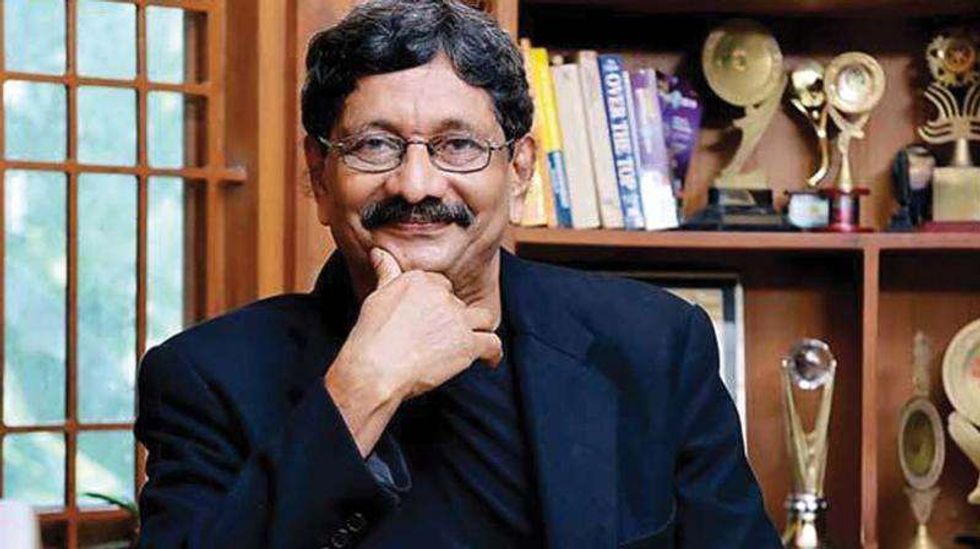 Dr V K VijayakumarPhoto: Geojit
Although initiatives such as “Make in India” have boosted output in sectors such as electronics and renewable energy, manufacturing’s share of GDP has not yet translated into sufficient job creation.
At the same time, India’s services sector continues to be a major growth driver, spanning information technology, finance, healthcare and business services.
Sustaining growth in services while expanding labour-intensive manufacturing will be essential to meeting employment needs, analysts said.
More than a quarter of India’s 1.4 billion people are aged between 10 and 26, making it one of the world’s youngest major economies.
This youthful population is widely seen as a potential engine of growth, but it also poses a significant challenge.
India’s GDP per capita was $2,694 (£1,996) in 2024, according to the latest World Bank figures, 12 times smaller than Japan’s $32,487 (£ 24,074), and 20 times smaller than Germany’s $56,103 (£41,575).
Experts pointed out that the size of India’s economy does not automatically translate into prosperity for all. Converting growth into broad-based improvements in living standards remains India’s central challenge.
With strong growth, a young population and an expanding global footprint, India enters 2026 with momentum – and with expectations rising both at home and abroad.
“As one of the world’s youngest nations, India’s growth story is being shaped by its ability to generate quality employment that productively absorbs its expanding workforce and delivers inclusive, sustainable growth,” the government said.