
INDIA made a fresh push to support its manufacturing sector in its annual budget on Sunday, but the Narendra Modi-led government’s reform plans did not meet market expectations at a time of global economic uncertainty linked to policy changes under the Trump administration.
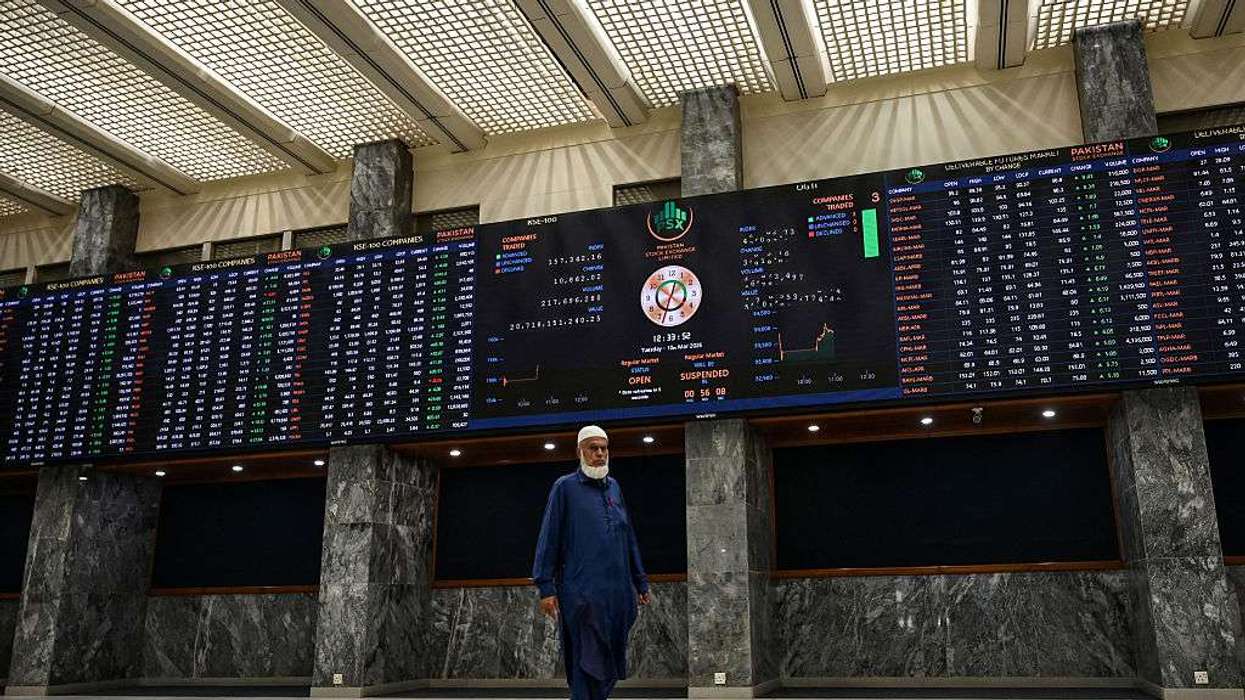
Equity markets fell in a special trading session after the budget, as the government raised the transaction tax on derivatives and did not announce major new reforms. The benchmark indices declined about 1 per cent.
India remains one of the fastest-growing major economies, with gross domestic product growth expected at 7.4 per cent in the financial year ending March 31, 2026. However, foreign investors have sold a record $22 billion worth of Indian equities since last January, and the rupee has weakened to record lows.
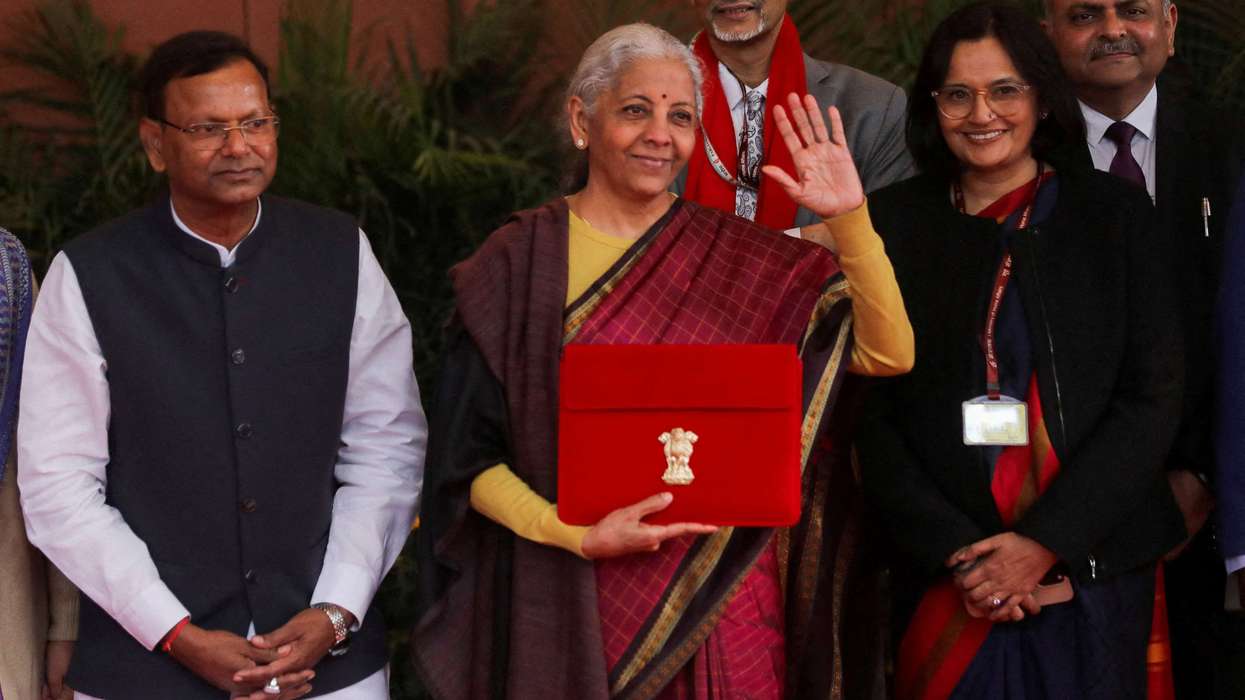
Finance Minister Nirmala Sitharaman said in her budget speech that the government would strengthen the manufacturing sector as part of its priorities for Asia’s third-largest economy, while aiming to accelerate growth amid global volatility.
The government will also continue efforts to strengthen public finances, targeting a reduction in the federal government debt-to-GDP ratio to 55.6 per cent in the next financial year from 56.1 per cent, and a fiscal deficit of 4.3 per cent compared with 4.4 per cent in the current year.
The government plans to borrow 17.2 trillion Indian rupees from bond markets, where yields have risen due to high borrowing levels.
“The government has delivered a non-adventurous budget,” said Dhiraj Nim, economist at ANZ in Mumbai.
“It is the kind of budget that will likely keep the bond markets nervous as the pace of fiscal consolidation is slower than expected… While equity market participants were expecting a reduction in the Securities Transaction Tax (STT), the rise has come as a negative surprise,” he said.
The STT was increased by more than 50 per cent on futures trading to 0.05 per cent from 0.02 per cent, and on options to 0.15 per cent from 0.01 per cent.
India’s benchmark equity index, the Nifty 50, was down about 1 per cent, with losses across sectors including banking, infrastructure, defence and capital markets.
The Nifty index of capital market stocks fell about 6 per cent after the announcement.
Bond and foreign exchange markets were closed on Sunday.
Manufacturing focus amid external pressure
India’s economy has so far withstood US tariffs imposed by President Donald Trump, supported by government spending on infrastructure and tax cuts aimed at boosting consumption.
India is also pursuing trade agreements, including a deal with the European Union, to offset the impact of tariffs.
The government will focus on expanding manufacturing across seven sectors, Sitharaman said. These include pharmaceuticals, semiconductors, rare-earth magnets, chemicals, capital goods, textiles and sports goods.
A review of 200 legacy industrial clusters will also be carried out.
The Modi government has faced challenges in raising manufacturing’s share of gross domestic product from below 20 per cent to 25 per cent, a target aimed at generating jobs for a growing workforce.
To support private investment and demand, the government has introduced reforms in recent months, including consumption and income tax cuts, changes to labour laws and steps to open up the nuclear power sector.
“The nation is moving away from long-term problems to tread the path of long-term solutions. Long term solutions provide predictability that fosters trust in the world,” Modi said on Thursday, ahead of the release of the government’s economic survey, which forecast growth of between 6.8 per cent and 7.2 per cent for the fiscal year starting in April.
India will continue with “next-generation reforms” over the next 25 years to meet its goal of becoming a developed economy, he said.
The government will also set up a high-level committee to review financial sector regulations and announced measures to support corporate bond markets.
Spending plans
The government will spend 12.2 trillion Indian rupees on infrastructure in the coming year, compared with 11.2 trillion rupees last year.
Defence spending was increased by 6 per cent.
“Overall, this is a budget without fireworks — not a big positive, not a big negative,” said Aishvarya Dadheech, founder and chief investment officer at Mumbai-based Fident Asset Management.
(With inputs from Reuters)