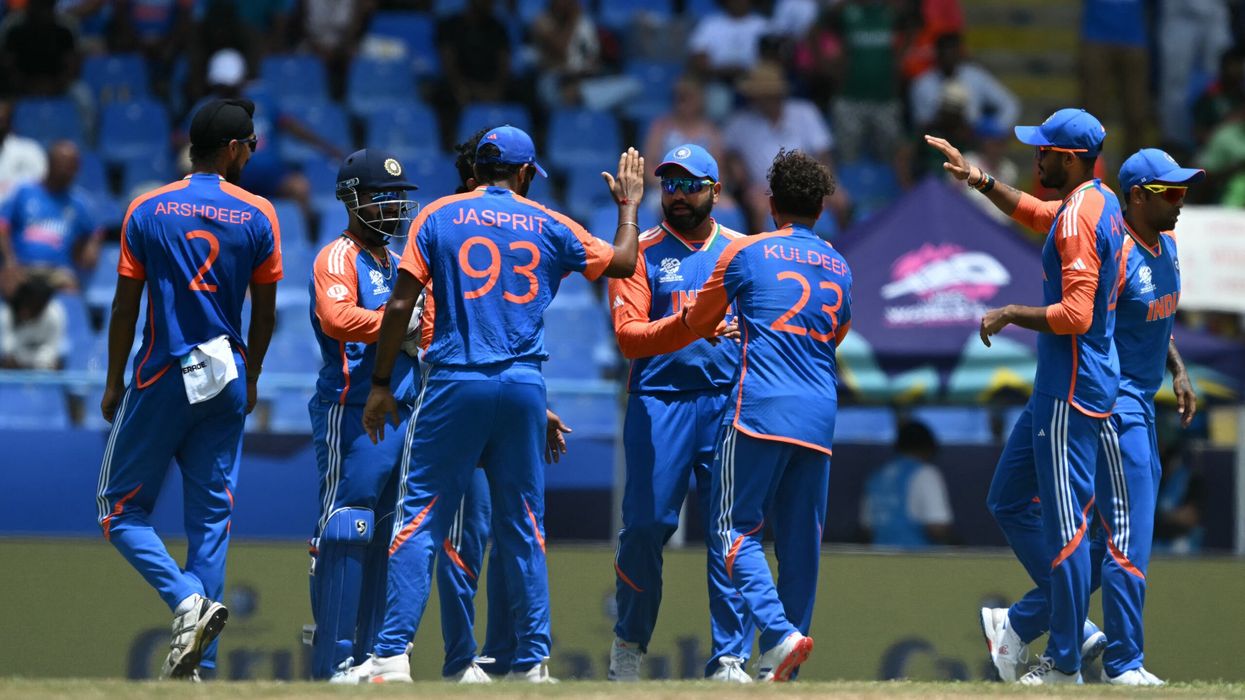

Leg-spinner Kuldeep Yadav took three crucial wickets while Hardik Pandya hit an unbeaten half-century as India moved closer to the T20 World Cup semi-finals with a 50-run win over Bangladesh on Saturday.
Chasing a target of 197, Bangladesh lost three of their top five batsmen to Kuldeep, who dismissed Tanzid Hasan (29), Towhid Hridoy (four), and Shakib Al Hasan (11). Kuldeep finished with 3-19 from his four overs.
India now have two wins from two Super Eight games.
Pandya, who had scored 50 when India batted, initiated the collapse by taking the first Bangladesh wicket, getting opener Liton Das (13) to sky a chance.
Once skipper Najmul Hossain Shanto fell to Jasprit Bumrah for 40 off 32 balls, Bangladesh's hopes faded.
Bumrah also ended Rishad Hossain's 24-run cameo, finishing with 2-13 from four overs as Bangladesh ended their 20 overs on 146-8.
"Our top score was 50, and we still got 196," said India captain Rohit Sharma. "In T20, you don't need fifties and hundreds; what matters is the pressure you put on the bowlers. That's how we want to play."
He added, "Hardik batting well, the way he did today, puts us in a very good place. We all know what he can do, and today was the perfect example of that. He's a very important player for us, with bat and ball."
Batting first, 2007 champions India saw five of their top six batsmen reach double figures.
Allrounder Pandya top-scored with an unbeaten 50 off 27 balls, including four boundaries and three sixes.
India raced to 71-1 in seven overs, with Sharma making 23 and Virat Kohli hitting a tournament-best 37 off 28 balls with one four and three sixes.
The only setback was Suryakumar Yadav, who scored just six after making back-to-back fifties in his last two innings. His runs came off the first ball he faced before falling to Tanzim Hasan Sakib, who had also dismissed Kohli in the same over.
Rishabh Pant hit 36 off 24 balls, while Shivam Dube made 34, with 18 runs coming from three sixes.
"I think we had a lot of batting options today, but we didn't show the intent we needed," admitted Shanto.
India beat Afghanistan by 47 runs in their Super Eight opener in Bridgetown, while Bangladesh lost to Australia by 28 runs in a rain-hit match in Antigua.
India have now won all five T20 World Cup matches against Bangladesh, extending their overall head-to-head record to 13-1.
(Agencies)