
The Foreign Exchange (Forex) market, once the domain of elite bankers in the City of London, has become a democratized arena where knowledge is the only currency that matters. With a daily trading volume exceeding $7.5 trillion, it offers unparalleled liquidity and opportunity. But for the aspiring investor looking to diversify beyond traditional assets, the question remains: How exactly do you trade these currencies? Understanding the mechanics of currency pairs is not just a technical skill.
Understanding the "Pair" Concept
In the stock market, you buy a share of a single company. In forex, everything is relative. You cannot buy "Dollars" in isolation; you must buy them with something else.
The Tug-of-War
Think of a currency pair as a tug-of-war between two economies.
- The Base Currency: The first currency listed (e.g., GBP in GBP/USD).
- The Quote Currency: The second currency (e.g., USD). When you click "Buy" on GBP/USD, you are effectively betting that the British economy will outperform the US economy. If the Pound gets stronger, you profit. If it weakens, you lose.
Categories of Pairs
According to Wikipedia, pairs are generally divided into three categories:
- Majors: The most traded pairs, usually involving the US Dollar (EUR/USD, USD/JPY). These have the lowest spreads.
- Minors: Pairs involving major currencies but not the Dollar (EUR/GBP, GBP/JPY).
- Exotics: A major currency paired with a developing economy (USD/SGD, GBP/INR). These are more volatile but offer unique opportunities for those with local knowledge of emerging markets.
The Technological Gateway
Decades ago, trading required a phone call to a broker. Today, execution is instantaneous, but the choice of technology is critical.
The Gold Standard Platform
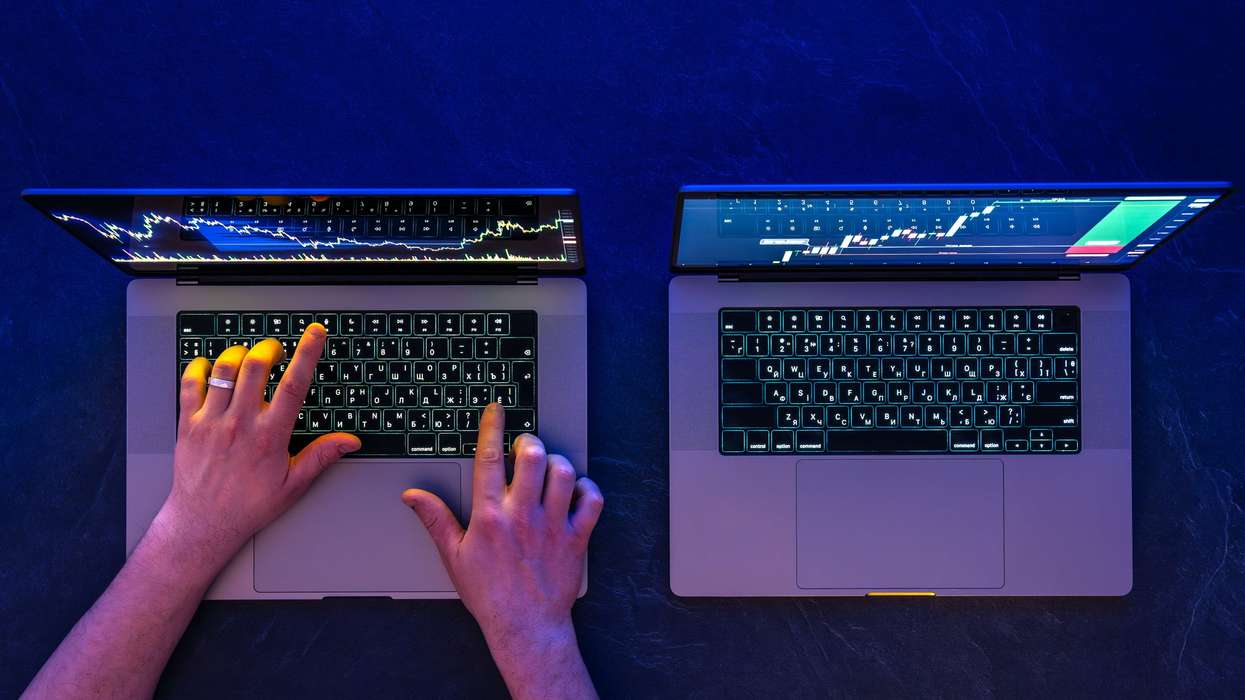
For serious traders, the platform is their workspace. In 2026, many professionals still choose to trade with MetaTrader 4 (MT4). Its popularity stems from its reliability and its ability to handle complex automated strategies. Unlike newer, "gamified" apps, MT4 provides a robust environment where you can overlay technical indicators, analyze historical data, and execute trades with millisecond precision. It is the tool of choice for those who treat trading as a business, not a hobby.
Analyzing the Market: Head vs. Heart
Success in trading requires removing emotion from the equation. There are two main schools of thought for analyzing price movements.
Technical Analysis
This involves reading charts. Traders look for patterns-like "support and resistance" levels-that indicate where buyers and sellers are congregating. For example, if GBP/USD has bounced off the 1.30 level three times, a technical trader will place a buy order the next time it hits that price.
Fundamental Analysis
This is where your knowledge of current events pays off. Interest rates, inflation reports, and political stability drive long-term trends. For the Eastern Eye readership, who often have strong ties to international markets, this can be an edge. Understanding the economic pulse of India or Southeast Asia can provide valuable insights when trading pairs like USD/INR or USD/SGD.
Risk Management: Protecting the Family Fortune
The cardinal rule of business applies here too: protect your capital.
The Danger of Leverage
Forex allows you to trade with leverage, meaning you can control a large position with a small deposit. While this can magnify profits, it can also amplify losses.
- Rule 1: Never risk more than you can afford to lose.
- Rule 2: Always use a Stop-Loss. This is an automated order that closes your trade if the market moves against you, preventing a small loss from becoming a catastrophic one.
The Role of Inclusion in Finance
The democratization of trading tools aligns with a broader shift in the UK economy. As noted in Eastern Eye's coverage of initiatives to empower minority firms, access to financial literacy and sophisticated investment tools is key to closing the wealth gap. Trading offers a level playing field—the market does not care about your background, only the quality of your decisions.
Diversifying Your Portfolio
While property and gold are traditional safe havens, a balanced portfolio in 2026 includes liquid assets.
Why Trade Multiple Pairs?
Don't put all your eggs in one basket. By trading a basket of forex pairs, you can hedge your risk. For instance, if the UK economy faces uncertainty (weakening the Pound), you might look for opportunities in the USD/JPY pair to offset potential losses in your domestic investments. This agility is what separates the modern investor from the passive saver.
Conclusion: A Skill for Life
Learning to trade forex pairs is a journey. It requires the discipline of an accountant and the nerves of a CEO. However, the rewards—financial independence, location freedom, and a deep understanding of the global economy—are worth the effort. By utilizing professional platforms like MetaTrader 4 and applying strict risk management, you can navigate the volatility of the markets and build a new pillar of wealth for the future. Start small, stay educated, and let the world's currencies work for you.
This article is paid content. It has been reviewed and edited by the Eastern Eye editorial team to meet our content standards.