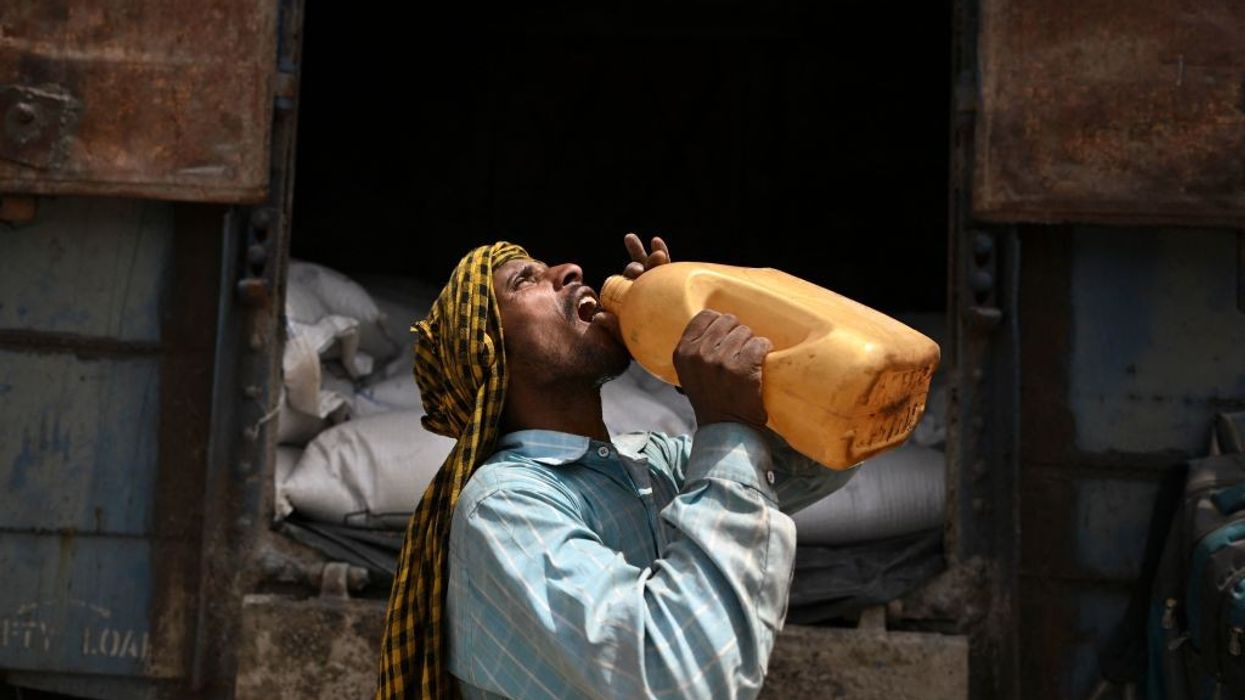
Killer heatwaves are putting "unprecedented burdens" on India's agriculture, economy and public health, with climate change undermining the country's long-term efforts to reduce poverty, inequality and illness, a new study showed.
Extreme heat has caused more than 24,000 deaths since 1992 and has also driven up air pollution and accelerated glacial melt in northern India, said a team of scholars led by the University of Cambridge's Ramit Debnath.
India is now "facing a collision of multiple, cumulative climate hazards", with extreme weather happening almost every day from January to October last year, they said.
Debnath said that it was "very important to figure out how we measure vulnerabilities to frequent extreme events", with the Indian government's own "climate vulnerability index" believed to underestimate the impact that longer, earlier and more frequent heatwaves will have on development.
As much as 90 per cent of India's total area now lies in extreme heat danger zones, and it is not fully prepared, he warned.
"India has already done quite a bit in terms of heat mitigation - they actually now recognise heatwaves as part of their disaster relief package," he said. "But there's a need to optimise the pace of these plans."
"The adaptation measures that are being put on paper are quite substantial ... and I think they have a very strong solid plan, but it's how they are implemented."
The researchers also warned that heatwaves were weakening India's efforts to meet its "Social Development Goals", a list of 17 UN objectives to cut poverty, hunger, inequality and disease.
Extreme heat could ultimately lead to a 15 per cent decline in "outdoor working capacity", reduce the quality of life of up to 480 million people and cost 2.8 per cent of GDP by 2050, they said.
Falling productivity caused by extreme high temperatures could already be costing India 5.4 per cent of its GDP, according to the Climate Transparency Report published by environmental groups last year.
(Reuters)
Heatwaves putting Indian economy, development goals at risk: Study
Extreme heat has caused more than 24,000 deaths since 1992 and has also driven up air pollution and accelerated glacial melt in northern India