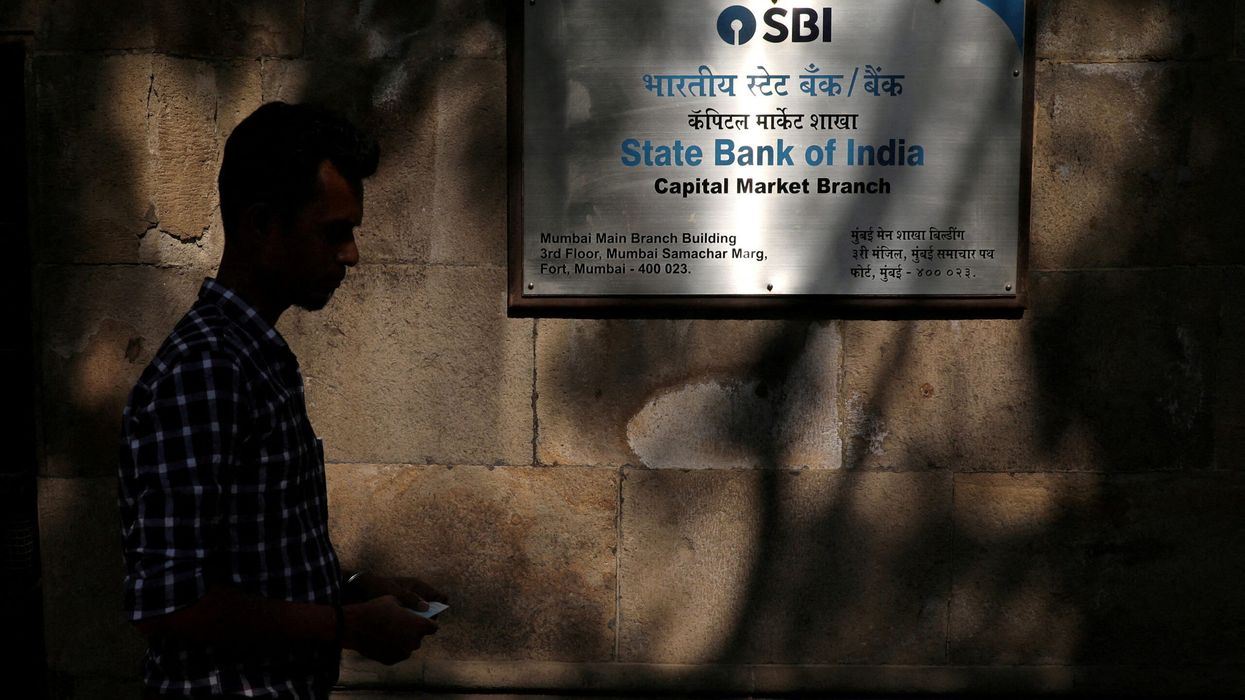

A petition has been filed in the Supreme Court seeking contempt action against the State Bank of India (SBI) alleging it "wilfully and deliberately" disobeyed the apex court's direction to submit details of contributions made to political parties through electoral bonds to the Election Commission by March 6.
The plea, filed by two NGOs, claimed SBI's application seeking extension of time till June 30 to disclose the details of electoral bonds encashed by political parties has been deliberately filed at the last moment to ensure that details of donor and the amount of donations are not disclosed to the public before the upcoming Lok Sabha elections.
A bench headed by Chief Justice D Y Chandrachud on Thursday took note of the submissions by advocate Prashant Bhushan, who appeared on behalf of NGOs Association for Democratic Reforms and Common Cause, that he wanted initiation of contempt proceedings against the SBI.
Bhushan said the SBI's application is likely to be listed on March 11 and the contempt application should also be heard together with it. "Please send an e-mail. I will pass the order," the CJI said.
The SBI moved the top court on March 4 seeking an extension till June 30 to disclose the details of the encashed electoral bonds.
In a landmark verdict on February 15, a five-judge constitution bench of the apex court had scrapped the Centre's electoral bonds scheme of anonymous political funding, calling it "unconstitutional" and ordering disclosure by the Election Commission of the donors, the amount donated by them and the recipients by March 13.
Ordering the immediate closure of the scheme, the top court had directed the SBI, the authorised financial institution under the scheme, to submit by March 6 the details of the electoral bonds purchased since April 12, 2019 till date to Election Commission (EC), which will publish the information on its official website by March 13.
In the contempt plea, the NGOs have said that two days before the expiry of the stated deadline, the SBI has filed an application seeking time till June 30 to comply with the directions.
"It is submitted that the said application is mala fide and demonstrates a wilful and deliberate disobedience & defiance of the judgement passed by the constitution bench of this court. It is further a clear attempt to undermine the authority of this court," it said.
It said the affidavit supporting the SBI's application has neither been sworn by the chairman or the managing director of the bank.
Quoting a RTI query, the plea said that in 30 phases of electoral bonds sale, only 19 out of 29 SBI authorised branches sold electoral bonds and 14 branches encashed them. (PTI)