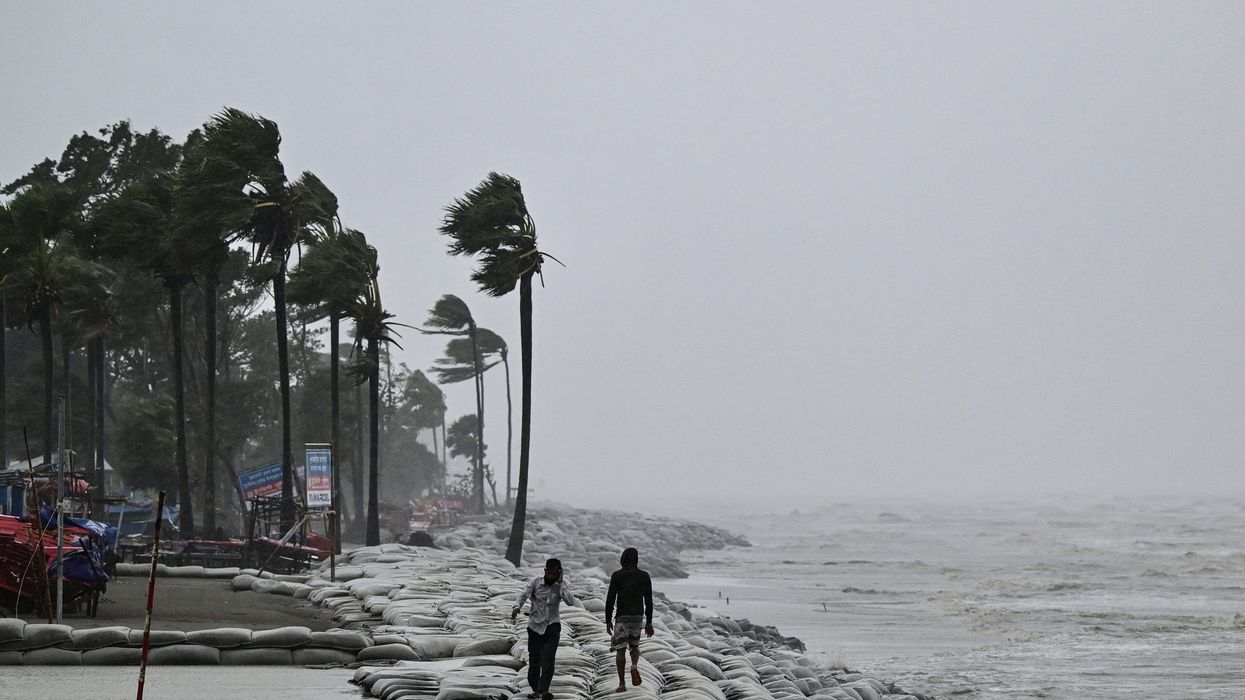

The death toll from a cyclone that struck low-lying areas of Bangladesh has risen to at least 10, with more than 30,000 homes destroyed and tens of thousands more damaged, local officials said Monday.
"They mostly died after they were crushed under fallen houses or collapsed walls," said Showkat Ali, government administrator of Barisal district, where seven people died, reported AFP. Three others died in neighbouring districts, some by drowning.
In India's West Bengal state, two people were killed reported PTI, bringing the total death toll from the cyclone to 12. Cyclone Remal caused widespread destruction across West Bengal after making landfall between the state and Bangladesh on Sunday night.
Flight operations at Kolkata airport resumed after being suspended on Sunday noon.
By Monday afternoon, the cyclone had weakened into a storm, but winds and rain continued to lash the coast.
In Khulna district, two people died, according to government administrator Helal Mahmud. "The cyclone has damaged more than 123,000 homes in the division, and among them some 31,000 homes were completely damaged," he said.
Another person died in Chittagong, where "more than 40,000 people are still in cyclone shelters due to heavy rains and strong wind," administrator Tofael Islam said.
Nearly 3 million people in Bangladesh were without electricity, according to officials from its power ministry, reported Reuters.
Both India and Bangladesh moved nearly a million people to storm shelters, with about 800,000 in Bangladesh and roughly 110,000 in India, authorities said.
'Remal' weakened into a cyclonic storm on Monday morning, with wind speeds of 80-90 kilometres per hour, following landfall around midnight on Sunday, according to India's meteorological department.
Read Also: Diabetes, weight-loss medicines increase stomach paralysis risk
Remal is the first cyclone in the Bay of Bengal ahead of this year's monsoon season, which runs from June to September. The cyclone was named Remal (meaning sand in Arabic) by Oman, under the system of naming cyclones in the Indian Ocean region.
Fishing boats and trawlers operating in the North Bay of Bengal and the deep sea have been advised to remain in a safe harbour until further notice.
Bangladesh, prone to cyclones, has designed most schools in coastal regions as cyclone shelters and has structures to enable people to take refuge during surges. Many of these multi-storey facilities have space for sheltering cattle as well.
(Agencies)