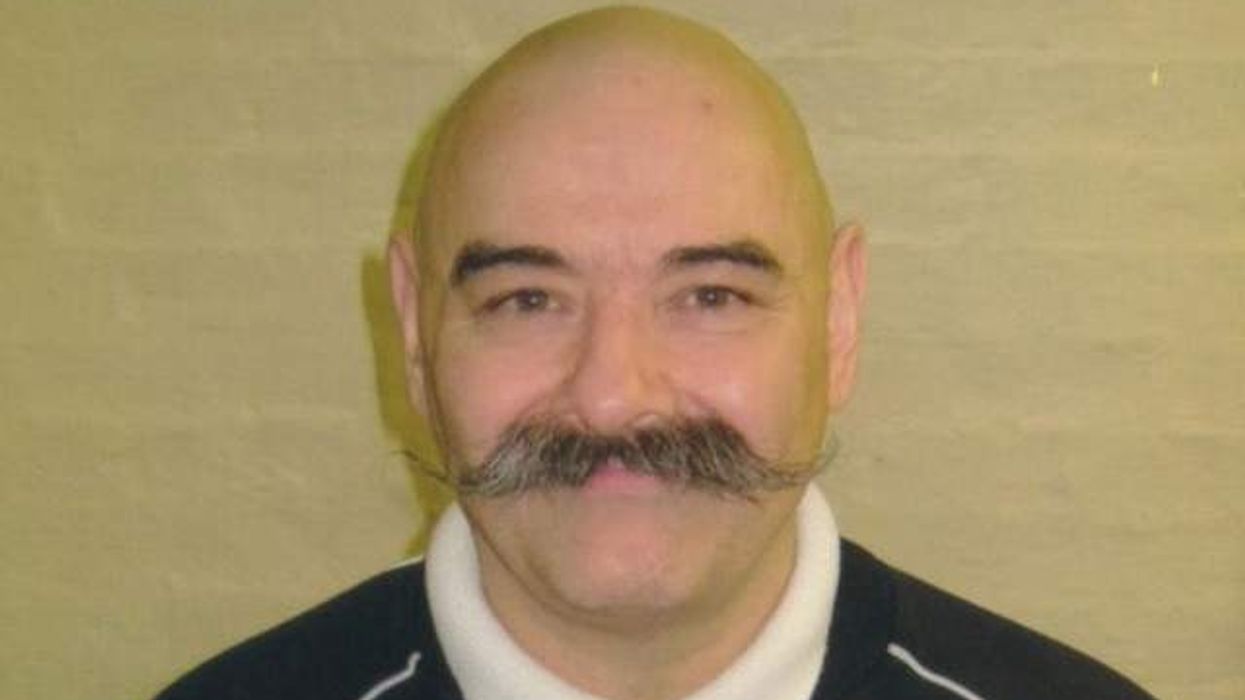

BRITAIN's most notorious prisoner has requested the justice secretary to give him a free pardon as he already spent nearly 50 years in jail, according to a report.
Charles Bronson, 69, was jailed aged 22. Born Michael Peterson, he was originally sentenced to seven years for armed robbery in 1974. He was only out twice from jail, from 1987 to 1988 and 1992 to 1993.
His term was extended to life imprisonment after he attacked inmates and jail staff, reports said.
The prisoner, now known as Charles Salvador, is campaigning to have his next parole hearing in public, a first in Britain.
"I bet you can't believe I'm still in, can you?. It's an absolute liberty. I'm 70 years old now, 70 years old. I've never murdered anyone; I've never raped anyone.," he told Sky News. “What am I in jail for? People don't believe it. They think I'm a serial killer."
Bronson's lawyer urged Dominic Raab to grant him a free pardon. In a letter to Raab, he requested the minister to use the power under the Prerogative of Mercy to grant Salvador's release without requiring him to go in front of the Parole Board.
According to him, the evidence from the last five years proves that his risk of violence has significantly reduced. He added that when someone approaches 70 the research shows that the risk drops off to zero.
Bronson will now submit a new parole application after his legal team won a High Court ruling to establish a prisoner’s right to a parole hearing in public.
"I'm the first man in Britain to have a public one and the reason I'm doing that is I'm going to expose the system for what it's done to me," he claims.