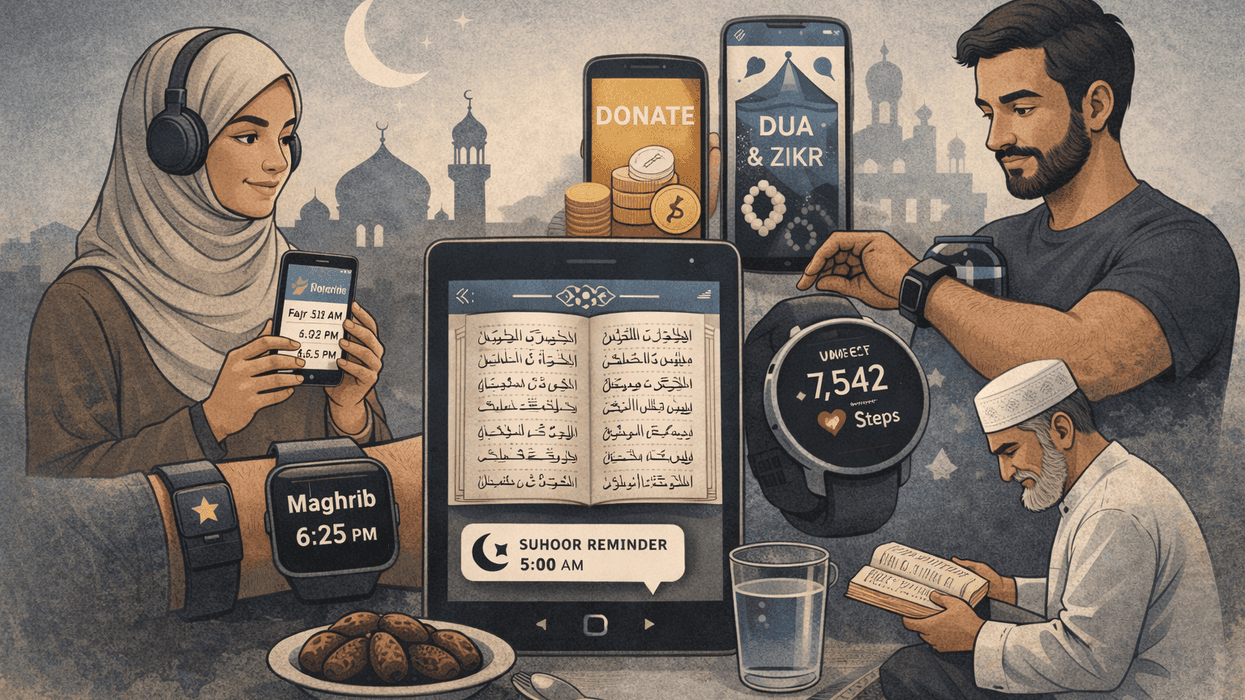

RAMADAN has gone digital as prayer time apps, Qu’ran platforms, timetables, fitness trackers and online donation tools are used by many Muslims in the UK during the holy month.
They are used for practical tasks such as checking prayer timings, setting suhoor reminders, reading the Qu’ran, tracking health routines and making charity payments. While some people use multiple apps daily, others avoid apps completely and rely on their personal routine, mosque schedules and offline habits.
Yasmin Karsan, a pharmacist with 10 years of experience and who has a master’s qualification in artificial intelligence (AI), told Eastern Eye she plans to use a wearable device this Ramadan to monitor health indicators while fasting.
“This Ramadan, I’ve actually got a ring, so I’ll be monitoring myself via a wearable ring that tracks my fitness and tracks your food intake and all of that,” she said.
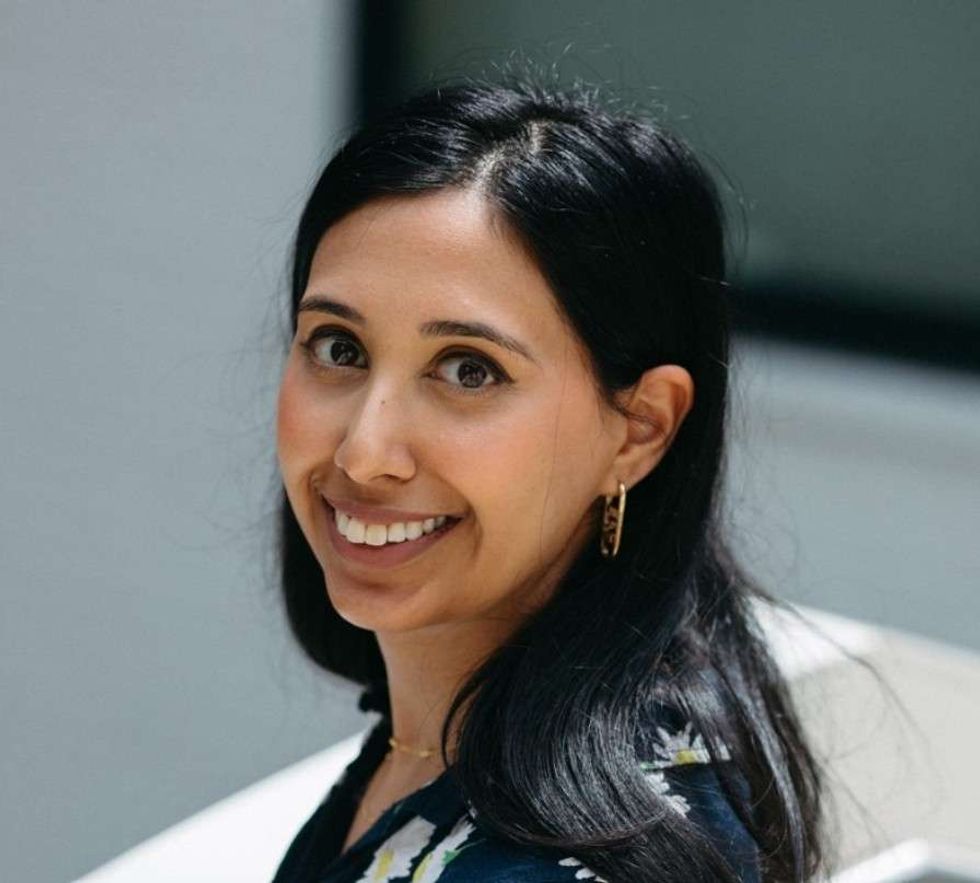 And ,Yasmin Karsanxxxxx
“It’ll be interesting to see what it will track, what it will monitor. Because I won’t be drinking water, will my blood pressure go low? Those kinds of things will be really interesting to monitor.”
She said she has also tried stepping away from social media, including removing apps completely.
“Doom scrolling is a really big thing, at the moment. I have done, previously, the digital detox where I have completely deleted all my social media apps and used the internet only for work, which has actually been quite nice from a digital perspective.”
Karsan said social platforms can be useful for explaining Ramadan to a wider audience.
“I have quite a social media following and write a lot of blogs and things like that, especially on LinkedIn. Being able to communicate the importance of Ramadan and how it feels and sharing when you wake up at 5am for suhoor or sharing breakfast time with everybody, you’re kind of digitally including everybody you might not have previously.”
Prayer-time apps remain one of the most common digital tools used during Ramadan. Muslim Pro, WeMuslim, Athan and Pillars provide prayer notifications, Qibla direction and Islamic calendar functions.
Many also include Ramadan features such as fasting alerts and daily schedules. Alongside apps, UK Muslims also use Ramadan timetables published online by mosques and charities.
Islamic Relief publishes a Ramadan timetable for UK cities including London and St Albans. The timetable lists daily prayer start times for fajr, sunrise, dhuhr, asr, maghrib and isha, along with suhoor and iftar timings. It also notes that congregational prayer times can differ from the prayer start times listed.
A Ramadan app guide published by the Greentech Apps Foundation lists several tools used for Qu’ran reading and supplications. These include Al Qur’an (Tafsir & by Word), which provides word-by-word translation and tafsir, and Dua & Zikr (Hisnul Muslim), which includes collections of duas and daily remembrances.
The guide also lists Tarteel: Qur’an A.I., which supports Qur’an recitation and memorisation.
Hamza Hussian, CEO of Abu Bakr Supermarket, told Eastern Eye digital tools are part of both his business routine and his Ramadan routine.
“With the business, we do digital marketing, so we make sure our marketing is up to date, to make sure that we are sending offers. We are getting customers into our stores through promotional offers on Instagram,” he said. “At the moment, we are in the process of building an app for our business where customers can create an order.”
He said he also uses apps for prayer times and fitness, and described his routine after breaking the fast.
“After my iftar, I go for regular walks,” he said. “During the day, we fast, so we don’t eat. After iftar, when I break my fast, I make sure with the fitness app to track the food and the calories I consume.”
Sheraz Awan, the man behind Sheraz’s Westerhope Convenience Store, told Eastern Eye he does not use technology for Ramadan.
“Technology hasn’t changed the way I see or treat Ramadan,” he said. “No, I don’t use apps for Ramadan.”
Karsan said digital tools can be useful, but can also create distraction, particularly as new AI-based tools appear. She said boundaries matter even for people who use multiple apps and online platforms.
“I think sometimes, do we need all these data points when actually it’s all about being more present, being more focused, being with your loved ones, reflecting in prayer and focusing on your bond with Allah? So, I think there have to be boundaries, right? But I do think that, for my personal opinion, it has added in a positive light, but I’m quite strict with my time on my phone