
SUPPORT for both the far-right Reform UK and the far-left Green Party is rising among British Indians, according to a new survey that warned political parties not to assume continued loyalty from the UK’s largest diaspora community.
The ‘British Indian Census 2025’, produced by the 1928 Institute and launched in Parliament this week, showed a clear shift away from traditional voting patterns.
The findings are based on a survey of 2,355 British Indians aged 18 and over, carried out between April and August. The study examined identity, representation, political attitudes and policy priorities within the community, which numbers about 1.8 million and contributes an estimated six per cent to the country's GDP.
According to the report, support for Reform UK has tripled over the past year to 13 per cent, matching a similar rise in backing for the Green Party. The shift marked one of the sharpest movements in political preferences since the Institute began tracking British Indian attitudes in 2020.
Labour continues to hold the largest share of British Indian support, at 35 per cent after age adjustment. Although still significantly higher than the party’s national polling average, the figure represents a 13 per cent fall over the past year.
Tory support stands at 18 per cent after losing 12 per cent since 2019, while support for the Liberal Democrats remains steady at around nine per cent.
Kiran Kaur Manku, co-chair and co-founder of the 1928 Institute, said the findings point to an electorate that is becoming more critical of political performance.
“Political support among British Indians is increasingly volatile. Support for Reform tripled to 13 per cent — now matching the Green Party — while Labour has seen a 13 per cent drop over the same period,” she said. Manku added that British Indians “have diverged from political allegiance” and now want clear delivery from politicians.
The report draws a distinction between different parts of the community. Older British Indians with long-established roots in the UK, particularly those identifying as working-middle class, are increasingly turning towards Reform UK. Meanwhile, younger respondents and those whose families arrived after the 2000s are more likely to support the Greens.
Lord Krish Raval, a Labour peer, said the movement towards parties at the extremes reflects wider public sentiment. “I’m not overly worried by these polls. They reflect the national mood, and we’re no different from any other community,” he said.
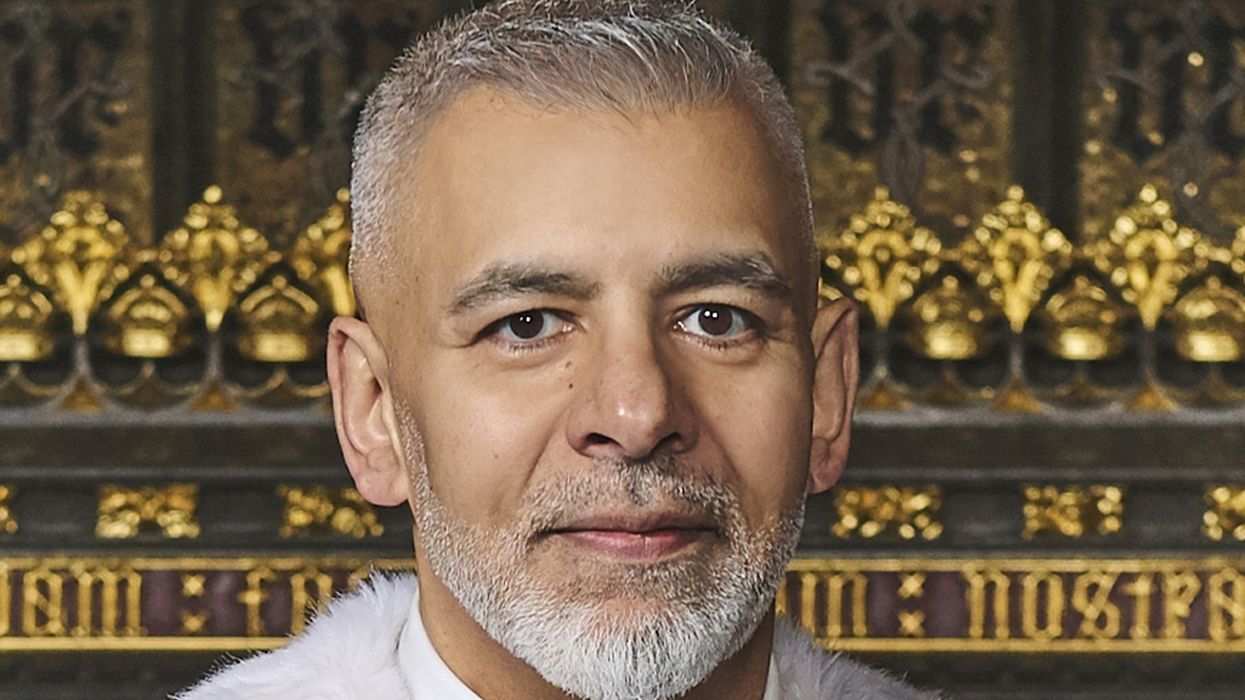 Lord Krish Raval Lord Krish Raval
He suggested that greater civic participation could strengthen the community’s voice: “In this age of polarisation, a constructive way forward is to exercise the power and talent in our community and enter public life.”
The Green Party welcomed the rise in support, linking it to their focus on inclusive policymaking. Sharmen Rahman, the party’s spokesperson for Equalities and Diversity, said: “The Green Party is committed to ensuring that anti-racism is embedded across the Party. We reject the toxic narratives being peddled by Reform UK, especially around immigration, that are stoking hatred and sowing division in our communities.”
The census also captured frustration with political and media representation. Only six per cent of British Indians feel accurately represented by policymakers. Media representation is rated even lower: just seven per cent feel British Indians are reflected accurately, and only six per cent believe that UK media represent India fairly.
Prejudice and discrimination remain significant concerns. Sixty per cent of respondents said they faced some form of prejudice or discrimination in the past two years. Of those, 71 per cent experienced it at work, and most felt it was motivated by race or ethnicity. The report noted that levels of reported prejudice are higher than those in the wider UK population.
Crime has become a top issue, ranking third among the priorities identified by respondents. Education and the economy take first and second place. Health and domestic poverty complete the top five. These findings mark a shift from 2020, when environment and equalities were more prominent.
On the UK-India relationship, the community favours practical cooperation. Trade and business links are the highest priority, followed by international institutions and travel and visas. There is also interest in strengthening cultural and heritage connections.
Seema Malhotra, minister for the Indo-Pacific, said the findings underline the diaspora’s strong global outlook. She said: “As we build the profile of business and investment in the UK, it is important that we link our diaspora to those opportunities. The research shows the community is still internationally connected and focused on economic prosperity.”
The report’s authors said that the findings challenge long-held assumptions about British Indian voters and highlight a community whose political choices are no longer predictable.
(with inputs from PTI)