

By Tom Dare
ARTIFICIAL INTELLIGENCE is being used by Birmingham council to stop ‘unconcious bias’ when finding job applicants, it has been revealed.
The move is an effort to improve diversity in the workplace, chiefs said, and has already been used in to council recruitment campaigns, with a third due to begin shortly.
The issue is due to be discussed next week by the Cabinet as part of the council’s Workforce Race Equity Review.
The idea behind the policy is to ‘ensure that our opportunities reach all areas of our community’, with a report into the Race Pay Gap last year stating:
- Our workforce does not reflect the diversity of our city and 67 per cent of black, Asian and minority ethnic (BAME) staff are in operational or frontline roles.
- Staff from a BAME community are likely to be paid 7.9 per cent less than your White counterpart.
- We don’t recruit enough BAME staff at management levels.
- There is less likelihood of being promoted to Grade 5 and 6 if you are from a BAME community.
- If you are from a BAME community you are more likely to resign or be made redundant than if you are White.
To help solve the issue of unconscious bias in recruitment, the council says it has taken to using AI, with papers stating that ‘early indications are that by using this approach we removed any unconscious bias from our advertisement placement”.
And they also say that progress has been made in a number of other areas to help tackle the Race Pay Gap, including:
- Signing up to work with Business in the Community on the Race At Work
- Charter, with financial support from the LGA.
- Delivering workshops to over 400 people around “rebuilding trust”.
- Published their Race Pay gap
- Closed the ethnicity data gap from 29 per cent to 18 per cent.
- Launched their new Equality, Diversity and Inclusion EDI Statement.
The papers are due to be discussed in Cabinet on Tuesday (18).
(Local Democracy Reporting Service)





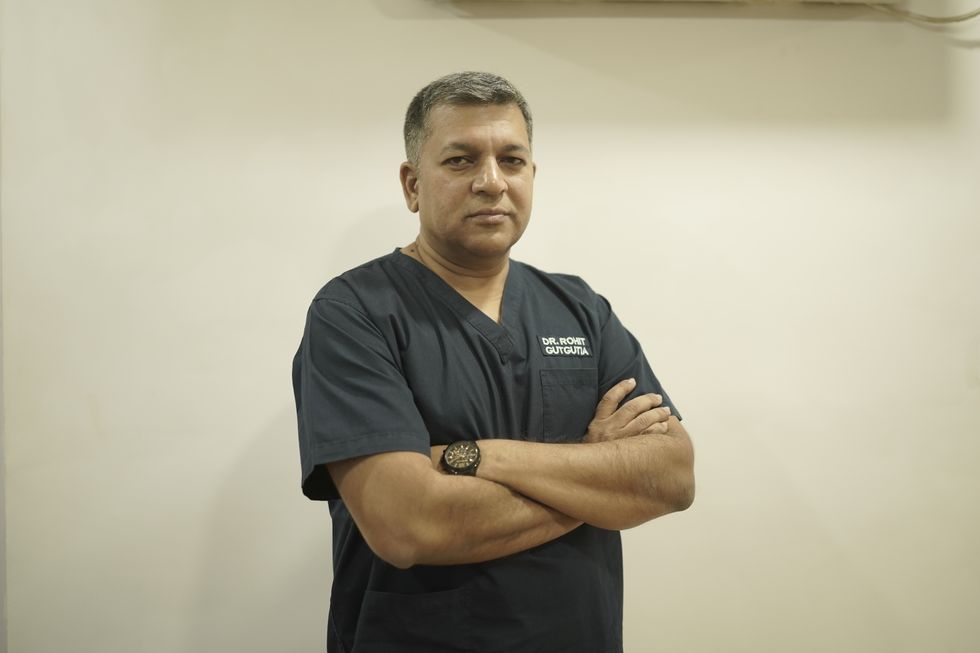 Dr Rohit Gutgutia is a fertility and IVF specialist with more than two decades of experience in reproductive medicine. He holds an MBBS and DGO in Gynaecology and Obstetrics and trained in advanced IVF in Israel in 2005.