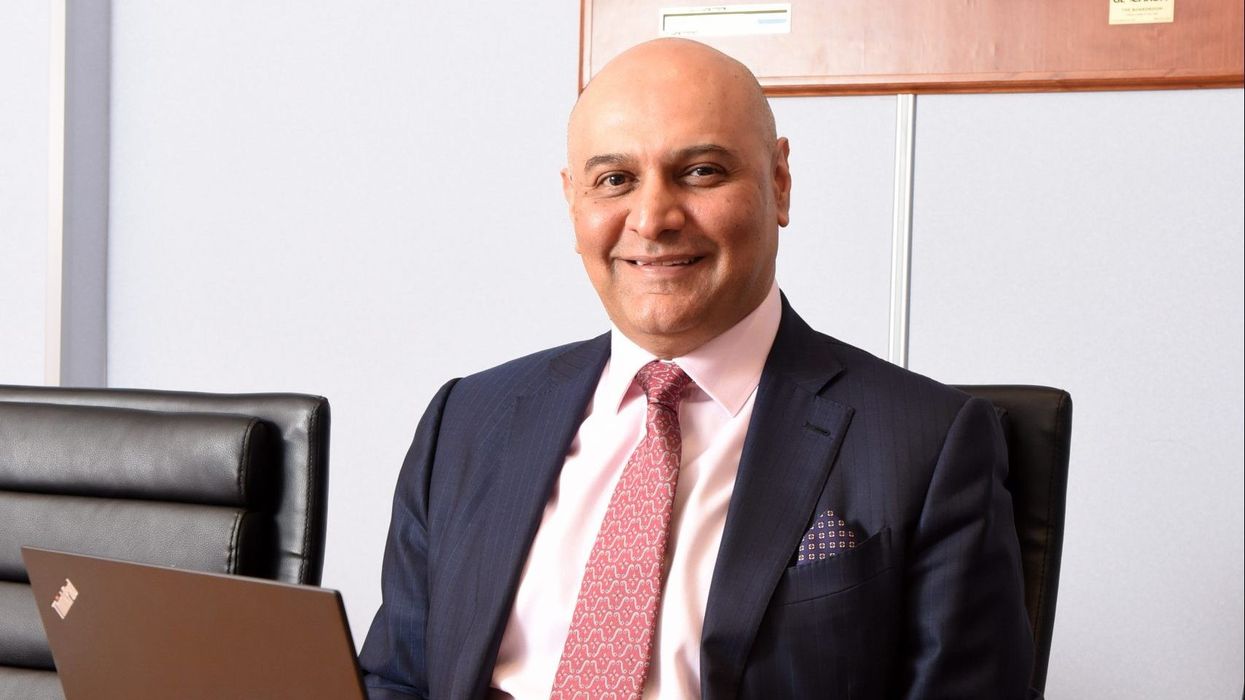

I’d like to share my thoughts reflecting on the government’s latest budget announcements and considering what they will mean for our businesses, voluntary sector, and communities.
The budget brought a few positives for small and medium enterprises (SMEs). At the start of 2025, there were some 5.7 million businesses. Of these 5.6 million (98.9 per cent) were classified as small; 38,435 companies were medium sized, while just 8,335 companies comprise large businesses with more than 250 employees.
This group makes up the vast majority of companies in the east Midlands. Starting, growing and scaling a business is tough. But we enjoy the race, - otherwise none of us would be here. So how can we realise our collective goals of business growth and success and grow our contribution to the economy?
Innovation is key – we innovate when we think differently, step out of our comfort zone, when we make connections within business and build those relationships. Reflecting on my own journey in business, both at Morningside Pharmaceuticals and, more recently, through establishing and leading our investment fund, RandalSun Capital, I can say both ventures were born out of necessity.
When I started Morningside, my vision was clear: to make trusted, high quality UK medicines accessible to people in developing countries, where reliable supplies were often scarce. We began in 1991, from a garage. Our start-up was a 100 per cent export company, building connections across the globe - frequently working with embassies and initially focusing on Commonwealth nations. I waited for faxes and made phone calls through the yellow pages. Remember those?
Cheap flights and even cheaper hotels were my norm when travelling. I placed enormous value on building relationships with prospective clients. That meant visiting their countries, learning their cultures and taking time to understand their operating environments.
Making ends meet was often the challenge, forcing me to innovate. I had to think creatively, re-engineer plans, and find ways to make what looked financially impossible on paper - work in practice. I grew our business over 30 years, into one which had exported to more than 100 countries, with a portfolio of 300 licensed products, and supplying NHS pharmacies and hospitals twice daily with a wide range of high-quality generic prescription medicines.
I learned continuously; it became second nature. Even now, my curiosity and my appetite for knowledge remains insatiable. It’s something I encourage everyone to embrace. As company owners, directors, and leaders, we are passionate about business. When you identify your passion, you discover your purpose.
So, how can we grow our impact? The first is tackling the widening gap in our workforce when it comes to young people. Recent data from the Centre for Social Justice shows that almost one million young people under the age of 25 in the UK are not in employment, education, or training. The so-called NEETs. That is nearly one in eight young people whose future is uncertain.
If we are serious about increasing productivity and tackling the skills shortages, we must innovate in our recruitment and re-think how we invite people to join our companies. In my roles as a director of the Centre for Social Justice and a trustee of the King’s Trust, I see the challenge of economic inactivity looming large, nationwide. But I also see solutions within reach.
I was pleased to hear chancellor Rachel Reeves talk about the new Youth Guarantee scheme. That’s a significant part of government's effort to guarantee a young person has options - including an apprenticeship. I hope the £820 million announced last month will bring great benefits for our regions businesses, and, of course, our young people. There's much more to do.
If businesses across our region could collectively consider their youth engagement, outreach, and recruitment strategies, we could unlock the potential of people here in the east Midlands. I also want to focus on productivity. Productivity and innovation are inseparable. One fuels the other, and ultimately, they determine the prosperity of our region and the UK.
Productivity in the UK remains persistently low, and in the east Midlands the challenge is even sharper, by some measures, the region’s productivity lags as much as 13 per cent behind the UK average. How do we create an environment where ideas translate into impact, where research drives enterprise, and where collaboration across business, academia, and government accelerates growth? The answer lies in collaboration; in meaningful partnerships that deeply connect our entrepreneurs, our universities, and our policymakers.
It lies in a shared commitment to make productivity not just a statistic to measure, but a goal to pursue together. If we succeed, the east Midlands will not only catch up, it could lead. Research suggests unlocking innovation across the Midlands region could make our economy some £18 billion more productive every single year. That would be an eight per cent boost to growth. It’s a prize worth pursuing.
How do we translate this opportunity into action? The adoption of technologies such as AI (artificial intelligence) and robotics can deliver rapid gains in efficiency. Businesses that embrace digital transformation today will be ahead tomorrow. Fostering a culture of innovation within an organisation can also be transformative.
When we build environments where creativity is encouraged, where ideas are supported, where talent is recognised, and where innovative success is openly celebrated, we unlock the full potential of our people. And when people feel empowered to contribute, productivity accelerates. Kindness also grows productivity. When people feel valued, supported, and respected, they deliver far more.
Collaborating powerfully is another area where we can unlock real productivity gains, including with suppliers and partners. True collaboration is not transactional, it is a partnership, built on ongoing dialogue, where innovations and improvements can be explored together. Without dialogue, opportunities are missed.
Consider this - how wide is your circle of collaborators, do you connect with universities, is there dialogue with your local technical college? If we keep our workforce close to us as we evolve - if we involve them, inform them, and inspire them - then change becomes a catalyst. It can underpin productivity today and accelerate productivity tomorrow.
The power to make real change lies not in government institutions or pending policies - it’s in our hands. It doesn’t matter whether you are a frontline employee, a managing director, a business owner, a customer service rep, or a supply chain manager. Every role matters.
Every positive decision strengthens not only our business, but it has the potential to grow the east Midlands economy, and ultimately the UK economy. Together, we have the potential to shape a region that is stronger, more innovative and more prosperous than ever before.
My challenge to you is simple: step forward, collaborate, contribute and commit. Because when we act together, we don’t just build better businesses - we build better communities, a better region, and a better nation.
(These are the edited excerpts from a speech delivered at an east Midlands senior leaders conference about the state of the UK economy.)



Anurag Bajpayee's Gradiant: The water company tackling a global crisis