
UK's ECONOMY barely grew in the final quarter of 2025, official data showed on Thursday, in a fresh setback for prime minister Keir Starmer’s government.
Gross domestic product grew by 0.1 per cent in the October-to-December period, the same pace as in the third quarter, the Office for National Statistics said. Economists polled by Reuters, as well as the Bank of England, had forecast 0.2 per cent growth.
The ONS said the key services sector was flat in the quarter. Construction output contracted by 2.1 per cent, while manufacturing was the biggest driver of the increase in output.
The period was marked by speculation about tax increases ahead of chancellor Rachel Reeves’ budget on November 26. The ONS revised down monthly GDP data for the three months to November to show a 0.1 per cent contraction rather than 0.1 per cent growth.
The monthly data showed the economy grew by 0.1 per cent in December alone, as expected in the Reuters poll. That left the size of the economy back at its level of June 2025.
The data suggested hesitancy among businesses during the fourth quarter, as investment fell by almost 3 per cent, the biggest quarter-on-quarter drop since early 2021, driven largely by volatile transport investment.
Economist Thomas Pugh at tax and consultancy firm RSM said the overall weakness in business investment suggested budget uncertainty held back investment and spending.
Some more recent data have suggested uncertainty has lifted for consumers and businesses.
“Looking at various surveys, there were some tentative signs that sentiment turned a corner and started to improve after the budget last year, which could help deliver a pick-up in activity this year,” Luke Bartholomew, deputy chief economist at Aberdeen, said.
“However, recent political uncertainty may see that sentiment bounce reverse.”
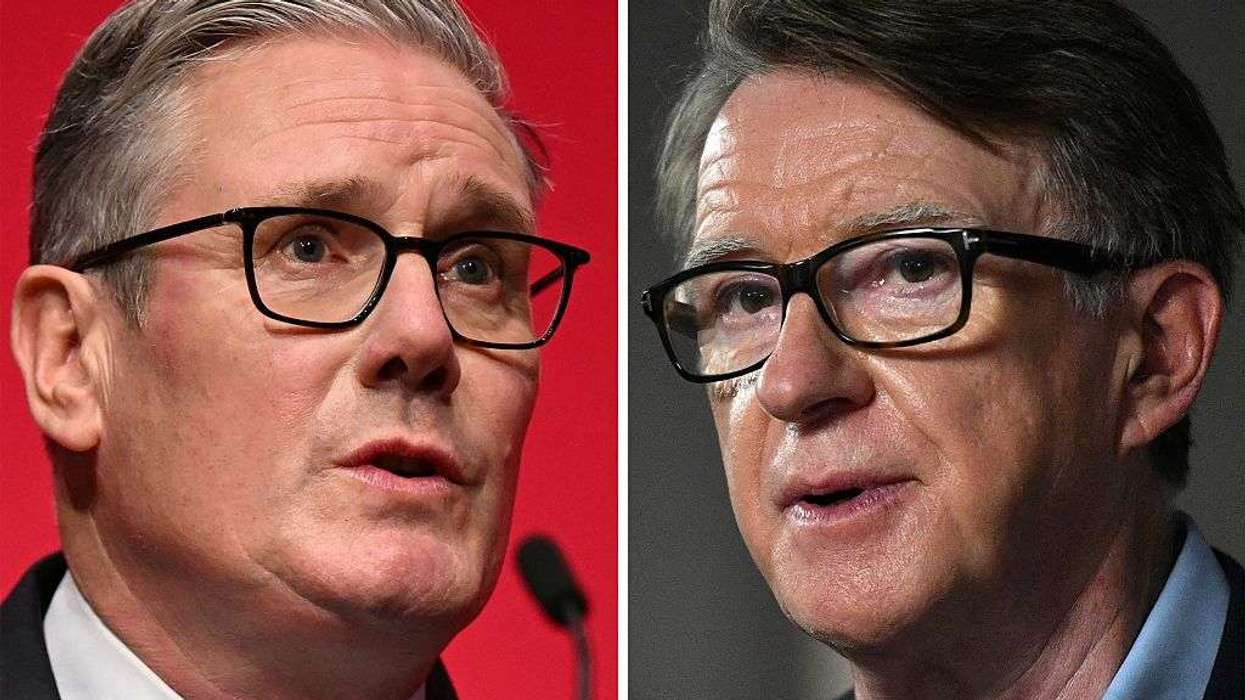
Starmer has faced calls to resign in recent days over the Jeffrey Epstein scandal. Starmer appointed Peter Mandelson as US ambassador despite knowing of his links to Epstein, a convicted sex offender.
In 2025 as a whole, the ONS said Britain’s economy grew 1.3 per cent, after a 1.1 per cent expansion in 2024. In 2025, growth was higher than 0.9 per cent in France, 0.7 per cent in Italy and 0.4 per cent in Germany.
British economic growth per head contracted by 0.1 per cent for a second quarter, although it rose by 1.0 per cent for 2025 as a whole.
The UK economy was also hampered last year by US president Donald Trump’s tariffs blitz. Despite Trump rolling back his most aggressive tariff threats, many British companies have held back from making major investment decisions owing to the uncertainty triggered by Trump’s actions regarding global trade.
The Bank of England last week cut its forecasts for UK growth this year and next. The central bank estimates gross domestic product growth to hit 0.9 per cent in 2026 and 1.5 per cent next year. It had previously forecast GDP output of 1.3 per cent for 2026 and 1.6 per cent for next year.
The growth downgrades came alongside the central bank’s decision to leave its benchmark interest rate at 3.75 per cent as UK inflation stays above the BoE’s two-percent target.
Thursday’s figures underscored why investors think the Bank of England is more likely than not to cut interest rates again in March.