
Highlights
- Defence bill explicitly mentions broadening US engagement with India via Quadrilateral Security Dialogue.
- New security initiative to strengthen defence industrial cooperation among Indo-Pacific allies including India.
- Joint mechanism established to assess nuclear cooperation agreement and align India's liability rules with international norms.
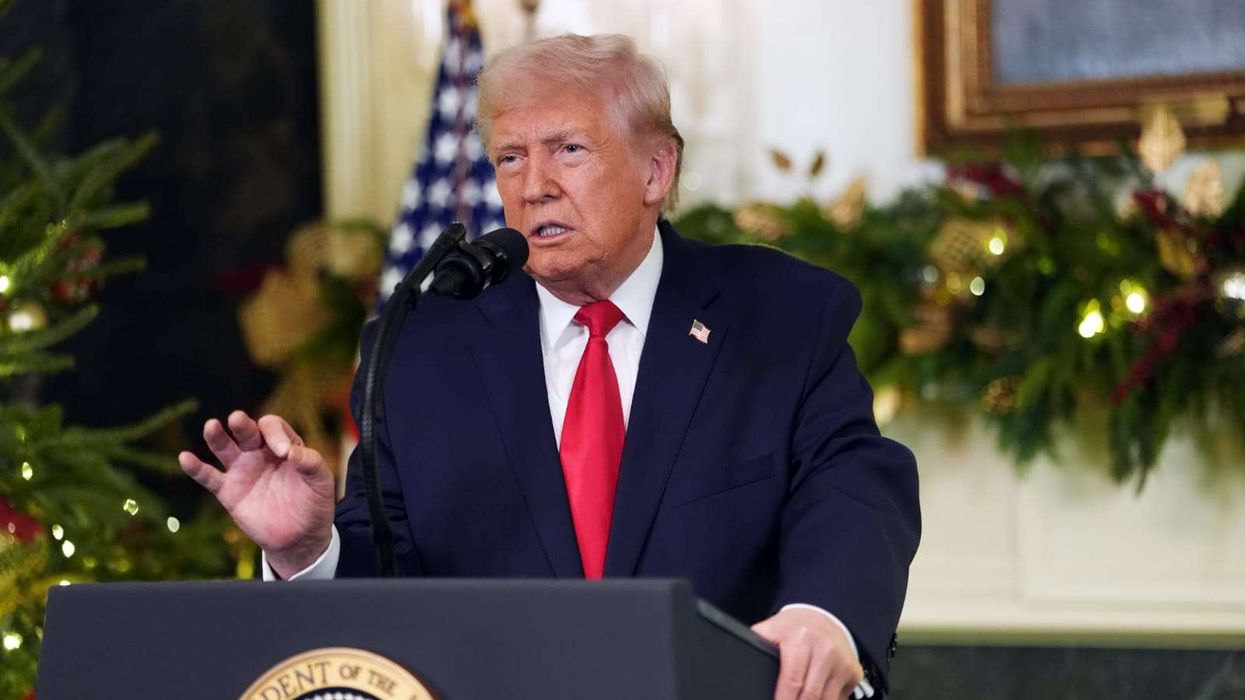
US president Donald Trump has signed into law an annual defence policy bill that highlights broadening America's engagement with India, including through the Quad, to advance a free and open Indo-Pacific region and address challenges posed by China.
The National Defence Authorisation Act for Fiscal Year 2026, signed on Thursday, authorises appropriations for the Department of War, Department of Energy national security programmes, and other executive agencies.
"The Act will enable the Department of War to carry out my Peace Through Strength agenda, protect the homeland from domestic and foreign threats, and strengthen the defence industrial base," Trump said in a statement.
The legislation outlines Congress's support for defence alliances and partnerships in the Indo-Pacific region, instructing the secretary of Defence to continue efforts that strengthen US defence relationships to "further the comparative advantage of the US in strategic competition with China."
This includes "broadening US engagement with India, including through the Quadrilateral Security Dialogue to advance the shared objective of a free and open Indo-Pacific region through bilateral and multilateral engagements and participation in military exercises, expanded defence trade, and collaboration on humanitarian aid and disaster response."
The Quad, comprising India, the US, Japan and Australia, was established in 2017 to counter China's aggressive behaviour in the Indo-Pacific region.
Defence cooperation initiative
The Act also establishes a security initiative to strengthen cooperation among defence industrial bases of the US and allied countries in the Indo-Pacific.
The secretary of Defence and secretary of State will determine which allies including Australia, Japan, South Korea, India, the Philippines and New Zealand will participate as member countries.
A significant provision creates a joint consultative mechanism within the US-India Strategic Security Dialogue to assess implementation of the 2008 Agreement for Cooperation Concerning Peaceful Uses of Nuclear Energy.
The mechanism will discuss opportunities for India to "align domestic nuclear liability rules with international norms."
The secretary of State must submit a report on this joint assessment within 180 days, with annual reports thereafter for five years. The legislation formally designates India as an "ally or partner nation" alongside Organisation for Economic Cooperation and Development (OECD) member countries.