
- US stock futures slipped after fresh tariff warnings from the White House.
- Gold and silver jumped to record highs as investors moved into safe-haven assets.
- Europe weighs retaliation as trade tensions threaten to widen.
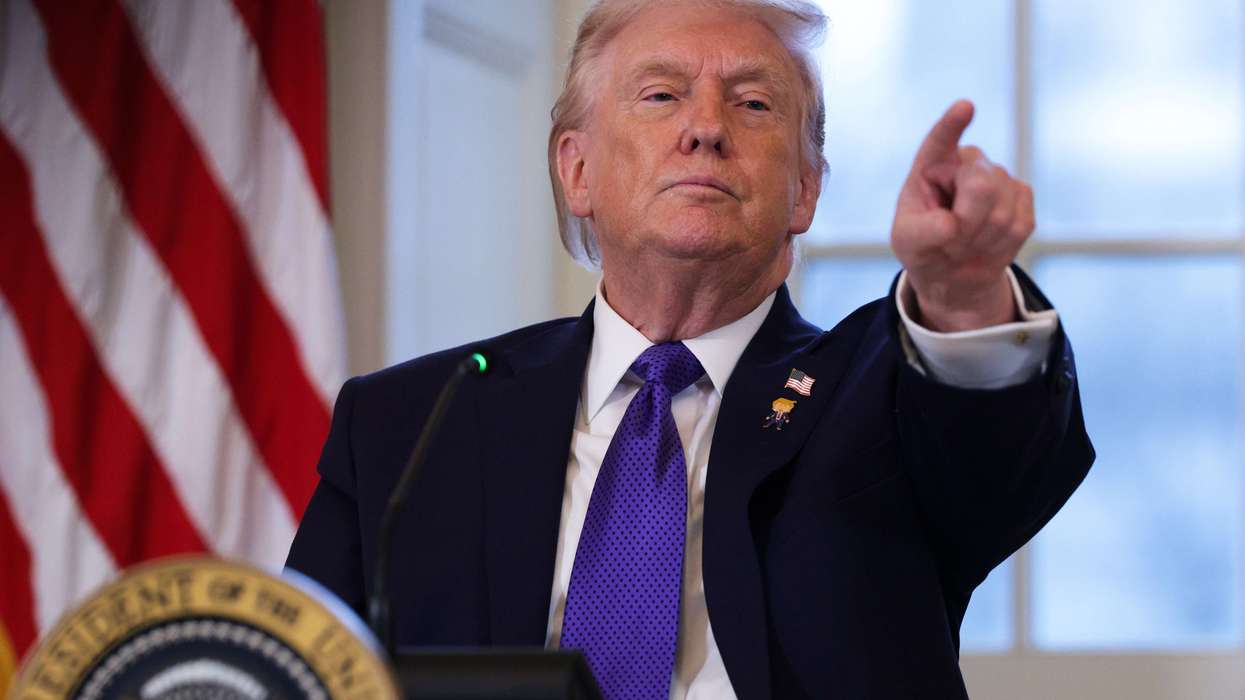
US stock futures edged lower on January 20 after President Donald Trump threatened fresh tariffs on imports from eight European countries, unsettling already thin holiday trading. The move came alongside renewed rhetoric around Washington’s demand to purchase Greenland, fuelling concerns of a broader transatlantic trade confrontation.
S&P 500 futures fell around 0.7 per cent, while Nasdaq futures dropped 1.0 per cent. With US equity and bond markets closed for a public holiday, volumes were light, but the mood was cautious. The dollar weakened against traditional safe-haven currencies, slipping against the Japanese yen and the Swiss franc, according to Reuters.
A safety rush takes shape
As risk appetite faded, investors appeared to rotate towards assets seen as safer. Gold touched a record high of $4,689.39, about £3,499, an ounce, while silver climbed to a peak of $94.08 an ounce. Precious metals have risen sharply over the past year and are often favoured during periods of geopolitical and economic uncertainty.
Oil prices, by contrast, edged lower on concerns that a prolonged trade dispute between the US and Europe could weigh on global growth and energy demand. Brent crude slipped to $63.84 a barrel, while US crude fell to $59.18.
Equity markets across Europe and Asia reflected the cautious tone. EUROSTOXX 50 and Germany’s DAX futures were both down 1.1 per cent. In Asia, Japan’s Nikkei index fell 1.0 per cent, while MSCI’s Asia-Pacific index outside Japan dipped 0.1 per cent.
Pressure builds across Europe
European stocks were mixed but broadly weaker. London’s FTSE 100 slipped 0.1 per cent, while Germany’s DAX fell 1 per cent, led lower by companies seen as vulnerable to tariffs. Carmakers BMW, Mercedes-Benz and Volkswagen were among the biggest losers. France’s CAC 40 dropped 1.2 per cent, with luxury goods firms under pressure. Shares in LVMH fell 3.8 per cent and Hermes declined 2.5 per cent.
Some sectors bucked the trend. Shares of gold miners such as Fresnillo and Endeavour rose on the back of higher bullion prices. European defence stocks also traded higher, with Germany’s Rheinmetall and France’s Thales gaining, as investors reassessed geopolitical risks.
Trump reportedly said the US would impose an additional 10 per cent import tariff from February 1 on goods from Denmark, Norway, Sweden, France, Germany, the Netherlands, Finland and Britain. He added that the levy would rise to 25 per cent from June 1 if negotiations fail. Several European Union countries criticised the move, describing it as economic pressure linked to Greenland.
Retaliation, data and the road ahead
The European Union has options on the table. These include retaliatory tariffs on €93 billion, roughly £80 billion, worth of US imports that were approved last year but suspended in early August, as well as steps under the bloc’s Anti-Coercion Instrument, which could extend beyond goods into services or investment flows.
Analysts at Deutsche Bank noted that European countries hold around £6.3 trillion, about $8 trillion, in US bonds and equities, nearly twice as much as the rest of the world combined. They suggested that repatriating some of those investments could be considered.
“With the US net international investment position at record negative extremes, the mutual interdependence of European-US financial markets has never been higher,” George Saravelos, the bank’s global head of foreign exchange research, reportedly said, warning that using capital flows as leverage could prove more disruptive than tariffs alone.
The standoff is expected to overshadow discussions at the World Economic Forum in Davos this week, where global leaders, including a large US delegation led by Trump, are due to gather.
In Asia, investors are watching Chinese economic data due later on January 20, with growth expected to slow to 4.4 per cent in the December quarter from 4.8 per cent previously. Attention is also on the Bank of Japan policy meeting on January 24. While no immediate rate hike is expected, policymakers may signal tightening as early as April. Political uncertainty adds to the backdrop, with Prime Minister Sanae Takaichi expected to dissolve parliament ahead of a February election.
Back in the US, delayed data on core inflation and consumer spending for November, due on January 23, could shape expectations around when the Federal Reserve might cut interest rates again. Strong recent data have already pushed market expectations for easing to at least June.
For now, markets appear to be bracing for more headlines, with investors weighing whether trade tensions cool through talks or harden into a longer and more disruptive standoff.