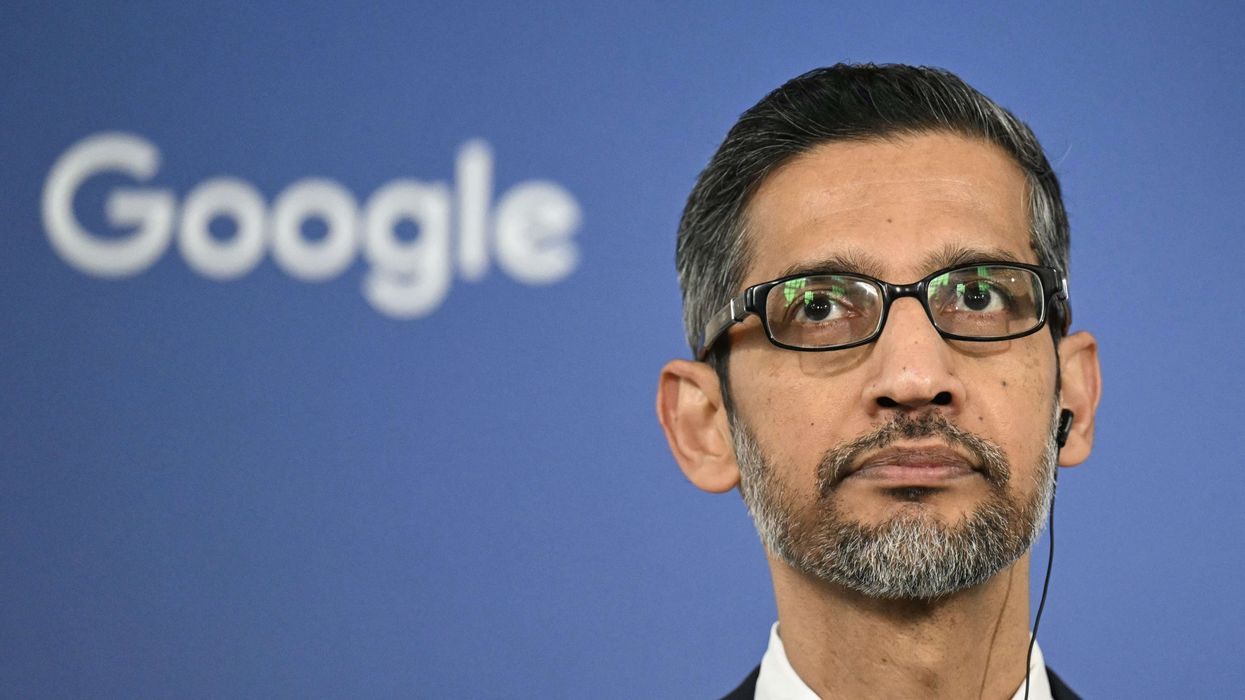

GOOGLE parent Alphabet chief executive Sundar Pichai said every company would be affected if the AI bubble were to burst.
Speaking to BBC News, he said the current growth of investment in artificial intelligence was an “extraordinary moment”, but added there was some “irrationality” in the boom.
Asked whether Google would be protected from a possible correction, Pichai said the company could manage it but added: “I think no company is going to be immune, including us.”
In an interview at Google’s California headquarters, he discussed energy needs, climate targets, UK investment, the accuracy of AI models and the impact of AI on jobs.
Alphabet shares have doubled in seven months to $3.5tn (£2.7tn), supported by confidence in its position against OpenAI. Alphabet is also developing specialised AI superchips that compete with Nvidia, which recently reached a $5tn valuation.
Some analysts have questioned around $1.4tn in deals surrounding OpenAI, raising concerns about a repeat of the dotcom bubble. Pichai said investment cycles can “overshoot”, adding: “There was clearly a lot of excess investment, but none of us would question whether the internet was profound. I expect AI to be the same.”
He said Alphabet’s “full stack” approach gives it strength. The company is expanding in the UK with a £5bn AI investment and plans to “train our models” there.
He warned of AI’s energy demands and said progress on climate targets would be affected, though Alphabet maintains its 2030 net-zero aim.
Pichai said AI will change work and “create new opportunities”, adding that people who adapt “will do better”.