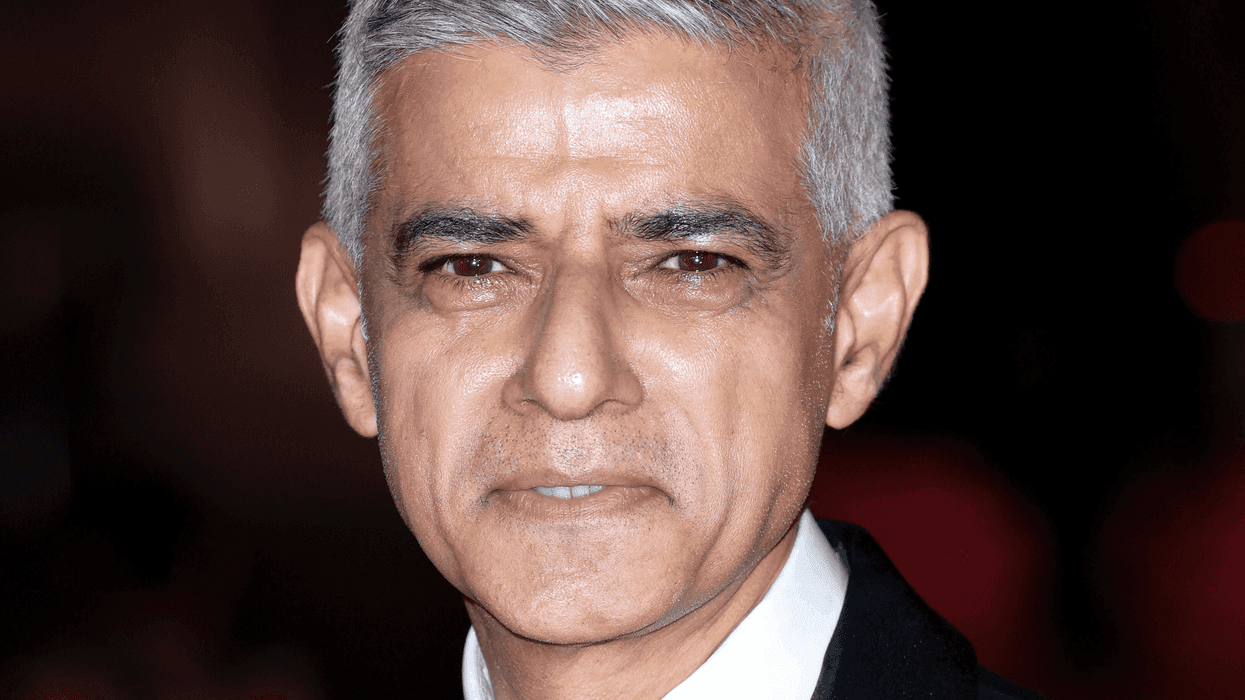

Sir Sadiq Khan will mark 10 years as mayor of London on 9 May this year. It’s quite a landmark. First elected mayor in 2016, and re-elected in 2020 and 2024, he was knighted by King Charles at Buckingham Palace last summer for his political and public service.
Being mayor of London is important enough but “the bus driver’s son” has been turned into something of a global superstar by US president Donald Trump. Most sane folk would reckon there must be something redeeming about a man who has been the subject of deranged attacks by Trump.
There is further evidence the former human rights lawyer and Labour MP for Tooting in south London has become a big draw in high society. When he took a trade delegation to Mumbai in 2017, Bollywood megastars, including Amitabh Bachchan and Shah Rukh Khan, turned out for him at a party hosted by Mukesh Ambani, the country’s richest man. Others who attended the party included Katrina Kaif, Alia Bhatt, Karan Johar, Sidharth Malhotra, Jacqueline Fernandez, Sridevi and Farah Khan. He also met Sachin Tendular, the “god of Indian cricket”.
“That was lovely, very nice,” recalled Sir Sadiq, who thinks it’s time to take another trade delegation to India.
In an interview at City Hall, he came across as pretty relaxed as he talked of his 10 years as mayor but he began with an entertaining psychiatrist’s analysis of Trump’s psychological problems.
Why has Trump gone on and on about the mayor?
“It’s for President Trump to answer the question why he’s obsessed with me, but he clearly is, and I’ve been living rent free inside this man’s head since 2016 and there are a number of explanations I have,” said Sir Sadiq.
“One of the main reasons, I think, is if you look at what President Trump and his followers believe in, they believe in mono-religion. It’s one of Trump supporters in this country who said, ‘Rishi Sunak can’t be British.’ Which is so offensive. I’m really proud – he’s not (from) my party – that Rishi became the first ever Hindu prime minister, the first ever prime minister of Asian descent. He is quintessentially British; English, I’d go so far as to say. Those are the sort of people who follow Trump.
“Why does Trump not like me? I am the mayor of a city that is diverse, progressive and incredibly successful. We are the antithesis of all he believes in. We have shown his thesis is wrong.
“You can be a proud Londoner and proudly Hindu or Muslim. You can be a proud Londoner and be of Pakistani or Indian origin. You can be a proud Londoner and be Hindu, Sikh, Muslim, Jewish, a member of an organised faith or not. And so, he attacks me. He attacks London because he needs us to fail for his thesis to succeed.
“People like myself are a thorn in his side. Firstly, we don’t cower to bullies, and secondly, we represent all that he hates. I learnt this when I1-12 years old, whether it’s in a playground or whether it’s City Hall versus the White House.”
“I’m somebody who loves America, loves Americans, I have a family of Americans, but this man is not good, in my view, for America or the planet. There have ever been more Americans coming into London to live since records began. There’s never been more investment in London from Americans. They either dislike Trump or they like me, or it’s combination of both. My dad once told me, ‘You judge a person by two things – their friends and their enemies.’ And I’ve got pretty good friends, and I’m pretty proud of my enemies, too.”
At the opposite end of the spectrum is the way he was embraced by Bollywood.
“It’s very sweet,” he remembered. “I’m big fan (of Bollywood). I was blown away. Shah Rukh Khan and Amitabh (Bachchan) turned out. They were lovely. When Rishi (Sunak), a proud Hindu, was prime minister, and with King Charles, a proud Christian, being the king and me being a mayor of Islamic faith, I said they’ve got to make Amar Akbar Anthony II.”
He was referring to the 1977 Bollywood classic, starring Vinod Khanna, Rishi Kapoor and Amitabh Bachchan, built round the theme of religious unity.
“I’m somebody who was raised on Sholay, Amar Akbar Anthony, Naseeb. The important thing about culture is it crosses national boundaries. Bollywood has shown the power to not just reflect society, but shape society.”
As mayor, he has done his bit to attract Bollywood to the UK and especially to London. “Historically, they have filmed here – some of the great classics such as Kabhi Khushi Kabhie Gham and Dilwale (Dulhania Le Jayenge). Many of the Bollywood stars live in London for a lot of the year.
“I was there to try and try to persuade the producers to film more in London and not spend so much time in Canada or Switzerland or Dubai,” he pointed out.
Although his parents came to the UK from Pakistan, he has found a way of maintaining harmonious relations with the Indian and Pakistani origin communities in the UK, who number 2.5m and 1m strong respectively. In fact, the Indian vote probably helped push him over the top.
“I’ve been blessed with support from the entire diaspora,” he acknowledged. “I’m quite clear what happened during partition or what happens even now in Sri Lanka, Bangladesh, Pakistan and India shouldn’t affect what happens here in London. One of the sources of pride for me when I was MP for Tooting is I was friends with both the Tamil community and the Sinhalese community. Recently, I broke the fast (after Ramadan) with Lord Michael Levy, a proud Jewish man.”
He had a little joke: “For the record, I’ve stolen no Indian jewellery over the last 10 years.”
This was a reference to smear tactics used when he was up against the Tory Zak Goldsmith in 2016. A leaflet alleged his victory risked the introduction of “a wealth tax on family jewellery”.
In drawing up the power list, note has been made of the fact that unlike a cabinet minister, the mayor, who has his personal mandate, does not hold office through patronage of the prime minister. Sir Sadiq cannot be sacked by Sir Keir Starmer.
“I'm on my sixth prime minister (David Cameron, Theresa May, Boris Johnson, Liz Truss, Sunak, Starmer), so I’ve outlived quite a few of them,” he said quietly. “I hope this sixth one stays for a long time. The people in London chose me. When I was growing up in London, I couldn’t have dreamed of running for mayor, let alone be the mayor. It’s been unbelievable. And then to think that I’ve been blessed not once, not twice, but three times, is just a privilege for me.
“When you are the mayor of London, irrespective of who the party is, whether it’s my tribe or the Conservative tribe or even the Reform tribe, there are occasions where I will work with them when it’s in London’s interest. But there are occasions where I’ll stand up to them irrespective of party. There are times where I make it quite clear I disagree – whether it’s issues around Palestine or welfare benefits. My primary role is to be London’s champion and London’s advocate.”
As mayor, he is responsible for everything from combating knife to keeping down bus and tube fares, from policing to housing, from the congestion and low emission charges for vehicles to major infrastructure and economic development. It’s not unlike being the president or prime minister of a major state.
He set out London’s primacy: “If we were a state, we would have the seventh largest economy in Europe. If you add the populations of Scotland and Wales, it’s less than that of London. We contribute more than a quarter of the country’s GDP. We contribute net more than £43bn to the treasury. The direct budget from City Hall is £23bn, but I’ve got convenient power as well. Don’t forget I’m in charge of planning. That determines FDI (foreign direct investment) into London. JP Morgan Chase have just announced a massive scheme in Canary Wharf. Google is to move into the East End as well.”
The investment by the corporate sector in India into London “is huge,” he emphasised.
“London is the second place of investment from India after Dubai. You know our secret weapon? It’s the Indian diaspora, a significant proportion in London. They’re our bridge, when it comes to business, culture and students. India is now the fifth largest economy. Very soon it will be the third largest. I see opportunities for Brits of Indian origin, and Indians when they come here. I can give you examples of Indian businesses doing amazing work in London, creating wealth and jobs and prosperity. To this idea that immigrants are bad, foreigners are bad, India is a good rebuttal to that argument.
“People know about cricket and Bollywood but you also have investment in life sciences, tech and financial services. The relationship we have with India is booming. I saw David Lammy, the deputy prime minister – he was in India for the AI conference – and he was buzzing with excitement about what’s happening with AI in India. I encourage students to come here from India. I encourage FDI. The bilateral relationship is going to be a two-way thing. Tourism (from India) is huge for us. We’ve been lobbying the government to make it easy for visas for work, tourists, students – and the other way as well (from the UK to India). It’s really important that we make it as easy and as frictionless as possible.
“We are keen to do another delegation to India. The focus last year was Africa. We did Ghana, Nigeria and South Africa. We’re looking this year at East and Southeast Asia. And I’m really keen to go back to the subcontinent. There’s huge opportunity in the subcontinent, India in particular. I spoke to somebody in higher education – and they were recently in Mumbai and Chennai – and they were blown away.”
He rejects the notion that Britain is broken.
“This country isn’t perfect,” he agreed. “This city isn’t perfect. But to characterise Britain as broken or London as lawless (made by Trump) is just untrue. And this denigration is a deliberate tactic to talk down a place to encourage people to vote for you.
“What it is is playing on people’s fears. The idea that that you can talk down your country in one breath, then ask people to invest in your country in another breath, is nonsense. It’s unpatriotic. I call it the Gerald Ratner school of politics. Remember Gerald Ratner? He’s the guy behind the jewellery company.”
Ratner achieved notoriety in 1971 after he described his own products as “crap”, thereby triggering his own downfall. He believes right wing politicians in particular are “doing a Ratner” by claiming “Britain is broken”.
“Why would a politician do that when it comes to the country or the city? This is what Reform are doing, very cleverly playing on people’s fears. What are people’s fears? They can’t get a decent job, they can’t get their kid into a decent school, they can’t get housing, they can’t get healthcare. Rather than doing the more responsible and harder thing, to address people’s fears, address the housing crisis, address challenges with education, addressing the situation with jobs, they talk Britain down. Some politicians have won elections that way. By the way, some politicians have won elections that way. But at some stage you’re going to be in the cockpit. What are you going to do about it? By any metric, London is the number one city in the world – on tourism, FDI, culture, international students, sport, lifestyle. We’ve had the financial crash of 2008, austerity, Brexit, the pandemic. But we’re on our way back. I think 2026 will be a very good year for our country and an excellent year for our city.”
Sir Sadiq and his wife, Saadiya, have two daughters.
“Work-life balance is a challenge for me,” he admitted. “I’m not going to pretend I've got it right. I’ve always been a workaholic, because I've always loved my work. I’ve got a fantastic wife who doesn’t just support me, she helps and encourages me. I’ve got two amazing daughters who understand the job their dad does. We try doing things together. Family is important to me.”
One can imagine a conversation between a Reform guy and the mayor.
“Where are you really from, Sadiq, just asking?”
“From here.”
“I mean where were you born?”
“Tooting.”
“No, no, before that?”
Sir Sadiq reflected: “My grandparents migrated thousands of miles from India to Pakistan. My parents migrated thousands of miles from Pakistan to London. I’ve moved about two miles from where I was born in south London. I’m anchored in Tooting where I was raised. My mum lives 5-10 minutes away. My in-laws live five minutes away. I’ve got six brothers and a sister. All of us live within a two-three mile radius. Family is very important to me.”
ends