
PAKISTAN's oldest and largest brewery has welcomed approval to sell its products abroad, ending a ban of nearly 50 years and allowing it to plan expansion.
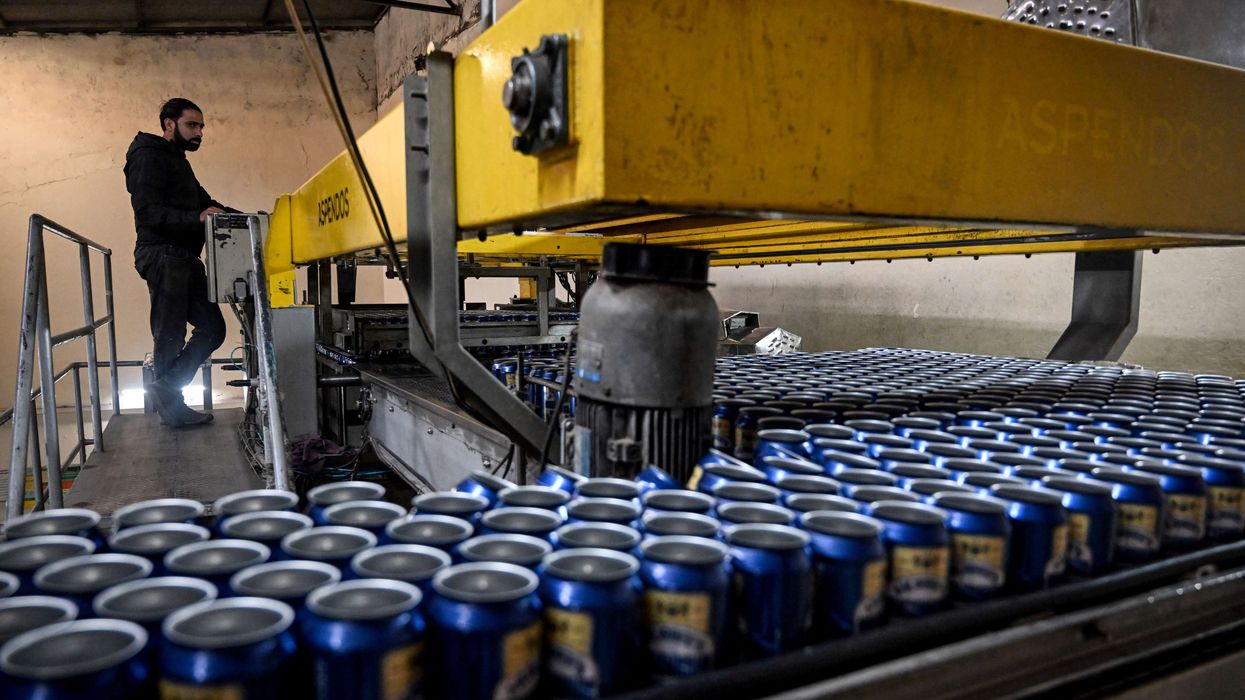
Inside Murree Brewery, bottles and cans move along production lines, a rare sight in a Muslim-majority country where alcohol is largely banned.
Founded in 1860 to supply British soldiers and the colonial community during the Raj, Murree has continued operating despite Islamist opposition and strict regulations, and has grown into one of Pakistan’s best-known companies.
"It's a journey of a roller-coaster and resilience," Isphanyar Bhandara, the third generation of his family to run the business, told AFP.
"Getting permission to export is another happy milestone," he said. "My grandfather, and late father, tried to get the export licence, but couldn't get it. Just because, you know, we are an Islamic country."
Bhandara said he got "a rude surprise" in 2017 when the Chinese-run Hui Coastal Brewery and Distillery received permission to brew beer in Pakistan, mainly for thousands of Chinese working on major infrastructure projects.
"What happened to all the Islamic lectures?" said Bhandara, who comes from Pakistan’s Parsi (Zoroastrian) community and is also a lawmaker in the National Assembly.
He then began a lobbying effort over several years to lift the export ban.
Peculiar profits
Originally based in the mountains outside Islamabad, Murree’s red-brick facility now stands opposite the army chief’s residence in Rawalpindi, one of the most heavily guarded areas in the country.
Revenue exceeded $100 million in the fiscal year to June, with alcohol sales generating just over half of the total, and non-alcoholic drinks and bottle manufacturing making up the rest.
Alcohol sales to Muslims are forbidden, meaning only religious minorities — around nine million people — and foreigners can buy beer or liquor in authorised shops or high-end hotels.
Pakistan has a long history of alcohol consumption. Its founder Mohammad Ali Jinnah was known to drink spirits, and military ruler Pervez Musharraf spoke openly about whisky. Former prime minister Zulfikar Ali Bhutto, who imposed the alcohol ban in 1977, once told a rally: "Yes, I drink alcohol, but at least I don't drink the blood of the poor."
Alcohol is often present at private gatherings, with purchases commonly made by Christian or Hindu buyers.
"Pakistan's affair with alcohol is like that of a secret paramour -- acknowledged but not talked about extensively," columnist Fasi Zaka said. "It's the tolerable vice -- condemned but familiar."
Many drinkers rely on bootleggers or locally produced alcohol, which has led to deaths from methanol poisoning.
"I have to bribe the police and take extra risks, so the price is doubled", a Christian bootlegger in Islamabad told AFP. "The extra charge is to keep everyone happy, whether it's a Muslim customer or a police officer keeping an eye on me," he said.
Expanding horizons
Before the export ban, Murree sold products in India, Afghanistan, Gulf countries and the United States.
"It sounds very strange or very bizarre today, but we were exporting to Kabul," Bhandara said.
The company has already shipped limited quantities to Japan, Britain and Portugal as it tests distribution plans.
"Right now, the target is not revenue or to make money... the target is to explore new markets", Bhandara said.
With about 2,200 employees, Murree is focusing on Europe, while also considering Asia and Africa.
Selling abroad may also allow the company to promote its history and brand.
"We are not allowed to advertise, so we keep our heads down -- we try to make a good beer with our heads down," Bhandara said.
(With inputs from AFP)