
- Oil has crossed the $90-a-barrel mark for the first time in almost two years.
- The Strait of Hormuz closure is blocking about 20 per cent of global oil supply.
- Global stock markets are slipping as investors worry about renewed inflation pressure.
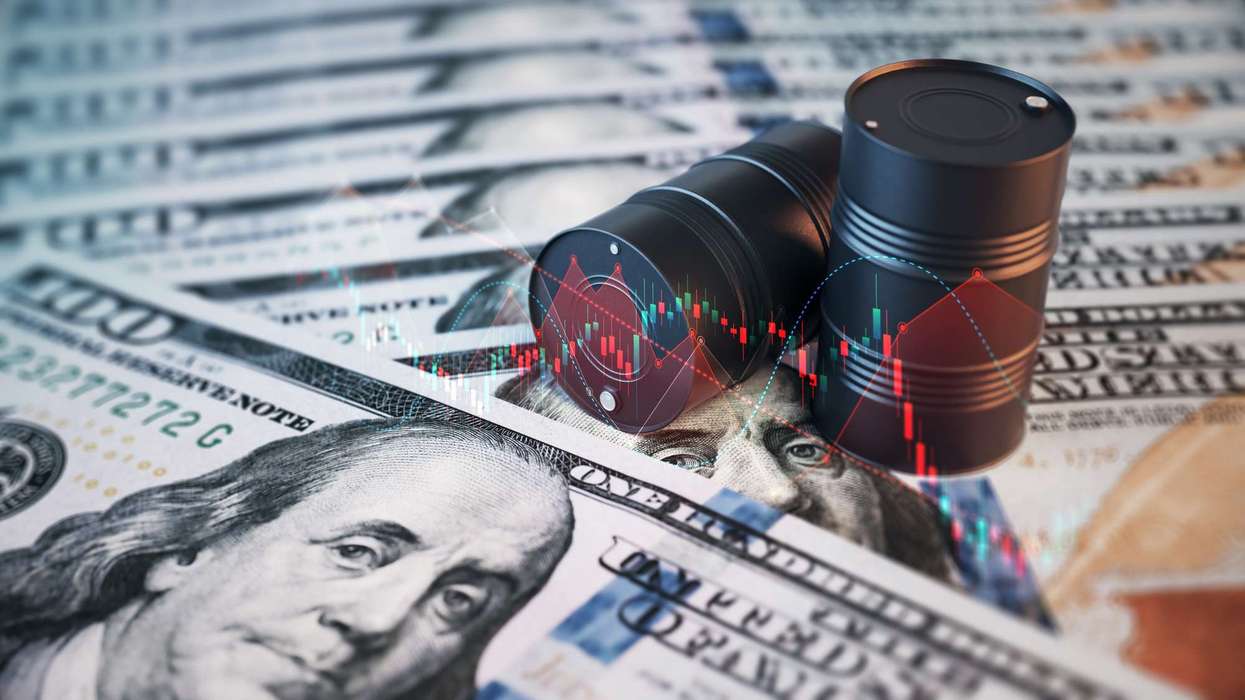
Oil prices have surged above $90 a barrel (£71) for the first time in almost two years, as the escalating Middle East conflict raises fresh concerns about global energy supply.
The spike in oil prices is already stirring anxiety across financial markets. Investors are increasingly worried that higher energy costs could push inflation up again, which in turn may delay expected interest rate cuts.
London’s FTSE 100 slipped about 1.5 per cent to around 10,260 during afternoon trading, after swinging between gains and losses earlier in the session. The benchmark index is now on course for its steepest weekly decline since the “Liberation Day” tariff shock in 2025.
Brent crude rose roughly 5.4 per cent to move above $90 a barrel (£71), levels not seen since April 2024. The global oil benchmark has climbed nearly 20 per cent since last week as tensions across the Middle East intensified.
A narrow waterway holding the global oil market hostage
Much of the disruption centres on the Strait of Hormuz, one of the world’s most critical shipping routes for crude oil.
Around 20 per cent of global oil supply passes through the narrow waterway every day. With tanker traffic effectively halted for about seven days, roughly 140 million barrels of oil — equivalent to about 1.4 days of global demand — has been unable to reach international markets.
Energy analysts say the longer the strait remains closed, the more pressure it could place on prices.
“Every day the Strait stays closed, prices will go higher,” Giovanni Staunovo, commodity analyst at UBS, reportedly said in a news report. Markets had initially believed President Donald Trump might attempt to cool the situation quickly because of the impact on energy prices, he added.
“But the longer that takes, the clearer it becomes how much supply is at risk,” he reportedly said.
The conflict has also begun affecting energy infrastructure across the Middle East, with reports of refinery shutdowns and disruptions to liquefied natural gas facilities.
Investors rush to safe havens as tensions escalate
Global markets are reacting cautiously to the rising uncertainty. Investors have been shifting money into safe-haven assets such as the US dollar and gold, while stock markets have weakened.
The FTSE 100 has fallen roughly 5 per cent over the week, even though oil giants such as BP and Shell — whose share prices often move alongside crude prices — have not fully matched the latest surge.
Wall Street was also expected to open about 1 per cent lower after disappointing US jobs data added another layer of uncertainty.
The sharp rise in oil prices followed US and Israeli strikes on Iran on June 28, after which Tehran halted tanker movement through the Strait of Hormuz.
Despite the growing concern over fuel costs, President Donald Trump appeared largely unconcerned. In an interview with Reuters, he reportedly said he was not worried about rising US petrol prices tied to the conflict.
“If they rise, they rise,” he reportedly said, adding that the military operation remained his priority.
There had been brief signs that Washington might intervene to calm markets. One move included a waiver allowing India to continue purchasing Russian crude, a shift seen as an effort to ease pressure on Asian refineries and contain global energy costs.
But tanker movement through the Gulf remains largely stalled. Reports of Iranian missile and drone strikes hitting an oil refinery in Bahrain and tankers in the Gulf have heightened fears that supply disruptions could worsen.
Meanwhile, the Wall Street Journal reported that Kuwait has begun cutting production at some oil fields after running out of storage space for crude that cannot currently be exported.
If export routes remain blocked, analysts say other producers could face similar problems, potentially removing millions of barrels a day from the global market.