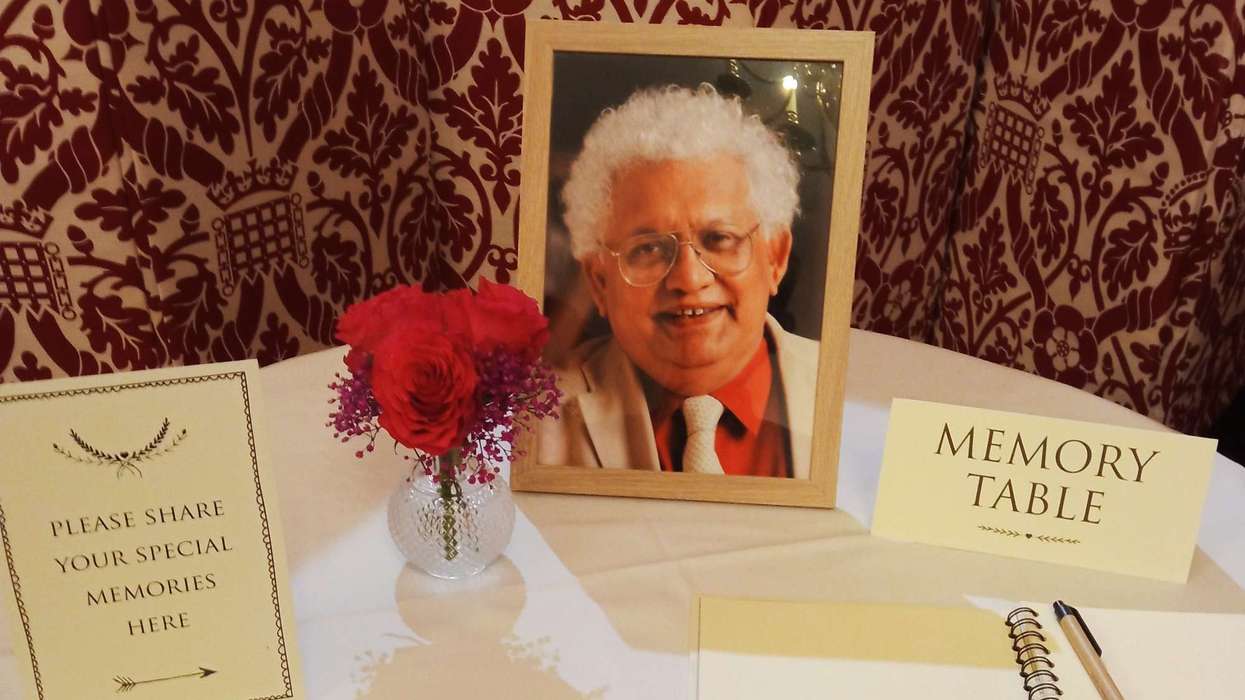

As guests arrived for the memorial lunch for Lord Meghnad Desai at the Cholmondeley Room terrace restaurant in the House of Lords on Tuesday, they heard Lata Mangeshkar’s rendering of one of the great classic songs of Hindi cinema – Ye zindagi usi ki hai jo kisi ka ho gaya from the 1953 film, Anarkali.
Meghnad died in Delhi on 29 July 2025, aged 85.
“Meghnad picked the song himself,” his wife, Lady Kishwar Desai, told Eastern Eye.
Meghnad, whose knowledge of economics was matched by his mastery of Bollywood movies, would have rattled out the details of such golden oldies.
He once did so when interviewed on the arts programme, Footlights, on Sunrise Radio.
The song was sung by Lata, of course, with “Lyricist Rajinder Krishan. Music Chitalkar Ramchandra. Cast Pradeep Kumar, Beena Roy, Kuldeep Kaur, Noorjehan, Manmohan K. Director Nandlal Jaswantlal.”
The lyrics touched a chord in him: “This life belongs to him or her who belongs to someone.”
Followed by: “Pyaar hi me kho gaya/ Yeh zindagi usi ki hai (that person who is lost in love – who forgot everything because of love/ This life belongs to him or her.)
The guests, invited by his wife, Lady Kishwar Desai, mainly from the world of economics and Westminster, were in a sense “the dearest friends” to whom Meghnad belonged. In their tributes, they spoke not only of Meghnad’s scholarship but his sense of fun, his warmth, his good nature and his willingness to help others and also his sense of mischief.
He will live on, it was said, through his students from all over the world.
Kishwar, then an editor in an Indian publishing house, said she and Meghnad met in Delhi when she was editing his book, Nehru’s Hero Dilip Kumar in the Life of India. Much of their courtship was done on the telephone. Some of Meghnad’s calls from London to Delhi lasted 8 hours. It got to the point when money men at London School of Economics expressed concern about the huge bills – and were assured by his friends he was discussing economics with his students.
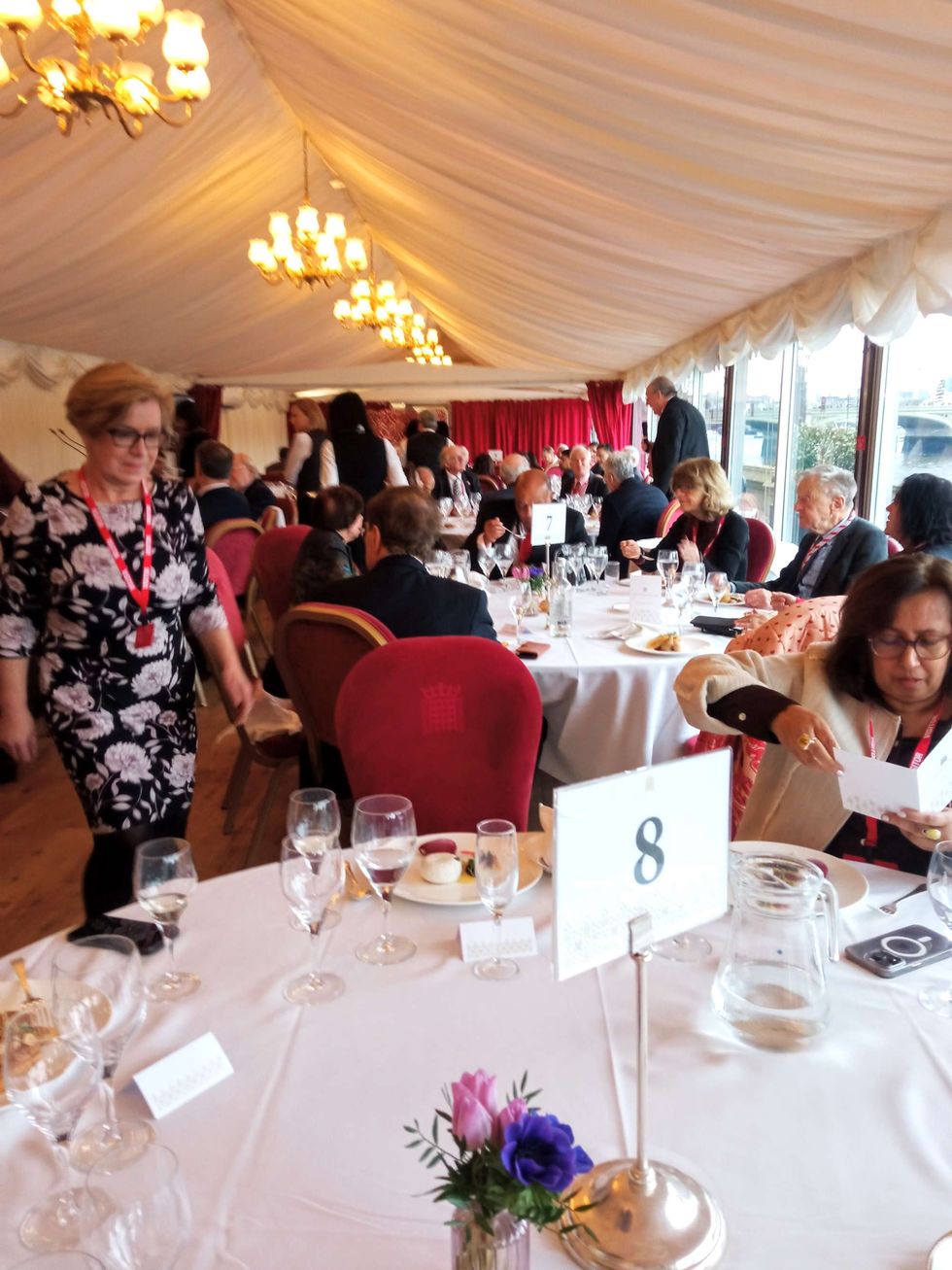 Meghnad Desai memorial lunch Eastern Eye
Meghnad’s stepdaughter, Mallika Ahluwalia, who introduced the speakers, summed up: “He was a much-loved professor at the London School of Economics, where he taught for some 40 years and became an Honorary Fellow and Professor Emeritus. He authored over 35 books and hundreds of articles. In the UK, he was elevated to the House of Lords, and in India, he received one of the highest national honours, the Padma Bhushan.”
Although Kishwar masterminded the lunch, the invitations were sent out in the name of Baroness Valerie Amos, who had served as leader of the Lords and Lord President of the Council from 2003 to 2007.
She confirmed: “In true Meghnad fashion, he’s actually curated this (lunch). He was very clear that he wanted nothing sad, that he wanted music, and he wanted us to remember him in a joyous way.”
She went on: “Meghnad was so very, very special, principled, passionate, persuasive, and, of course, unorthodox. He was an intellectual and academic. He loved to debate and discuss. He loved teaching. He loved sharing his knowledge and experience.
“I hesitate to call Meghnad political in the traditional sense of that word. But he was fascinated by politics and how to use politics and power to drive equity and fairness, and always that global outlook, never centered in a narrow way, but always looking outwards. And India was particularly important to him. He was an author and commentator, writing numerous books, but also commenting politically in magazines like Tribune.”
Lord Krish Raval, who said Meghnad “was my first parliamentary boss”, remembered “his indulgence in treating his staff to routine cream teas”.
Raval read out a letter sent by the prime minister, Sir Keir Starmer: “Lord Meghnad Desai had a profound impact on all who knew him. He was a towering intellect and compassionate scholar and a devoted public servant whose life enriched our national conversation and deepened the bonds between communities, cultures and nations. The first Labour peer of Indian origin, Lord Desai’s remarkable journey was defined by a restless curiosity and an unshakable commitment to advancing human understanding.
“As an economist of global renown, he challenged orthodoxies and broadened the horizons of his discipline. His tenure at the London School of Economics shaped generations of students and thinkers. More than 200 academic articles and numerous books stand as a testament to a life dedicated to ideas and inquiry in public service. He gave his wisdom to the House of Lords with characteristic candour and generosity of spirit.
“He brought to British political life, not only intellectual rigour, but a heartfelt belief in the power of reasoned debate and shared purpose. He was a bridge builder between the United Kingdom and India, enriching our national life with his global outlook and empathy.
“We honour a man whose contributions to economics, politics and public discourse will continue to resonate for generations to come. His legacy will endure in the students he taught, the debates he shaped and the friendships he forged across borders,” the prime minister concluded.
Next up was the economics historian Lord Robert Skidelsky, who said: “I knew Meghnad for at least 50 years, and with growing affection and respect after we were both made peers in 1991. His lovely house in Goa was for many years a refuge for me, not just from the English winter, but from the whole rectangle of commitments, double bookings, deadlines, problems and ephemera, which clutter up our lives. For a month every year, time stood still and I could recover my perspective on life and that I owe to Meghnad.
“I recall his intellectual generosity. He was one of those people who encourage your thoughts rather than axe them. He wanted flowers to bloom, not wither. I never heard him say an ungenerous word about other people's work. I know from personal experience how much trouble he took of my own. His criticisms encouraged. They never provoked anger. He must have been an inspiring teacher.
“He was one of the very few speakers in the Lords who spoke extempore. I don’t think I ever saw him with a note. And the arrangement of the argument was orderly, the flow of words continuous, and I admired him enormously for this gift.
“His autobiography, Rebellious Lord, was a typical Meghnad product. He loved being a peer, but chiefly, I think, for the paradoxical quality of his ennoblement. He loved paradoxes, never more so than in his writing. The best example is his book Marx’s Revenge. The Guardian put its central thesis as follows: if any socialist has studied Marx properly, they would learn all along that capitalism would triumph. Or, as I put it in my review of the book, Desai’s interpretation makes it difficult to understand why Marx himself bothered with revolution, and the book is typical of Meghnad wanting to have it both ways. I think he wanted to be both Gandhi and Nehru.
“He described himself as an atheist, but I think actually he was a polytheist. He would never give allegiance to a single god. His world was not empty of gods, but full of gods, and it would be blasphemy to worship just one. In his book on India, Meghnad wrote, ‘The reformed Bengali was westernised in his living room, but otherwise Hindu in his bedroom and kitchen.’
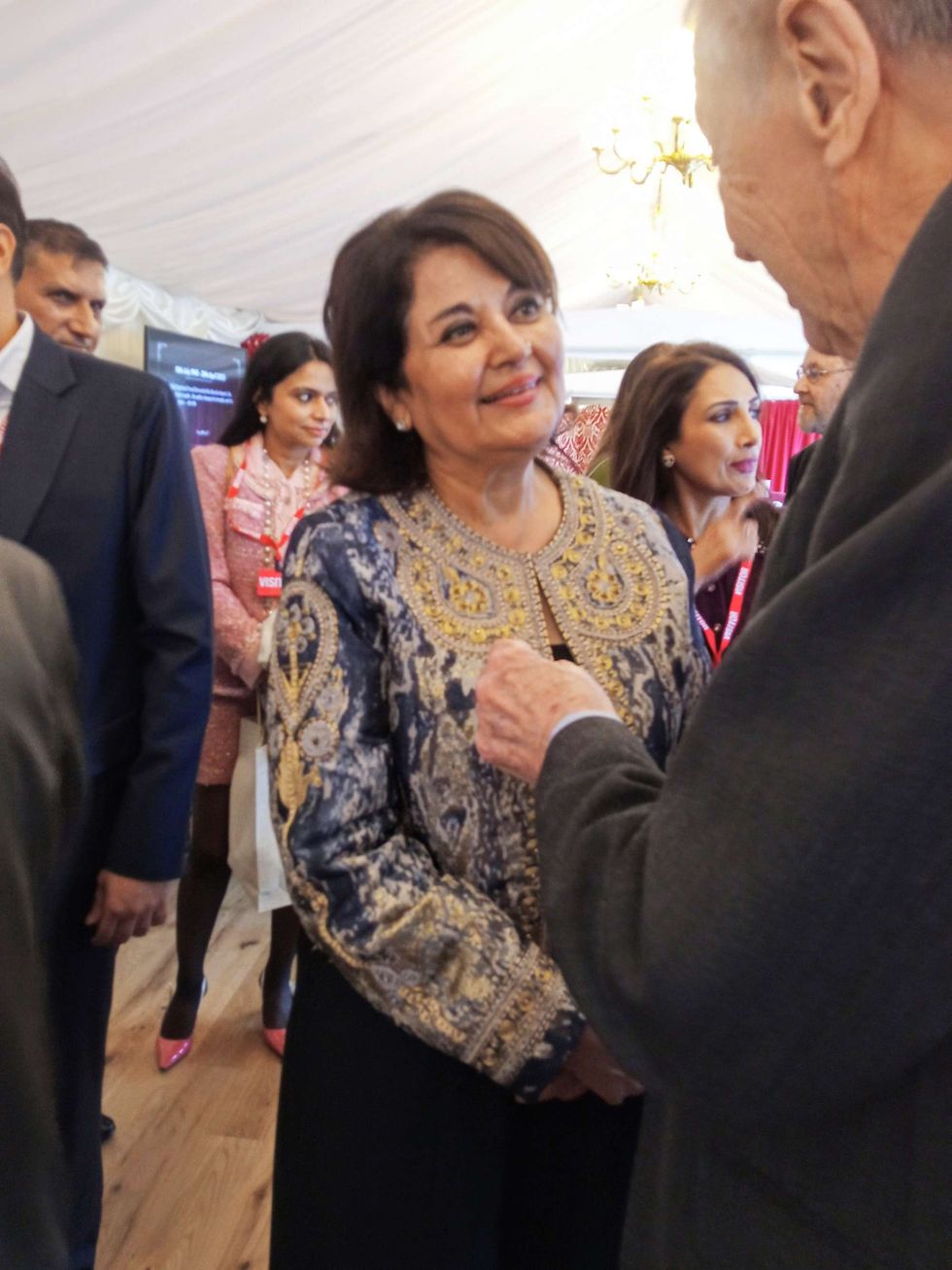 Lady Kishwar Desai at the lunch Eastern Eye
“One could think of Meghnad either as an Indian gentleman with British characteristics or a British gentleman with Indian characteristics. He was a great character, an outstanding thinker, a wonderful friend, and we are so much poorer for his passing.”
Baroness Usha Prashar spoke of how she struck up a close friendship with Meghnad when she arrived in the Lords 25 years ago. “What I really admired about him was his generosity of his spirit and the fact that he wore his achievements very lightly, that he was someone who can actually negotiate the academic world, the political world and the social world with such ease.
“The quality I admired the most in him was his intellectual independence. He was nobody’s person. If he spoke in the House of Lords, you never know which direction. Every time he got up to speak, we all listened and said, ‘Now, what is he going to say?’ And he was always out of the box. And he was a kind of a maverick. He lit up the room. Wherever he went, he was larger than life. I just feel he is here and obviously enjoying every minute of it.”
David Marsh, a writer on political, economic and monetary issues who persuaded Meghnad to join the organisation he had set up – Official Monetary and Financial Institutions Forum (OMFIF) – emphasised his friend’s essential kindness: “He was always trying to uplift people in different ways. He would reach out to different people. He would invite people to the House of Lords for cream teas, and otherwise, he would deal with prime ministers in the same way as he would deal with peasants.
“He understood the social implications of economic policy more than most members of the House of Lords, or indeed House of Commons. But more than that, what I remember about Meghnad is not just his hair, although you always saw that first, but it’s his sense of humor and his light touch.”
Lord Nicholas Stern, who is the IG Patel Professor of Economics and Government at the LSE, said he had known Meghnad since 1970 when the two were “young and sort of somewhat rebellious economists together”.
He recalled an example of Meghnad’s kindness: “He married it with understanding. Kindness without understanding is nice. Kindness with understanding can be life changing. And it was about 35 years ago, I was wondering around the LSE looking miserable because my father had just died, and Meghnad saw me, and of course, we knew each other very well.
“And he said, ‘Why are you miserable?’ And I told him, and I'm sure he had appointments and whatever, he said, ‘We're going for a walk.’ And he took me for a walk for about 45 minutes. And that was transformative for me. He taught a beautiful subcontinental insight, if I say so, he taught me acceptance.
“When you’re bereaved and convulsed, sometimes with rage, for somebody to give some sense of understanding what it meant, that’s an example of kindness with understanding being transformative. And I remember Meghnad with so much fun and joy and the arguments that we had. I remember him for being one of the key people in taking me to India, which has changed my life over the last 51 years. Most of us in the room would have been bereaved in some way, and to have somebody next to you who can take you out like he did, and really change the way in which I understood what my position was, I remember that forever.”
Another eminent speaker was the Cambridge economist, Prof Sir Partha Dasgupta, author of the landmark, The Economics of Biodiversity: The Dasgupta Review.
“Meghnad and I were colleagues at the LSE from 1971 to ‘85 when I left for Cambridge, but we had met before at the Delhi School of Economics,” he began.
“The reason for my wanting to speak on this occasion in memory of Meghnad, was that, to me, he represents now, on reflection, a kind of intellectual not very common in, at least, European, UK, US universities. I’ll give you an instance of what I mean by that.
“Sometime in 1972 or so, a long, long time ago, well before environmental concerns were of any substance, I realised that we had some problems with handling nature in economics. Now I couldn’t articulate that at that time. It took me many years.
“I mentioned that to Meghnad. We were colleagues, and we had rooms not very far from each other. I didn’t quite understand how, say, grasslands which I regarded as obviously capital stocks, and wetlands which are capital stocks, somehow didn’t enter the vocabulary of economic thinking, even though they’re economic assets.
“Meghnad had never written on these matters, and he never did, even afterwards. But he came back 10 to 15 minutes later to my office with a couple of books that I could read. I had no idea of what to look for. Even at that time, there wasn’t a well defined notion of the subject called ecological economics. But I didn’t have the vocabulary, let alone understanding of the way ecosystems function and their productivity. That took me many years, but he had the material in his library. That, to me, suggests his extraordinary curiosity about the world. He was there to respond to a puzzle. I mentioned my own puzzle and he gave me the material that I needed. Nobody else at the LSE could do that. I remember that very well.”
Mukulika Banerjee, professor of anthropology at the LSE, who is from a much younger generation, did not overlap with Meghnad.
She said: “I just wanted to bring up one aspect of Meghnad that we haven’t spoken about yet, which as a younger female Indian academic I encountered, which was he was the only senior male academic who was completely devoid of any chauvinism.
“When we planned a book together on cinema and politics, bringing both of his deep interests together and mine, he always offered to come to LSE to see me, because he recognised that as an academic, I was busy. As a young mother, I had my evenings booked up and this was done without any drama. He always said, ‘You’re the busy one, I’ll come and see you.’ And it was so rare. It stood out without any compare. There hasn’t been another senior male I’ve met like that.”
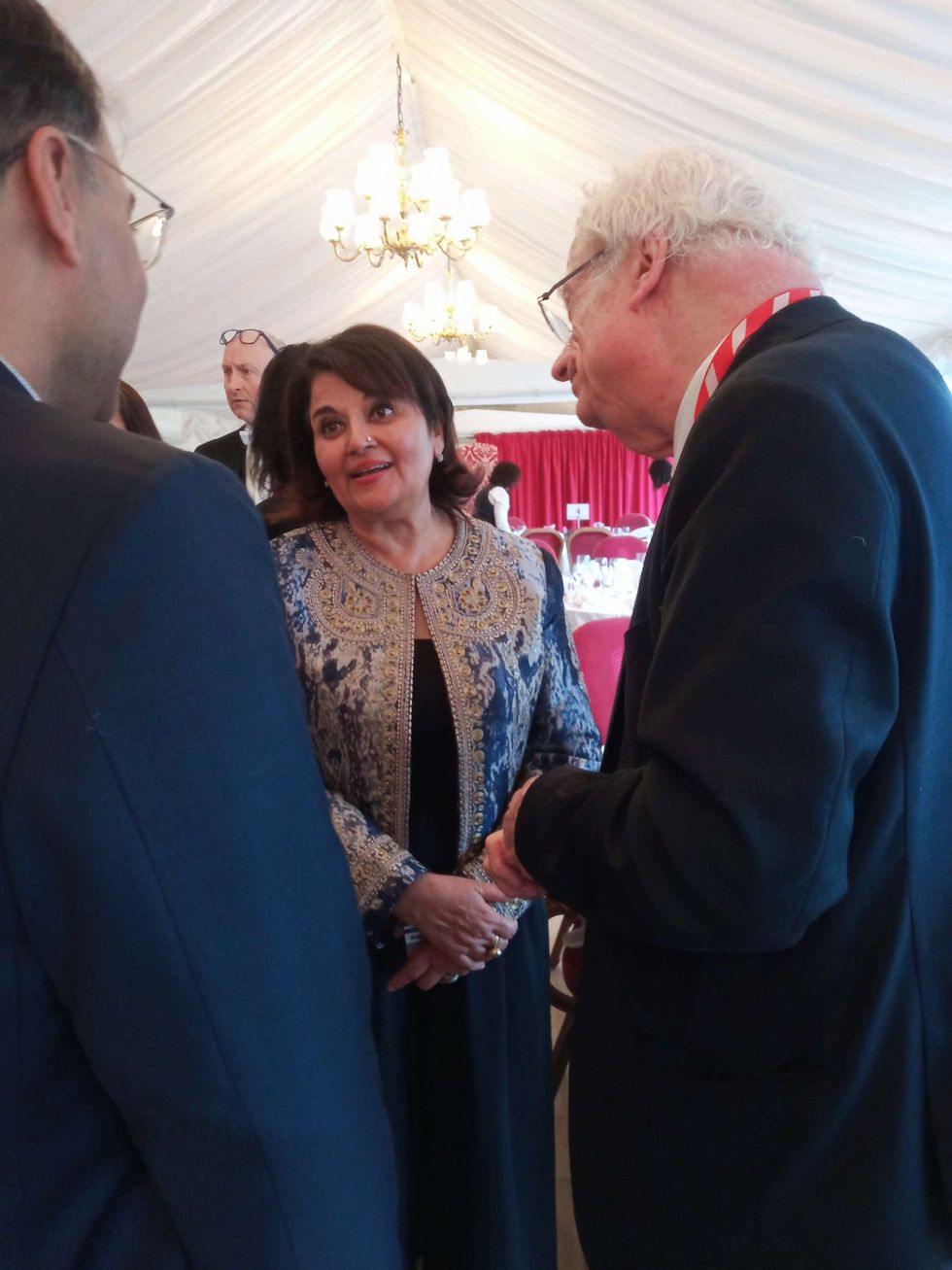 Lady Kishwar Desai with Lord Chris Smith (right)Eastern Eye
At Heathrow when there was a three-hour queue before boarding, Meghnad was ahead but dropped back to join Mukulika. “My heart lifted when Meghnad spotted me. In typical Meghnad fashion, he dropped back in the queue to join me, and spent the next three hours until we were in our seats. I learned so much in those three hours.”
An Oxford academic, Paul Flather, the son of the late Shreela Flather, said fondly, as did others, that Meghnad could be “very, very mischievous. He loved a good crisis, didn’t he? He always had an opinion, and it was always very different (from others). He was a very, very serious and thoughtful intellectual. He was a champion of the Global South. He was a champion of development economics. He was a champion of the marginalised. I’ll always remember him for lighting up our lives and being a life enhancer and challenging us.”
The journalist Will Hutton, a former editor of The Observer, was a 29-year-old producer on BBC Radio 4’s The Financial World Tonight on which Meghnad was a contributor.
“I wanted to reconceptualise Keynes and I had no idea where to start, and I thought he might have a few ideas,” Hutton remembered. “For the following months, he fed me a diet of books. Finally, my book was published. But when the next book came out, The Revolution That Never Was: An Assessment of Keynesian Economics, he didn’t like it at all. He didn’t like the notion that actually you might try and reform capitalism, because as a Marxist, he was very against that notion. Those two books were foundational for my career. In his generosity, he gave up so much time.”
Next to speak was Lord Chris Smith, now the chancellor of Cambridge University, who became friends with Meghnad when they both lived in Islington in north London.
Smith, who became Labour MP for Islington South and Finsbury in 1983, said: “When Islington Central merged with Islington South, he became chair of the (local) party. He was wonderfully wise and mischievous at the same time. And I can remember the following general election (in 1987), when the economy was in disastrous condition. We were confident that Labour would do really well, because the Tories were messing everything up. And we didn’t. And Meghnad’s comment was that when economic times are bad, you have to realise people hold on to what they’ve got. They don’t want to try something new. And that was Meghnad at his wisest and at his most mischievous.”
Others at the lunch included the peers Neil Kinnock, Norman Lamont, Jitesh Gadhia, Raj Loomba, Wahid Alli, Dolar Popat, Peter Goldsmith, Michael Levy and Paul Boateng.
Guests signed a memory book for Kishwar as they left.