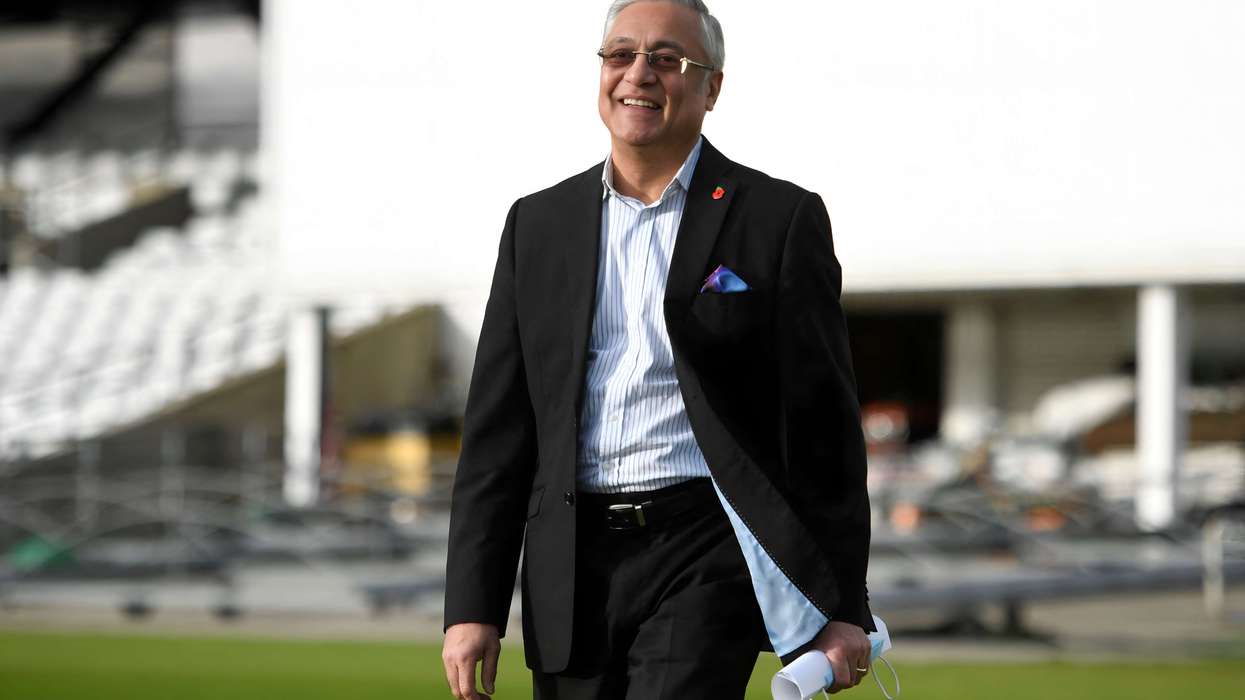

THE APPLAUSE rose in waves across the hall as graduates of the University of East London waited for their names to be called. Standing before them in September 2025 was a man whose life had been spent navigating the complicated territory between public policy and lived reality. Accepting an honorary doctorate that day, Lord Kamlesh Patel reflected not on accolades but on the quiet logic that had guided his career.
“I've been fortunate to serve in public life, working with governments, advising national bodies and shaping frontline services,” he told the students. “But what always mattered most is trying to leave things a little bit better than when I found them.”
That instinct – practical and rooted in experience – has shaped Patel’s influence for decades. Few figures in British public life have moved so fluidly between government, healthcare, education and community leadership. His authority comes from a lifetime spent confronting inequality in the institutions meant to address it.
Recognition in 2025 reflected the breadth of that contribution. Months before the UEL ceremony, the London College of Business Studies opened its new Ilford campus and named a modern IT suite in his honour. The Lord Patel of Bradford OBE IT Suite offers students access to the latest digital tools to prepare for careers in business, management and technology.
Speaking at the opening in May, Patel struck a familiar note – one that links education directly to social mobility. “To be associated with an innovative space dedicated to learning, technology, and empowerment is deeply humbling,” he said. “I hope this suite will inspire students to dream boldly and use their education to create meaningful change. I have always believed that education is not merely a pathway to personal success but a fundamental right that can uplift entire communities.”
The college also launched three scholarship programmes in his name, aimed at widening access to higher education. Two support students from backgrounds under-represented in universities across the UK, while the Lord Patel Global Scholarship funds a full undergraduate degree each year for an international student.
Education has become an increasingly visible part of Patel’s public work. In 2024 he took on the role of chancellor at the University of Southampton, partnering with former education secretary Justine Greening to broaden access for students from disadvantaged backgrounds while strengthening the university’s global profile.
“We come from different backgrounds, but I think we can really work together well,” Patel said of their collaboration. “We can improve social mobility for students as well as take the university to a different level.”
One expression of that ambition has been the university’s decision to establish a full campus in India – the first British institution to do so. Patel views the move as a strategic response to demographic reality.
“You're talking about 700 million people under the age of 35,” he told the GG2 Power List last year, describing what he calls India’s “demographic dividend”. “That provides a global workforce, not just for India but for the world.”
Yet Patel’s reputation was forged long before university ceremonies and global partnerships entered the picture. For much of his career he has worked at the intersection of healthcare, race equality and criminal justice – areas where policy failures have the most immediate human consequences.
Today he chairs the advisory board of Cygnet Healthcare, where he focuses on improving standards in mental health hospital care. The organisation treats NHS patients in specialised facilities across the country.
Long before mental health became a mainstream political issue, Patel was pushing for better data and accountability in the system. One of his most significant contributions was the ‘Count Me In’ census, launched in 2005 under the Labour government to monitor ethnic representation in mental health wards.
“On the 31st of March every year we had 100 per cent accurate record of who was an in-patient in our mental health wards in England, and that was really important,” he recalled, noting that the programme later ended.
That pragmatic style is rooted in his own early experiences. Growing up in Bradford during the 1960s and 1970s, Patel witnessed the realities of inequality and exclusion that shaped many immigrant communities.
“I saw first-hand what inequality and exclusion looked like,” he said during the UEL ceremony. “It was those experiences that taught me the value of perseverance, dignity, and community. That's where my passion for social justice was born.”
A qualified social worker, he began his career in inner-city Bradford, developing services for people facing mental health problems and addiction. His working life started even earlier. At 16 he was already moving between jobs – sweeping floors, working in bars, waiting tables, selling insurance, running a betting shop, trading used cars and handling accounts. He also worked for the ambulance service, discovering early how difficult life could be on public sector wages.
Those experiences gave him an unusual vantage point when he later entered national policy debates. Over the years Patel has chaired major institutions including the Mental Health Act Commission, Social Work England and Bradford Teaching Hospitals NHS Foundation Trust. He also led the government’s Delivering Race Equality in Mental Health programme and authored the influential Patel Report on prison drug treatment.
Alongside his formal roles, Patel supports at least 30 charities and has spent the past decade as president of the Royal Society for Public Health. He chairs the India Business Group, strengthening economic links between the UK and India, and serves as vice president of the British Board of Film Classification.
He was made an OBE in 1999 for services to ethnic minority health issues and appointed to the House of Lords in 2006.
Yet Patel tends to frame achievement less as recognition than as responsibility.
Addressing graduates in East London, he offered a final reflection shaped by the journey from Bradford’s inner-city streets to the House of Lords.
“Your journey doesn't have to be perfect to have meaning. Your starting point doesn't determine your destination. What matters is how you move forward, with integrity, with courage, and with care for others. My coat of arms is a motto that I've lived by all my life. 'Where there's a will, there's always a way.' Go well and go with purpose.”