
THE UK is not the only country learning to live with the vagaries of American foreign policy. The US and India also have a special relationship, not least because of the presence of five million highly qualified people of Indian origin who have made America their home.
Many are in prominent positions, such as the heads of giant corporations.
Vice-president JD Vance’s wife, Usha Bala Vance (née Chilukuri), is Indian, as is the filmmaker Mira Nair (her son Zohran Mamdani is the mayor of New York City) and the author, Jhumpa Lahiri.
The decision of the US and India to sign a free trade agreement has brought calm into the relationship after president Donald Trump’s decision to punish Narendra Modi’s government for buying Russian oil by imposing a tariff of 50 per cent. The fact is that India has found Russia to be a more reliable ally.
During the 1971 Bangladesh civil war, the West Pakistan army carried out systematic genocide to try and prevent the secession of East Pakistan (East Bengal before Partition).
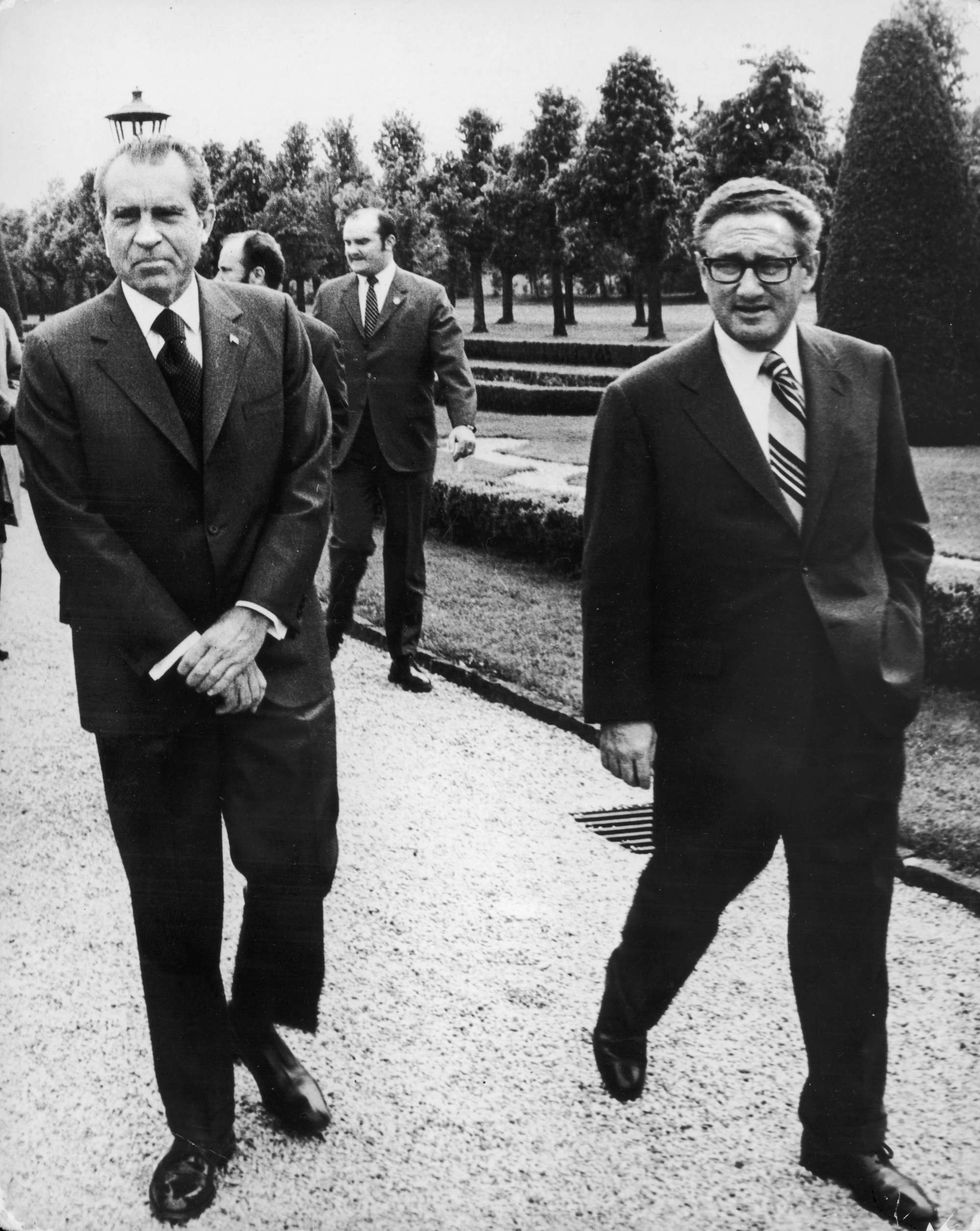 Nixon with secretary of state Henry Kissinger in Paris in 1972Keystone/Getty Images
The number of people killed is put between 300,000 and three million. Hundreds of thousands of women were raped. An attempt was also made to wipe out the intellectuals of East Pakistan. Notable people who were killed, according to one list, included Dhaka University professors Govinda Chandra Dev (philosophy), Munier Chowdhury (Bengali literature), Mufazzal Haider Chaudhury (Bengali literature), Anwar Pasha (Bengali literature), Abul Khair (history), Jyotirmoy Guhathakurta (English literature), Humayun Kabir (English literature), Rashidul Hasan (English literature), Ghyasuddin Ahmed, Sirajul Haque Khan, Faizul Mahi, Dr Santosh Chandra Bhattacharyya and Saidul Hassan (physics), Rajshahi University professors Hobibur Rahman (mathematics), Prof Sukhranjan Somaddar (Sanskrit), Prof Mir Abdul Quaiyum (psychology) as well as Mohammed Fazle Rabbee (cardiologist), AFM Alim Chowdhury (ophthalmologist), journalists Shahidullah Kaiser, Nizamuddin Ahmed and Selina Parvin (journalist), Altaf Mahmud (lyricist and musician), Dhirendranath Datta (politician), Jahir Raihan (novelist, journalist, film director) and Ranadaprasad Saha (philanthropist).
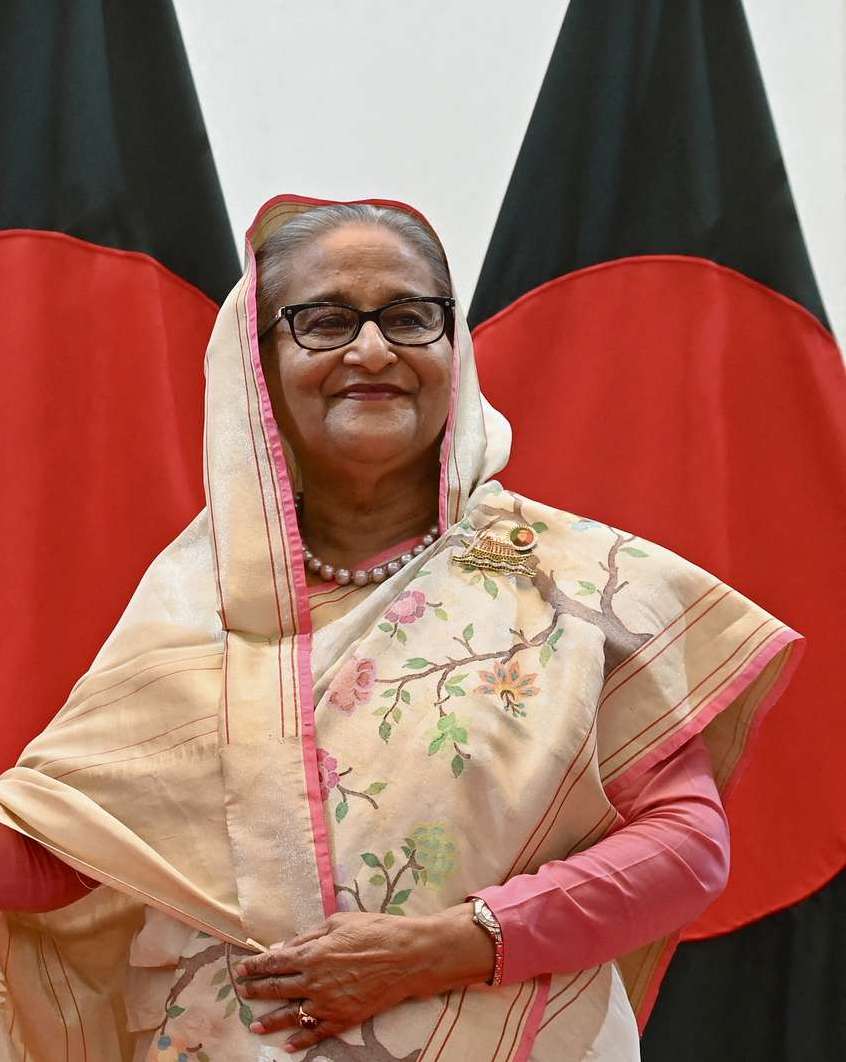 Sheikh HasinaMunir Uz Zaman/AFPvia Getty Images
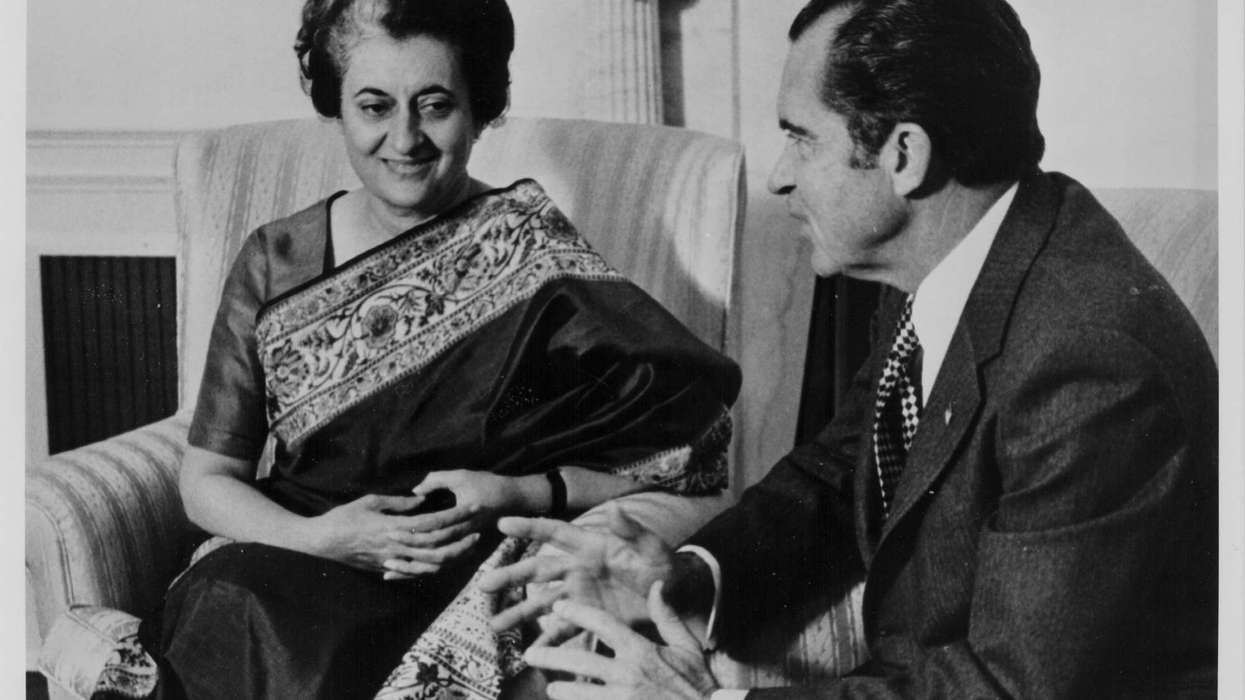
Despite the holocaust, US president Richard Nixon decided to back Pakistan, and even sent the seventh fleet into the Bay of Bengal to deter India’s prime minister Indira Gandhi (he failed). The Pakistan army surrendered to India after two weeks – and Bangladesh was born.
Sheikh Mujibur Rahman was released from prison in West Pakistan and became the new leader of Bangladesh.
His daughter, Sheikh Hasina, is now in exile in India, while his granddaughter, Tulip Siddiq, Labour MP for Hampstead and Highgate, has been targeted by the new regime in Dhaka.
All this is confirmed in a recent report in the New York Times, “Seven Pages of a Sealed Watergate File Sat Undiscovered. Until Now.”
The report by James Rosen, a reporter based in Washington and a historian of the Watergate era, states: “War between India and Pakistan broke out on Dec. 3, 1971. The White House convened the Washington Special Action Group, an elite cell of the National Security Council.”
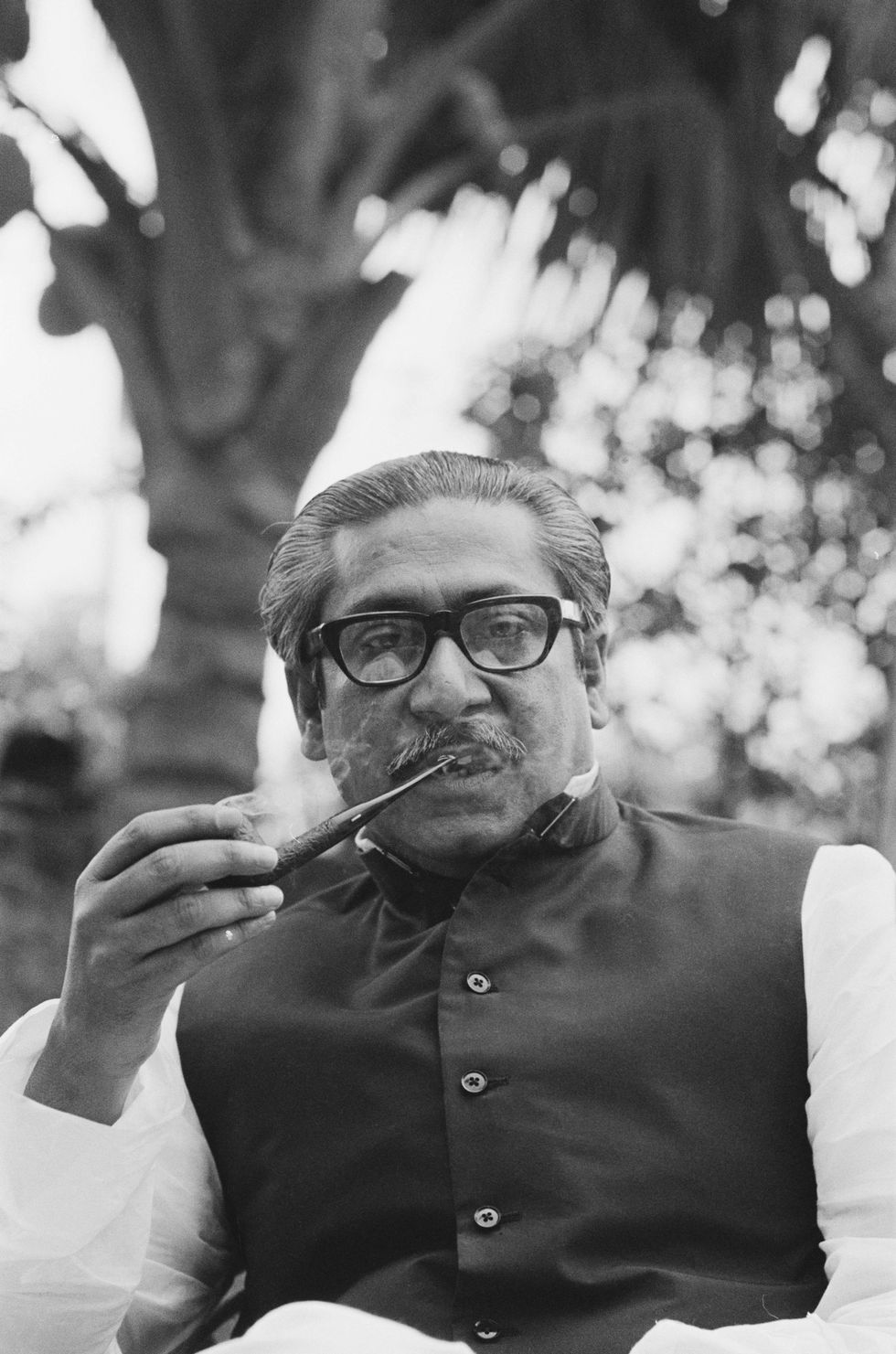 Sheikh Mujibur RahmanIan Brodie/Daily Express/Hulton Archive/Getty Images
His report says: “‘This was a regional Cold War issue,’ Gen. Alexander Haig, a deputy to Henry Kissinger at the NSC (National Security Council), told me in 2000. ‘We had firm evidence that the Russians and the Indians were colluding’ against Pakistan. Indeed, the Kremlin and India had signed a strategic treaty that summer.”
Rosen goes on: “Beyond wishing to check Soviet aggression, Nixon distrusted prime minister Indira Gandhi of India. He also had reason to support the Pakistani president, Yahya Khan, despite his abysmal human rights record: Islamabad had hosted Nixon’s back-channel diplomacy that would lead, in 1972, to his historic visit to China, the president’s foreign-policy masterstroke. Publicly, however, the US remained neutral.
“‘I am getting hell every half-hour from the president that we are not being tough enough on India,’ Kissinger told the NSC group on December 3. ‘He does not believe we are carrying out his wishes. He wants to tilt in favour of Pakistan.’ Without consulting the Navy, Nixon ordered a task force, led by the nuclear carrier Enterprise, to the Bay of Bengal.’
” Leaks were published in the Washington Post by syndicated investigative reporter Jack Anderson. His source was identified as a 28-year-old, Navy Yeoman First Class Charles Radford.
“Stationed at the US Embassy in New Delhi, Radford had grown passionate about India,” Rosen’s report says.
The report goes into great detail on who was spying on whom within the US administration. But Rosen’s story reveals the contents of seven previously suppressed pages from the Watergate files.
“Fifty years later, their contents can finally be revealed,” Rosen says. “The redacted portion began with Nixon describing the plan — ‘my decision, not Kissinger’s’ — to use Pakistan as the bridge to China. Since the Eisenhower era, Nixon had cultivated relationships with Pakistani officials, and those relationships had facilitated his détente with Beijing. As a result, Nixon said, ‘we felt a great obligation to the Pakistanis.’
“He continued: ‘The Russians were supporting India. … Nobody was supporting Pakistan because there was an embargo on the shipment of arms. … But we were giving moral support to them, and, also, we gave to the Chinese an assurance privately that if India jumped Pakistan and China decided to take on the Indians that we would support them.’”
Rosen comments: “This was inside dope on global power politics at a level that none of Nixon’s listeners had heard before.” The new element in Rosen’s story is that Nixon had made it clear that despite the genocide in East Pakistan, he would support Pakistan and China against India.
This is partly the background to why even today India maintains a strategic relationship with Russian president Vladimir Putin, while simultaneously seeking to consolidate a cordial partnership with Trump.
Multi-polarity is not easy at a time when Putin is accused of ordering the death of the Russian political prisoner Alexei Navalny through the use of some kind of obscure frog poison.
But it will seem odd to many that poor Prince William was sent to Saudi Arabia to schmooze Crown Prince Mohammed bin Salman, despite the latter’s involvement in the dismemberment of the journalist Jamal Khashoggi. Saudi money soothes troubled consciences.
Even allies of the US, India and the UK included, are having to think beyond Trump. Even if he is gone in three years, he has greatly undermined trust in the US.
Just to take one example, he encouraged Iranians to take to the streets and declared: “Iranian Patriots, KEEP PROTESTING – TAKE OVER YOUR INSTITUTIONS!!!... HELP IS ON ITS WAY.” Maybe the decision not to affect regime change in Tehran is wise, but Trump appears to have misled Iranian protesters.