
It’s worth noting that India’s foreign policy on Iran differs markedly from that followed by the US, Israel – and the UK.
The Indian government offered its condolences after the assassination of Iran’s supreme leader, Ayatollah Ali Khamenei.
India’s foreign secretary, Vikram Misri, who is the head of the diplomatic service, signed a condolence message at the Iranian embassy in Delhi. The ministry of external affairs released a photograph of Misri with the Iranian ambassador, Mohammad Fathali. But neither the Indian prime minister Narendra Modi nor any of his senior cabinet colleagues went to the Iranian embassy.
India has to engage in diplomatic tightrope walking. The Indian government did not condemn the initial US and Israeli military attack on Iran.
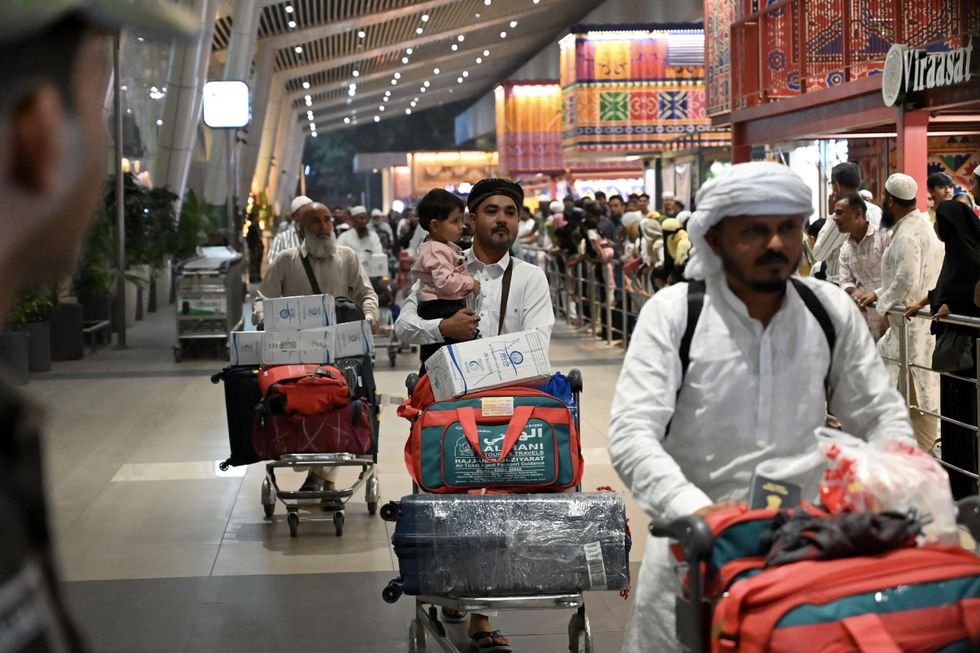 Indian passengers arrive in Ahmedabad after being stranded in Jeddah amid travel disruption across the Middle EastShammi Mehra /AFP via Getty Images
The spokesman for the external affairs ministry issued a formal statement: “India is deeply concerned at the recent developments in Iran and the Gulf region. We urge all sides to exercise restraint, avoid escalation, and prioritise the safety of civilians. Dialogue and diplomacy should be pursued to de-escalate tensions and address underlying issues. Sovereignty and territorial integrity of all states must be respected.”
Modi spoke by phone with the leaders of Kuwait, Bahrain, Oman, Saudi Arabia, Qatar and the United Arab Emirates, during which he condemned Iran’s retaliatory strikes on Gulf states.
Last month Modi visited Israel, with which India has been building strong security links. India has also been a traditional buyer of Iranian oil.
In domestic politics, Modi has been condemned by Congress and other opposition parties for not coming out strongly enough against the US military action. For example, the Congress party’s general secretary, Jairam Ramesh, said: “India’s foreign policy under the self-styled Vishwaguru (world teacher) stands brutally exposed, notwithstanding all the grandstanding on it by the cheerleaders of the PM, led by himself.”
Ramesh drew attention to the timing of Modi’s visit to Israel on February 25- 26, just two days before Washington and Tel Aviv launched their strikes.
“The Modi government’s response to the war unleashed on Iran that has involved targeted assassinations has been a betrayal of India’s values, principles, concerns, and interests,” he said.
Sanjay Singh of the Aam Aadmi Party (AAP) also attacked Modi’s silence.
“Say something about the tyranny of America and Israel, Modi ji – you are not Vishwaguru, you are Guru Ghantali,” Singh said, deploying a Hindi idiom for empty posturing. Singh warned: “Global dictator America’s tyranny will spread all over the world.”
Samajwadi Party chief and former Uttar Pradesh chief minister Akhilesh Yadav also took the Indian government to task: “In these circumstances of deadly attacks and war targeting everyone, from the most prominent figures to ordinary citizens of any country, our country’s government should clarify its stance on this international issue… and, as a neutral country, what diplomatic efforts it is making to stop the war and restore peace.”
It should be remembered that India has one of the biggest Muslim populations in the world, numbering more than 200 million. The Shia proportion is 15 per cent.
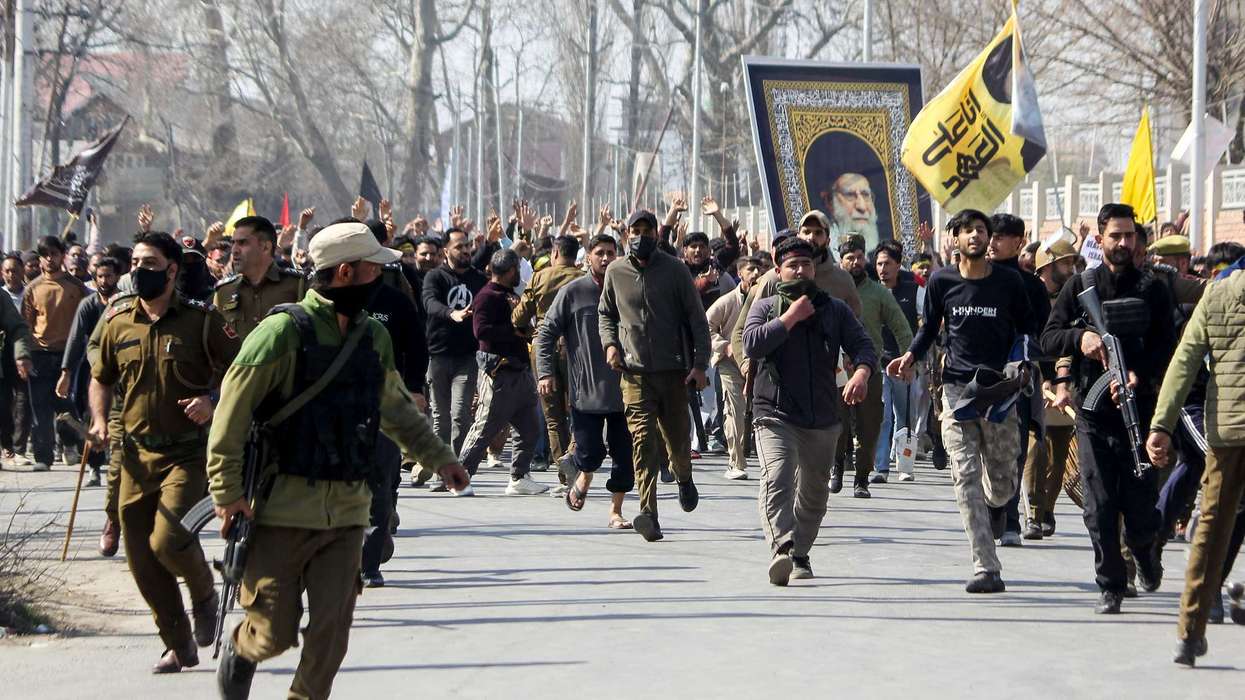
Hours after Khamenei’s death was announced, the All India Shia Council held a protest in Delhi, raising slogans against the US and Israel. Similar gatherings were held in Jammu and Kashmir, where men, women and children assembled carrying portraits of Khamenei, black flags and banners supporting Iran.
Shia cleric Maulana Yasub Abbas, general secretary of the All India Shia Personal Law Board, announced three days of mourning and said the community would burn effigies of Donald Trump and Benjamin Netanyahu.
“The world thinks that by killing Khamenei, Iran will be finished,” said Abbas. “America and Israel will get a befitting reply from Iran.”
Mirwaiz Umar Farooq, Kashmir’s chief priest, called it “a moment for the Ummah to rise above divisions and stand united”.
While India does not want Trump to reimpose a 50 per cent tariff on Indian exports to the US, popular sentiment appears to be with Iran. There are deep civilisational links between Iran and India, something I became aware of when I lived in Iran.
Persian (which I tried to learn) was extensively used in India for more than 600 years, from the 12th century until the 19th century, serving as the lingua franca of the courts, administration, literature, and intellectual life across much of the Indian subcontinent. Under the Mughals, Persian reached its zenith. It became the primary language of poetry, philosophy, and scholarship. The Mughal court attracted Persian poets and scholars from Iran, and a distinct Indo-Persian literary tradition emerged. The East India Company replaced Persian with English as the official language in 1837, marking the end of its formal status.
It is important to draw a distinction between the theocratic rule of the ayatollahs and Persian culture, which goes back to ancient times. Already, many Iranian monuments are being damaged by war. I was a witness to extremist Ayatollah Sadegh Khalkhali trying to destroy the mausoleum where Reza Shah Pahlavi (1878-1944) was buried. Khalkhali wielded pickaxes which kept bouncing off the robust marble structure. It was Ayatollah Khomeini, who stepped in and stopped the destruction of Iran’s cultural heritage.
The Golestan Palace in Tehran, a Unesco World Heritage site, is reported to have been damaged in the recent attacks on the Iranian capital.
Unesco said cultural property is protected under international law, notably the 1954 Hague Convention for the Protection of Cultural Property in the Event of Armed Conflict, including its enhanced protection mechanism, as well as the 1972 Convention concerning the Protection of the World Cultural and Natural Heritage. To that end, the organisation has communicated to all parties concerned the geographical coordinates of sites on the World Heritage List as well as those of national significance, to avoid any potential damage.
It would be a tragedy for the world if Iran’s historic sites were reduced to the rubble of another Gaza. The choice of Mojtaba Khamenei, 56, as a successor to his late father, suggests Iran would like to suck America into a war without end. Trump will want to avoid another Vietnam.