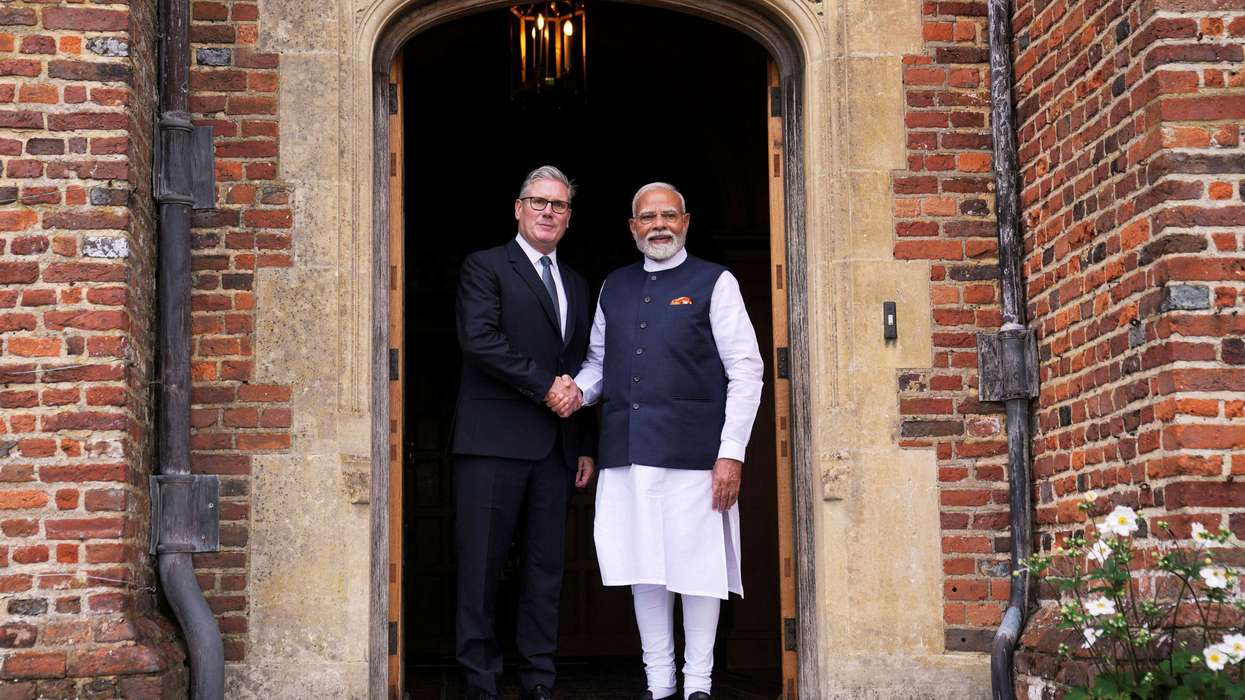

THE free trade agreement with India will benefit UK businesses at a difficult time for international trade, according to a parliamentary scrutiny report published on Tuesday (3).
The House of Lords International Agreements Committee opened its review of the India-UK Comprehensive Economic and Trade Agreement (CETA) in the months after it was agreed during prime minister Narendra Modi’s visit to the UK last July.
The cross-party committee, responsible for scrutinising all treaties laid before parliament, called CETA a “considerable achievement,” given that negotiations took place while the US was imposing tariffs on much of the world.
“The UK has reached a landmark deal with a key strategic partner at a time of considerable geopolitical turbulence,” said Lord Peter Goldsmith, who chaired the committee during the inquiry.
“We also welcome that the agreement is compliant with World Trade Organisation rules, in light of the current challenges to the rules-based international order. It is a significant achievement, and the government should capitalise on this by ensuring businesses can utilise it in practice.”
The committee found the agreement will help UK businesses as they look to spread their supply chains and reduce their reliance on any single market.
However, it also flagged shortcomings. Legal services have been left out of the agreement entirely, there is little new access for financial or professional services, and a bilateral investment treaty, which would have offered stronger protections for businesses operating in both countries, was not reached.
Lord Goldsmith urged both governments to treat the agreement as something that can be built on over time.
“We recommend the UK and India view the FTA as a ‘living agreement’, rather than a static one, and prioritise strengthening the terms of the agreement as the relationship develops,” he said. The report will be debated by the House of Lords early next month as CETA moves towards ratification.
It raised a note of caution on one front: the trade agreement India signed with the European Union last month could, in time, affect how competitive the UK-India deal remains.
Once CETA comes into force, British consumers should see a wider choice of Indian goods and lower prices. But whether British exports to India will keep pace as India opens its doors to the EU “remains to be seen,” the committee said.
The peers also pointed to an imbalance in how the agreement will work in practice. Indian exporters will have full access to the UK market as soon as the deal is in force. The benefits for UK exporters, by contrast, will take longer to come through. Among its recommendations, the committee asked the government to publish an assessment of how successive trade deals are affecting the UK agricultural sector, to keep working with India on reducing trade barriers in services, and to do more to help smaller businesses make use of the agreement.
It also called on the government to set out what additional support will be provided through the British High Commission in India and its regional offices in the UK.
The agreement is expected to add £25.5 billion a year to trade between the two countries, on top of the £47.2bn recorded in 2025. Parliament is now in the process of ratifying CETA, with both MPs and peers set to debate the agreement before it can be put into effect.